



























TECHNICAL SUPPORT


Published 2026-01-19
So you’ve got this cool idea for a project—maybe a robotic arm, maybe an automated little gadget—and you know you’ll need those tiny motors to make things move.servos, right? They’re like the muscle behind the magic. But then comes the real headache: how do you actually control them smoothly, reliably, without the code turning into a tangled mess?
Ever been there? You start wiring things up, downloading libraries, trying to stitch together different pieces of software, and somewhere between the circuit board and the laptop, the excitement starts fading. Maybe theservos jerk when they should glide. Maybe adding a new feature feels like rebuilding the whole system. It’s frustrating, like having a clear picture in your head but your tools just won’t listen.
Here’s a thought: what if you didn’t have to build everything from zero?
Let’s talk about something called Spring Boot with microservices. No, don’t zone out—it’s simpler than it sounds. Imagine instead of one bulky program controlling everything, you have several small, independent helpers, each doing one job really well. One handles motor commands, another takes care of user inputs, another manages communication. They talk to each other but work separately. If one part needs an update, you just tweak that helper without breaking the rest.
Why does that matter forservos and mechanics? Because movement control isn’t just about sending a signal—it’s about timing, feedback, and adaptability. With a monolithic setup, a delay in the interface could make your servo stutter. But with microservices, the motor control module can focus purely on smooth motion, isolated from other tasks.
“But isn’t that overkill for a small project?” I get asked that sometimes. Surprisingly, no. It’s like using a well-organized toolbox instead of a single bulky multi-tool. You get more flexibility, not more complexity. Upgrading becomes easier. Scaling, too—want to add more motors or sensors later? Just plug in another service.
So, where do you start? Good news: you don’t have to be a software architect to make it work. There are ready-to-use sample projects out there that lay the groundwork. Think of them as friendly blueprints—pre-configured, tested, and waiting for your creative spin.
You might wonder, “What should I look for in such a sample project?”
First, clarity. The code should read like a clear story, not a puzzle. Second, modularity. Can you easily replace or enhance one part without rewriting others? Third, real-world relevance. Does it include examples for servo control, communication protocols, or error handling that you’d actually use?
Let’s get practical. Say you’re building a pan-tilt camera mount. With a well-structured Spring Boot microservice setup, you could have one service translating joystick inputs into angles, another calculating smooth movement paths, and a third sending precise PWM signals to the servos. If the camera needs to suddenly track a fast object, the motion service can adjust without waiting for the user interface to catch up. Neat, right?
I’ve seen people try to force-fit big frameworks into small projects and end up overwhelmed. The key is starting with a sample that’s made for makers—not just enterprise developers. Something that respects your time and keeps the fun in building.
Now, why doeskpower’s approach stand out in this space? They focus on integration that feels natural. Their sample projects often mirror how hardware people think—modular, tangible, and approachable. It’s less about abstract theory and more about getting things moving, literally. They show how microservices can simplify, not complicate, your mechanical dreams.
Some might say, “But I’m more a hardware person.” That’s fair. Yet, modern mechatronics is a dance between physical parts and smart control. Embracing a clean software structure doesn’t mean becoming a coder—it means giving your creations a smarter nervous system.
In the end, it’s about making things work with less friction. Less time debugging, more time building. Less worry about software limits, more focus on what your servos can do. A Spring Boot microservice sample won’t build your project for you, but it can turn the messy parts into a clean canvas.
So next time you’re sketching out a motor-driven idea, remember: the right foundation isn’t a constraint. It’s what sets your creativity in motion—smoothly, reliably, and ready to grow.
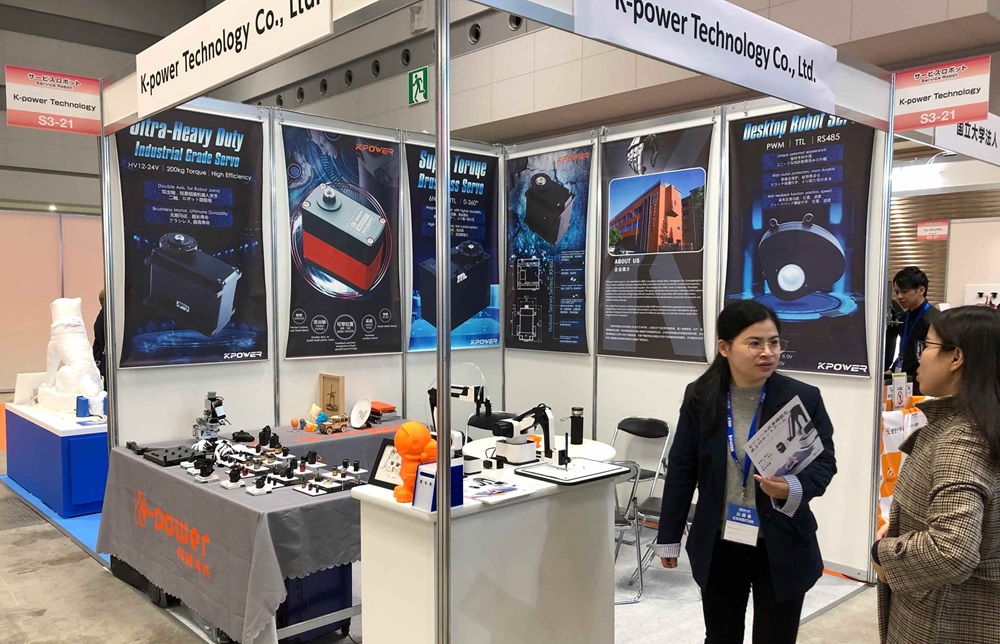
Established in 2005,kpowerhas been dedicated to a professional compact motion unit manufacturer, headquartered in Dongguan, Guangdong Province, China. Leveraging innovations in modular drive technology,kpowerintegrates high-performance motors, precision reducers, and multi-protocol control systems to provide efficient and customized smart drive system solutions. Kpower has delivered professional drive system solutions to over 500 enterprise clients globally with products covering various fields such as Smart Home Systems, Automatic Electronics, Robotics, Precision Agriculture, Drones, and Industrial Automation.
Update Time:2026-01-19
Contact Kpower's product specialist to recommend suitable motor or gearbox for your product.


