



























TECHNICAL SUPPORT


Published 2026-01-19
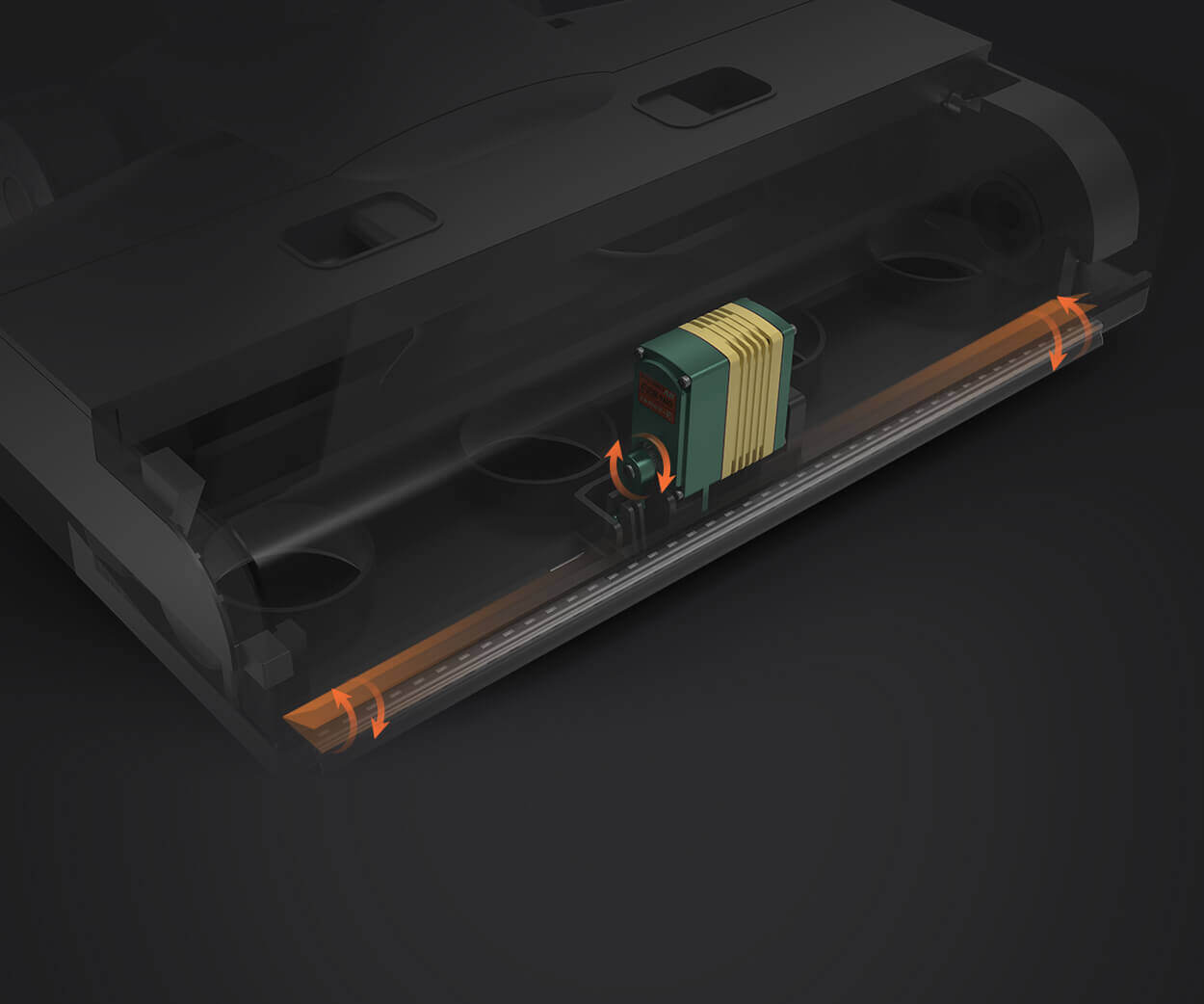
Imagine you design a sophisticated mechanical system. Each servo motor and steering gear is perfectly adjusted and each performs precise movements. But when they need to cooperate—for example, a robotic arm needs to complete the coherent operations of grabbing, rotating, and placing—what will happen if there is a lack of unified coordination signals? Maybe a certain joint rotates half a beat faster, or the instructions received by the actuator are delayed... and the entire movement is messed up.
Microservice architecture often faces similar dilemmas. Each service is like an independent motor, performing its own duties. But as the number of services grows, how do they find each other? How do you know which service provides the required data and which one can handle a specific task? Hardcoded service address? That would make the system as rigid as a rusty gear. Manual maintenance list? When the service is online or offline, updates are always delayed.
What you need at this time is a "discovery service" - it is like an intelligent navigator in the system, recording the "location" and status of each service in real time, allowing services to find and call each other dynamically and smoothly.
Question 1: Where did the service go? In a dynamic environment, services may start and stop frequently due to expansion, failure, or updates. The traditional fixed address method will often make the caller "missed". The discovery service uses a registration and query mechanism to automatically report when the service goes online and automatically clear when it goes offline, ensuring that the address list is always up to date.
Question 2: How to balance the load? If there are ten instances of a service, to whom should the call request be sent? Discovery services usually work with load balancing strategies to distribute traffic reasonably to prevent some instances from being overloaded and others from being idle - just like balancing current distribution for multiple parallel motors in a mechanical system to make the overall operation smoother.
Question 3: What should I do if something breaks down? If a service instance responds slowly or becomes unresponsive, the discovery service can mark or remove it and direct requests to healthy instances. This adds a layer of resilience to the system, preventing local failures from spreading.
These mechanisms may sound a bit abstract, but look at it from another perspective: it changes the microservice architecture from "static wiring" to "dynamic self-organization". The system is more flexible, more robust, and easier to expand.
When selecting or designing a discovery service, people often consider several aspects. Is consistency: Is the service registration information synchronized in time among all nodes? This is related to whether the call will point to an expired address. It’s availability: If the discovery service itself goes down, will it affect the entire system? Good design often strikes a balance between consistency and usability.
There is also integration complexity. Is the discovery service easy to integrate with existing service frameworks? Does it require a lot of extra code? Can multi-language environments be supported (since microservices may be written in different languages)? These practical details affect the smoothness of landing.
And of course, there's performance and scale. When the number of services reaches tens of thousands, can the speed of registration and query keep up? Is the resource consumption of the discovery service itself controllable?
existkpower, we often face coordination challenges in mechanical and automation systems. From the synchronous control of servo motors to the path planning of multi-axis robotic arms, one of the core issues is "how each unit knows each other's status and responds in real time." This thinking also extends to our understanding of software architecture.
The discovery service in microservices is essentially a coordination mechanism. It allows services to no longer rely on static configuration, but adapt to changes through dynamic discovery. It's a bit like adding real-time position feedback to a mechanical module - the system becomes smarter and more adaptive.
A good discovery service should be transparent, lightweight, and reliable. It should not become the bottleneck of the system, but should be like smooth nerve conduction, silently supporting the dynamic operation of the entire architecture. It exists to allow development teams to focus more on business logic rather than infrastructure details.
If you are considering introducing or discovering services, ask:
The answers to these questions can often help you determine the value of discovery services.
Service discovery is not a cool technology, but it is often the "silent cornerstone" in microservice architecture. It straightens out the communication network between services, allowing the architecture to flexibly scale and respond to failures calmly. Just like those inconspicuous but critical sensors and signal lines in precision machinery - without them, no matter how excellent the independent components are, it will be difficult to play harmonious music.
When building a reliable, scalable system, it may be worth spending a little more thought on getting this "navigator" in place. After all, smooth collaboration always leads to better overall performance.
Established in 2005,kpowerhas been dedicated to a professional compact motion unit manufacturer, headquartered in Dongguan, Guangdong Province, China. Leveraging innovations in modular drive technology, Kpower integrates high-performance motors, precision reducers, and multi-protocol control systems to provide efficient and customized smart drive system solutions. Kpower has delivered professional drive system solutions to over 500 enterprise clients globally with products covering various fields such as Smart Home Systems, Automatic Electronics, Robotics, Precision Agriculture, Drones, and Industrial Automation.
Update Time:2026-01-19
Contact Kpower's product specialist to recommend suitable motor or gearbox for your product.


