



























TECHNICAL SUPPORT


Published 2026-01-19
When Your Machines Need to Talk, But They’re Speaking Different Languages
Picture this: a robotic arm jerks to a halt. A conveyor belt stutters. Somewhere, a sensor reads data that never reaches the dashboard. The machines are there, but they aren’t communicating. It’s like having a team where everyone works in silence—eventually, things fall apart.
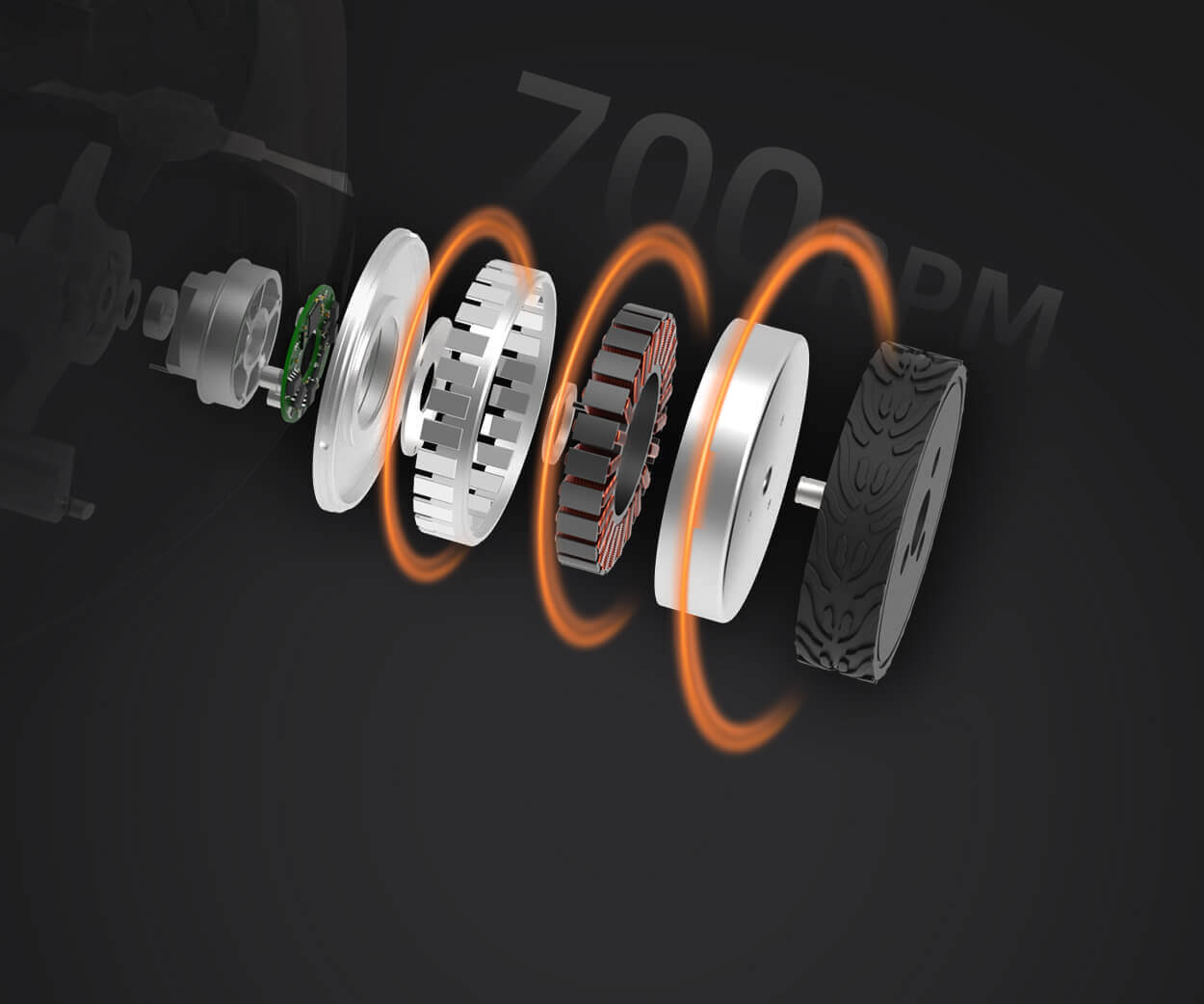
This isn’t just a glitch; it’s a structural problem. In setups involvingservomotors, actuators, and mechanical assemblies, the old way of tying everything together through one bulky, centralized system is showing its age. It’s slow. It’s fragile. When one part needs an update, the whole system holds its breath.
So, what’s the way out? Let’s talk about two approaches that often come up: Microservices and Web APIs in C#. They might sound like tech jargon, but think of them as different strategies for building a conversation.
The Tightly-Knit Group vs. The Specialized Team
A traditional Web API in C# is like a skilled generalist. It’s a single, cohesive unit that handles requests, processes logic, and talks to your database—all under one roof. It’s reliable and straightforward for many tasks. But ask it to manage a dozenservomotors while simultaneously processing vision data and logging performance metrics? It can become a bottleneck. One heavy task slows everything down.
Microservices, on the other hand, are more like a specialized team. Instead of one big application, you have many small, independent services. One service might handle only motor control commands. Another solely manages sensor data ingestion. A third takes care of user commands from a web interface. Each runs in its own process, speaks through lightweight channels (often HTTP/APIs themselves), and can be developed, deployed, and scaled independently.
Why does this matter for machinery? Because in the physical world, tasks are naturally separated. The precision loop controlling aservodoesn’t need to know about the login system. By separating these concerns, a failure in one area doesn’t cripple the entire operation. Need to upgrade the communication protocol for your actuators? You update that one service without touching the rest of the system.
“But isn’t that more complex?”
It’s a fair question. More services mean more moving parts to manage. Network calls replace in-memory calls. You need to think about data consistency and service discovery. For a simple, single-purpose machine, a well-structured monolithic Web API might be perfectly sufficient, even preferable. It’s cleaner and easier to debug.
The tipping point comes with scale and diversity. Are you integrating different types of hardware that evolve at different speeds? Is uptime critical, where a failure in a non-core component shouldn’t stop the main workflow? Do you foresee adding new capabilities, like advanced analytics or remote diagnostics, down the line? If yes, the initial investment in a microservices approach begins to pay dividends in resilience and flexibility.
HowkpowerApproaches the Conversation
Atkpower, we see this not as an abstract software debate, but as a practical design philosophy for making hardware smarter. The goal is to give each physical component—every servo, every drive—a clear, reliable voice within the larger system.
We don’t start by asking, “Which architecture is better?” We look at the motion on the floor. What are the real pain points? Is it lag in command response? Is it the difficulty of adding a new sensor array? The answer in the blueprint informs the answer in the code.
Sometimes, the solution is a robust, high-performance C# Web API, acting as a central, efficient conductor for a synchronized mechanical orchestra. Other times, it’s a suite of lean microservices, each a dedicated expert—like a specialized translator for Modbus TCP, another for EtherCAT command routing—working in concert. The choice is in the service of a seamless outcome: machinery that moves, responds, and adapts as a unified whole.
It’s about building systems that aren’t just connected, but are intelligently conversational. Because when your machines talk well to each other, they work better for you. And that’s where true reliability is engineered—not just in the code, but in the seamless dance between the digital command and the physical turn of a gear.
Established in 2005,kpowerhas been dedicated to a professional compact motion unit manufacturer, headquartered in Dongguan, Guangdong Province, China. Leveraging innovations in modular drive technology, Kpower integrates high-performance motors, precision reducers, and multi-protocol control systems to provide efficient and customized smart drive system solutions. Kpower has delivered professional drive system solutions to over 500 enterprise clients globally with products covering various fields such as Smart Home Systems, Automatic Electronics, Robotics, Precision Agriculture, Drones, and Industrial Automation.
Update Time:2026-01-19
Contact Kpower's product specialist to recommend suitable motor or gearbox for your product.


