



























TECHNICAL SUPPORT


Published 2026-01-19
When Your Machine Stutters, It's Time to Rethink the Guts
You know that feeling. Everything’s running, but something’s off. The motion isn’t as smooth as it should be. A slight jitter in the arm, a delay in response, a hiccup in the sequence. It’s not broken, just… stiff. Like the system is fighting itself.
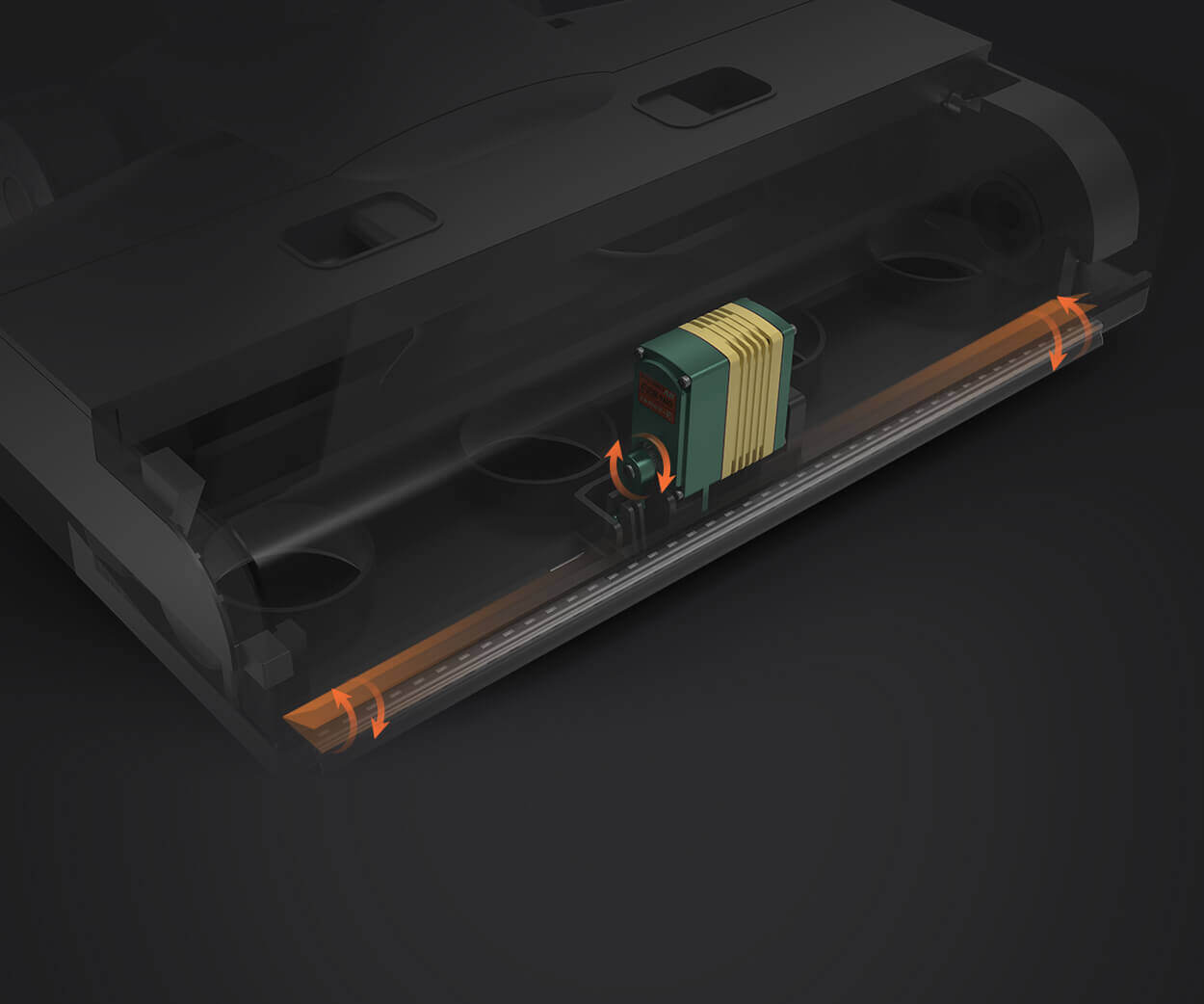
That stiffness often comes from the inside—the software architecture. A single, massive block of code controlling everything, what we call a monolithic system. It works, until it doesn’t. Adding a new feature becomes a puzzle. Fixing one bug might create three others. The whole thing feels like a tangled knot.
So, how do you untangle it? The answer isn’t just rewriting code. It’s reimagining how control flows, almost like redesigning a machine’s nervous system. This is where the shift from a monolithic design to a microservices architecture comes in, especially for motion control systems involvingservomotors and mechanical actuators. It’s not just an IT trend; it’s a practical blueprint for smoother, smarter machines.
From One Big Brain to a Team of Specialists
Think of your current control system as a single, overworked engineer in a room, responsible for every calculation—from path planning and torque control to communication and error handling. They’re brilliant, but overwhelmed. Now, imagine replacing that one person with a coordinated team. One specialist handles only communication protocols. Another focuses solely on real-time trajectory calculation. A third manages safety checks. Each is an expert in their domain, working independently yet seamlessly together.
That’s the microservices approach. Each “service” is a small, self-contained program with one clear job. Theservocontrol service talks to the motor. The command interpreter translates high-level instructions. The monitoring service watches for overheating or overload.
Why go through this trouble? Because life gets easier.
The Quiet Benefits of Letting Systems Breathe
First, there’s agility. Need to update the communication module? You can do it without stopping the entire production line. The other services—like the one controlling the physical movement—keep humming along. It’s like being able to replace a single gear without shutting down the whole machine.
Then, there’s resilience. If one service, say the data logger, has a temporary glitch, it doesn’t mean the robotic arm freezes. The core motion control services can continue, and the logger can recover on its own. The system becomes fault-tolerant, not fragile.
Finally, there’s clarity. When every function lives in its own well-defined space, understanding the system is easier. Troubleshooting is faster. You’re not digging through a million lines of code; you’re looking at a specific, small module. This makes long-term maintenance and scaling not just possible, but straightforward.
The Migration: It’s a Journey, Not a Flip of a Switch
“Sounds great,” you might think, “but how do I get from here to there without causing a meltdown?” This is the critical part—the migration steps. It’s a strategic process, not a reckless overhaul.
A common and safe path is the Strangler Fig pattern. You don’t rip out the old monolith. You gradually build the new microservices around it, letting them take over functions one by one. Start with a peripheral, non-critical function. Maybe the user authentication or the reporting module. Extract its logic, wrap it into a standalone service, and let it run alongside the old system. The monolith still works, but now it delegates that one task to the new service.
Once that’s stable, you pick the next piece. Perhaps the module that calculates simple move commands. You strangle another branch of the old system. Piece by piece, service by service, the old monolith’s responsibilities shrink. Eventually, it’s left doing almost nothing, and you can finally retire it peacefully. This approach minimizes risk—your operation keeps running every single day.
Choosing the Right Partner for the Rewire
This journey requires more than just coding skill. It requires a deep understanding of the physical world the software controls—the pulse of aservo, the feedback loop of an encoder, the inertia of a mechanical load. The architecture must respect real-time demands and physical constraints.
This is where a partner with roots in the motion control domain makes all the difference. They don’t just see services and APIs; they see the resulting motion curve. They understand that splitting a control loop incorrectly can introduce latency that causes vibration. Their experience ensures the new architecture isn’t just clean in theory, but robust and performant in practice.
For companies likekpower, whose legacy is built on precise mechanical and electrical control, this transition is a natural evolution. It’s about applying the same principles of modularity, reliability, and precision from hardware design to the software that drives it. The goal is a system that’s as elegant and dependable as the machinery it commands—fluid, adaptable, and ready for whatever comes next.
The stutter in your machine isn’t just a nuisance; it’s a message. It’s the old way saying it’s time for something new. Untangling the knot starts with a single, deliberate thread.
Established in 2005,kpowerhas been dedicated to a professional compact motion unit manufacturer, headquartered in Dongguan, Guangdong Province, China. Leveraging innovations in modular drive technology,kpowerintegrates high-performance motors, precision reducers, and multi-protocol control systems to provide efficient and customized smart drive system solutions. Kpower has delivered professional drive system solutions to over 500 enterprise clients globally with products covering various fields such as Smart Home Systems, Automatic Electronics, Robotics, Precision Agriculture, Drones, and Industrial Automation.
Update Time:2026-01-19

Contact Kpower's product specialist to recommend suitable motor or gearbox for your product.


