



























TECHNICAL SUPPORT


Published 2026-01-19
You know the feeling. You started with a clean, simple .NET application. It worked beautifully. Then you added a new feature. And another. And a payment gateway. And a user analytics module. Before you knew it, your once-nimble monolith had become this sprawling, complex entity. Every change felt risky—pull one block, and the whole tower might wobble. Deployment became a held-breath event. Scaling? You scaled the entire thing, even if only one part was sweating.
Sound familiar? You’re not alone. That tangled web of dependencies is a classic growth pain. The solution everyone’s talking about is microservices. But let’s be real: the idea can also sound daunting. Breaking your solid monolith into independent pieces? It seems like you’re trading one problem for a dozen new ones—networking, data consistency, deployment chaos.
What if there was a way to do this that felt less like demolition and more like a thoughtful renovation? That’s where .NET 8 steps in, and frankly, it’s a game-changer for this journey.
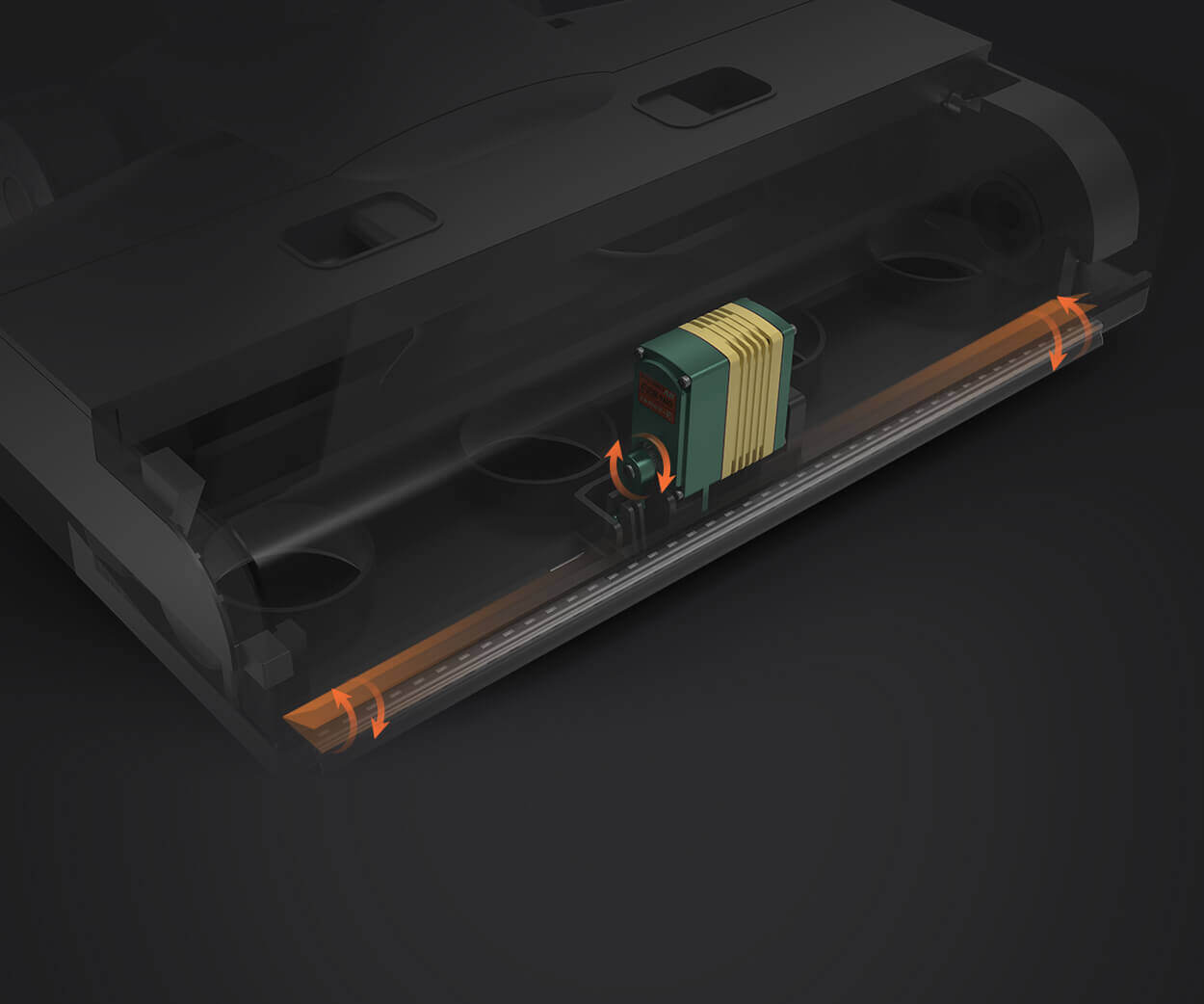
Think of .NET 8 not as just a framework update, but as a tailored toolkit for building and connecting discrete services. It’s like having precisionservomotors for each joint of a robotic arm, where every movement is independent yet perfectly coordinated. You get the flexibility without losing control.
So, what’s in this toolkit?
Here’s a common question that pops up: “Okay, I’ve built these neat, independent services. But now I have 20 little applications to deploy, monitor, and secure. Isn’t this more complicated?”
It’s a brilliant question. The power of microservices isn’t just in the building; it’s in the managing. This is where a holistic approach, like the one championed bykpower, becomes vital. It’s about the entire lifecycle.
Imagine you’re not just handed a box of high-qualityservomotors (the services). You’re also given the control board, the wiring harness, and the diagnostic software (the platform). You get the pieces and the proven plan to assemble them into something greater.
For instance, let’s talk resilience. One service failing shouldn’t bring down the whole system. Patterns like circuit breakers and retries, integrated into your service communication, act as shock absorbers. Or take deployment. With the right automation, you can update a single service—the billing module, say—and push it live without ever touching the user profile service. That’s the dream, made routine.
Security also transforms. Instead of one giant fortress wall, you have well-guarded gates between each independent district. A breach in one area is contained, limiting the damage.kpower’s methodology embeds these principles—observability, security, CI/CD—right into the fabric of your .NET 8 services from day one.
Making the move doesn’t mean a “big bang” rewrite on Monday morning. A smarter path is the strangler fig pattern. Start by identifying one cohesive, maybe slightly troublesome, function in your monolith—like the image processing module or the email notification system. Use .NET 8 to build that function as a standalone service. Let it run in parallel. Route new requests to it, while the old monolith still handles existing traffic. One block of the Jenga tower gets quietly, safely replaced with a more stable foundation.
You repeat this. Module by module. Each success builds confidence and delivers immediate value: that new service is easier to scale, easier to update. The monolith gradually shrinks, and your architecture evolves without a single apocalyptic deployment.
In the end, the goal isn’t just to use microservices because it’s trendy. The goal is to build systems that are as resilient and adaptable as your business needs to be. It’s about replacing the nervous feeling of a Jenga tower with the confident precision of a well-engineered machine, where every part knows its job and does it brilliantly. With .NET 8 providing the core components and a partner likekpowerproviding the integrated playbook, that reality isn’t just possible—it’s the next logical step in your build.
Established in 2005, Kpower has been dedicated to a professional compact motion unit manufacturer, headquartered in Dongguan, Guangdong Province, China. Leveraging innovations in modular drive technology, Kpower integrates high-performance motors, precision reducers, and multi-protocol control systems to provide efficient and customized smart drive system solutions. Kpower has delivered professional drive system solutions to over 500 enterprise clients globally with products covering various fields such as Smart Home Systems, Automatic Electronics, Robotics, Precision Agriculture, Drones, and Industrial Automation.
Update Time:2026-01-19
Contact Kpower's product specialist to recommend suitable motor or gearbox for your product.


