



























TECHNICAL SUPPORT


Published 2026-01-19
When Your Machines Stop Talking: The Silent Workshop
Imagine this. You’ve got a sleek assembly line. A robotic arm, precise as a surgeon, waits for a component. The conveyor belt, however, has gone mute. No signal, no data, just a confused halt. The arm stays frozen. Production stops. It’s not a mechanical failure—the gears are fine. The problem is deeper, quieter. The machines have simply lost the ability to speak to each other.
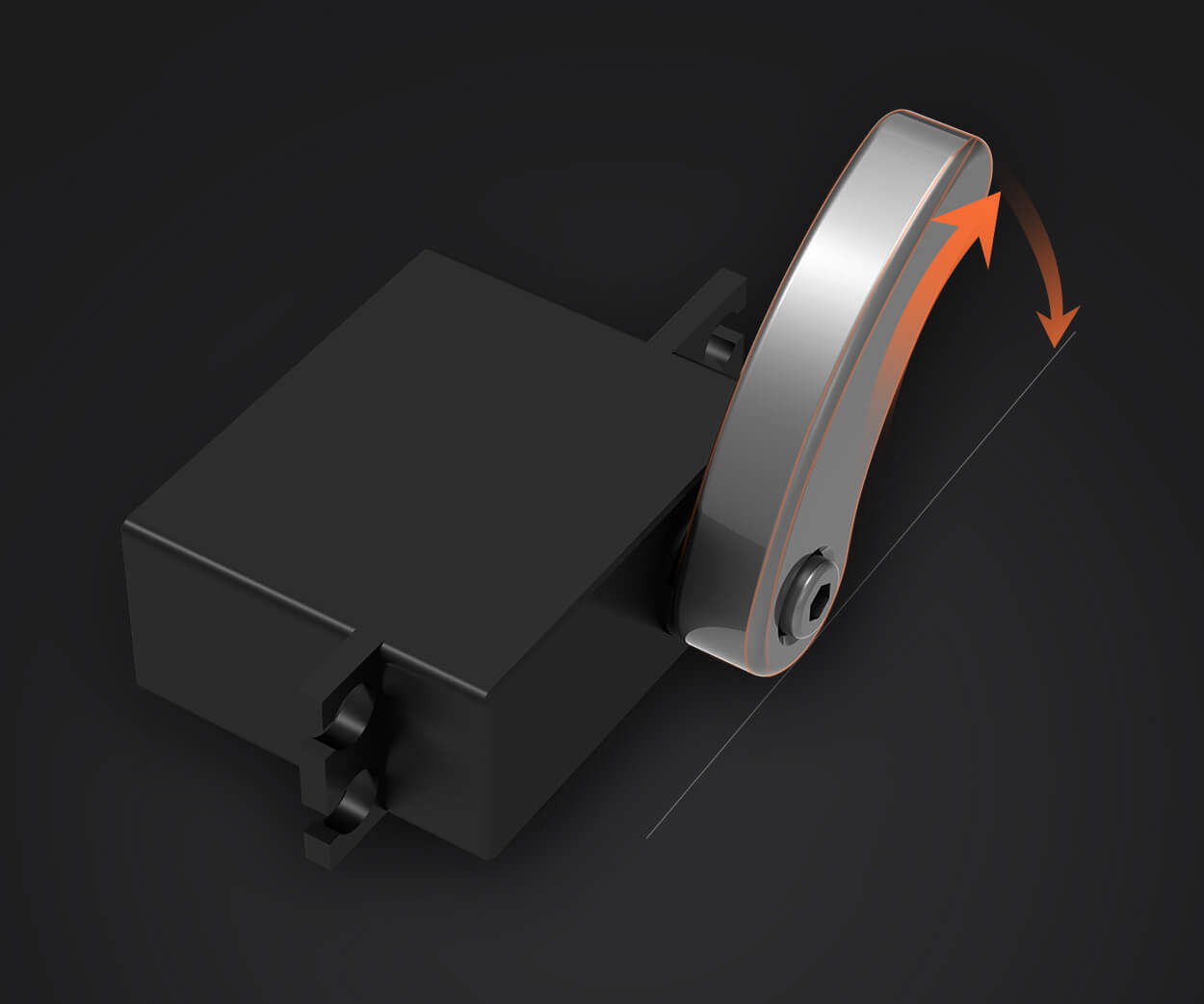
This is the hidden snag in modern automation. You can have the most advancedservomotors, the most durable actuators, but if the communication between them is a tangled mess of incompatible protocols and delayed signals, your entire system is fragile. It’s like having a team of experts who all speak different languages, standing in the same room, unable to coordinate the simplest task.
So, how do we get them talking? Really talking? Not just shouting basic commands, but having a continuous, fluent conversation?
The Microservice Whisperer: More Than Just Wires
Let’s ditch the overly technical jargon. Think of each function in your machine—the motion control, the temperature sensing, the safety check—as a dedicated specialist. A microservice architecture makes each specialist an independent unit. The “how to communicate microservices each other” product isn't about installing more cables; it’s about giving these specialists a universal, intuitive language and a reliable room to talk in.
Why does this matter? Because rigidity breaks. A monolithic control system is like a single, overburdened commander. If one part fails, or if you need to upgrade a single function, the entire system must pause, must be re-taught. It’s costly and slow. But when each service is autonomous, communicating clearly with others, changes become localized. You can swap out a “vision specialist” without telling the “gripping specialist” to relearn its whole job. The conversation simply adapts.
What Does a Good Conversation Look Like?
It’s not about speed alone. It’s about clarity, reliability, and context. Here’s what we often hear:
“Will new additions understand the existing protocol?” Absolutely. A robust framework is designed for newcomers. It’s like a well-organized workshop—a new tool (or service) knows where to plug in and how to introduce itself without disrupting the ongoing work.
“What about delays? Real-time means real-time.” Precisely. This is where generic solutions stumble. Motion control data, especially from high-precisionservodrives, can’t afford to be stuck in a messaging queue. It needs a priority lane. Effective inter-service communication respects these urgencies, ensuring critical whispers are heard instantly, while less time-sensitive logs are delivered reliably in the background.
“How do we manage this without creating chaos?” Think of it as establishing etiquette, not rigid rules. There’s a central registry—a sort of directory—where each service announces what it does and how it can be reached. Other services find it, and they talk directly. No single point bottlenecks the conversation. If one specialist steps out, the others can continue, perhaps in a degraded mode, but they don’t crash entirely. The system gains resilience.
kpower’s Take: Building the Nervous System
Atkpower, we see this daily. A client might have a stunningkpower servomotor for flawless circular interpolation, but its potential is locked if the vibration analysis from another module arrives too late. Our approach isn’t to sell you another layer of complexity. It’s to provide the foundational nervous system.
We focus on lightweight, industry-tested messaging brokers that act like a central nervous system, routing signals efficiently. We implement service discovery so that components automatically find their counterparts. Security is baked in—these conversations are for trusted machines only. And most crucially, we design data formats that are lean and mean, perfect for the high-frequency, low-latency chatter between mechanical components.
The result isn’t just a “connected” system. It’s a collaborative one. The servo doesn’t just receive a position command; it can broadcast its torque load and temperature in real-time. A cooling unit can then react proactively, not after an alarm. It’s a symphony, not a series of solo acts.
From Silent to Synchronized
The goal is effortless synergy. You stop worrying about communication protocols and start focusing on performance, uptime, and innovation. Upgrading a sensor becomes a simple swap, not a week-long reprogramming marathon. Scaling up means adding more conversationalists to the network, not rebuilding the entire forum.
Your workshop should hum with productive dialogue. Machines sharing insights, anticipating needs, and working as a cohesive whole. That’s the true power unlocked when microservices communicate effectively. It turns a collection of parts into an intelligent organism.
It begins with giving them the right voice. The rest is just listening.
Established in 2005, Kpower has been dedicated to a professional compact motion unit manufacturer, headquartered in Dongguan, Guangdong Province, China. Leveraging innovations in modular drive technology, Kpower integrates high-performance motors, precision reducers, and multi-protocol control systems to provide efficient and customized smart drive system solutions. Kpower has delivered professional drive system solutions to over 500 enterprise clients globally with products covering various fields such as Smart Home Systems, Automatic Electronics, Robotics, Precision Agriculture, Drones, and Industrial Automation.
Update Time:2026-01-19
Contact Kpower's product specialist to recommend suitable motor or gearbox for your product.


