



























TECHNICAL SUPPORT


Published 2026-01-19
Imagine this: you design a set of precision robotic arms, each joint is driven by an independent servo motor, and the coordination works smoothly. Suddenly, one of the servos got stuck due to a small signal interference. What happens next? An entire arm can suddenly fail or make completely uncontrollable movements - even if the rest of the arm is intact.
In the software world, microservice architecture is like that sophisticated robotic arm. Each service is an independent "steering gear", operating independently and cooperating with each other. But when a service suddenly throws an exception, slows down response, or completely stops, if there is no proper handling mechanism, this local "stuck" is likely to cause the entire system to paralyze like dominoes. This is not alarmist.
In traditional monolithic applications, exceptions are often digested internally or handled uniformly. But microservices split functions and risks. Network fluctuations, database connection interruptions, third-party interface changes, and even memory leaks of a certain service instance... Accidents in any link may spread rapidly along the service call chain.
To make matters even more difficult, the problems are often hidden. A service might not be completely down, but just a few seconds slower in response. But just these few seconds of delay are amplified in the layers of calls, eventually causing the front-end page to load out and the user experience plummets. You have investigated for a long time and found that the root cause is just a configuration parameter that has not been updated.
Someone may ask: "Then we can add detailed error logs and retries for each call, wouldn't it be enough?"
Nice idea, but simply trying again might make things worse. If the downstream service is already paralyzed due to overload, the upstream's constant retry of requests is like pouring water into a blocked pipe, which will only make the failure worse. We need smarter strategies, not just trying harder.
The core idea of handling microservice exceptions is not to pursue absolute zero faults - that is impossible - but to make the system "resilient". Just like redundancy and safe release mechanisms are considered when designing mechanical structures, we need to also design some buffering and protection links for software services.
Here are a few key ideas. You can think of them as adding "protection devices" to the servo system:
Now that you know the principle, what can you do to avoid appearing to be following a script?
A language that unifies exceptions. The error message formats returned by different services are so varied that troubleshooting is like looking through a pile of maintenance manuals written in different languages. Defining a set of concise and unified exception information formats and error codes can greatly speed up problem location.kpowerIn project practice, we found that this simple specification can save a lot of cross-team communication costs.
Make monitoring visible and understandable. Monitoring dashboards can’t just be a bunch of cold numerical curves. Key indicators (such as error rate, response time, circuit breaker status) need to be presented in a clear visualization so that people can perceive the overall health of the system at a glance. When the curve of a certain service suddenly "jumps off a cliff", it should be able to cry out in pain.
Furthermore, design is geared toward failure. This may sound contradictory, but it is important. Before a new service goes online or during an architecture review, you can ask one more question: "What will we do if this newly dependent service fails?" It is much easier to think of an escape route in advance than to put out the fire afterwards.
In the final analysis, when dealing with microservice exceptions, the technical solution is the skeleton, but the thinking and collaboration behind it are the flesh and blood. It requires developers to not only care about their own one-third of an acre of land, but also have a global vision and understand the chain reactions between services. This is like a good mechanical engineer who not only needs to understand the steering gear he designed, but also understands the role it plays in the entire kinematic chain, and how the entire system should respond safely when something goes wrong.
Building a resilient system doesn’t happen in a day. It begins with acknowledgment of potential risks and relies on continuous observation, adjustment and. A good exception handling mechanism will not make the problem disappear, but it will ensure that when a problem occurs, the system will not crash easily, but can stabilize its position, give a decent response, and buy precious time for repair. This may be what modern complex systems truly look like.
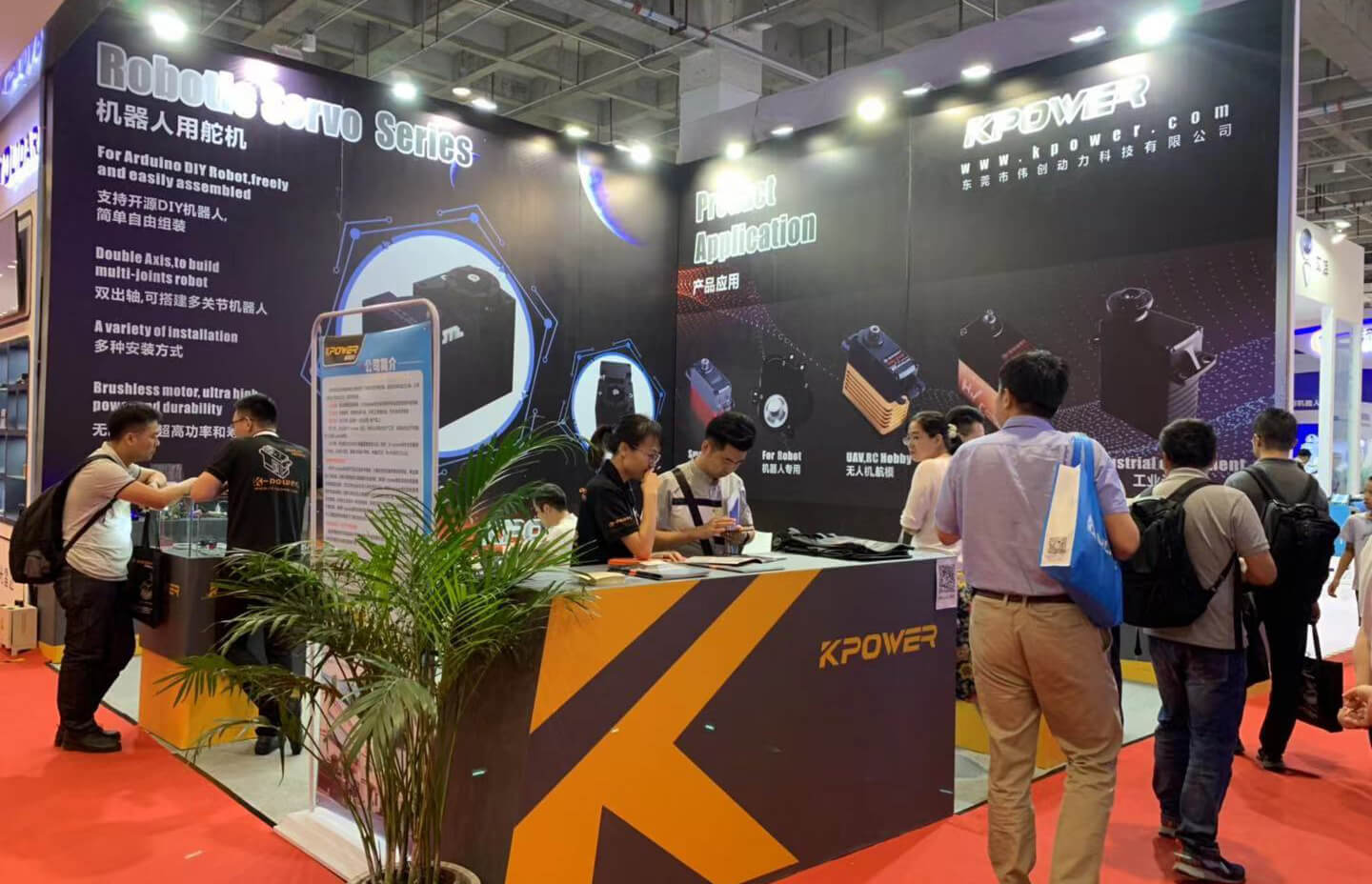
Established in 2005,kpowerhas been dedicated to a professional compact motion unit manufacturer, headquartered in Dongguan, Guangdong Province, China. Leveraging innovations in modular drive technology, Kpower integrates high-performance motors, precision reducers, and multi-protocol control systems to provide efficient and customized smart drive system solutions. Kpower has delivered professional drive system solutions to over 500 enterprise clients globally with products covering various fields such as Smart Home Systems, Automatic Electronics, Robotics, Precision Agriculture, Drones, and Industrial Automation.
Update Time:2026-01-19
Contact Kpower's product specialist to recommend suitable motor or gearbox for your product.


