



























TECHNICAL SUPPORT


Published 2026-01-19
Have you ever had that moment? Looking at my carefully designed microservice architecture, I suddenly felt that it didn't look like a flexible system, but more like a disassembled remote control car - every part could move, but it just couldn't run together. We often hear teams complain: "The services have been dismantled, but why do I always feel like something is missing?"
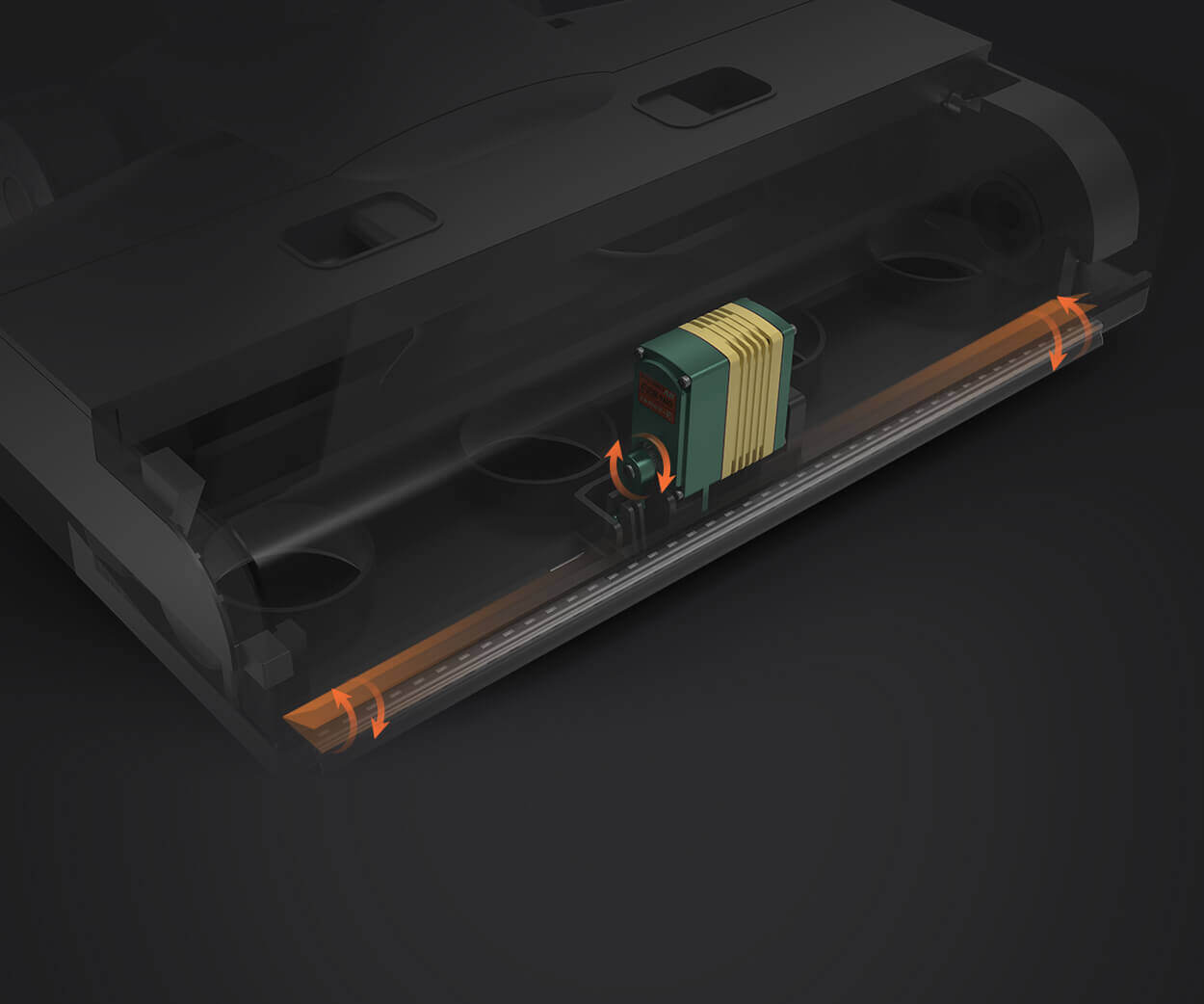
Don’t rush to find tools or frameworks yet. Let’s talk about the core elements that make up microservices—not the classes and methods at the code level, but the key parts that make the entire architecture truly come alive.
Think about the last time you took apart an old motor. There are a lot of parts in front of you, but what really determines its performance are just a few core components: the coil that provides power, the gears that transmit motion, and the circuit board that controls the rhythm. The same goes for microservices, which look complex on the outside but rely on several things in their core.
Many people think that microservices are just "cutting big things into small pieces." But how to cut is the knowledge. It should be divided around business capabilities, not the technical layer. For example, user management should be self-contained, rather than extracting "database operations" into a service. Once the boundaries are clear, each service can evolve at its own pace.
How do we talk to each other? This determines the speed of the entire system's neural response. Some people like to use synchronous HTTP API, which they think is straightforward; some people prefer asynchronous message queues, saying that it is completely decoupled. In fact, which one to choose depends on the scene. The order payment may need to be confirmed immediately, so synchronization is suitable; it doesn't matter if the delivery notification is a few seconds late, it is easier to go through the message queue.
This is where things tend to go wrong the most. There are always people who want all services to share a database and find it easier to manage. But it’s like throwing everyone’s tools into one tool box—it’s convenient to use, but you don’t know who has touched your wrench. Each microservice should have its own independent data storage and only expose necessary information through interfaces. Data ownership is clear and modifications are hassle-free.
Such as service discovery. A new service is online, how do you let other brothers know where it is? You can't configure the address manually every time. Another example is configuration management. There are dozens of services, each with different settings. Do you need to change them one by one? These supporting components are like screws and washers in machinery. They look small, but without them the entire structure would be loose.
At this time, you may be thinking: "I understand the principle, but how to do it specifically?" Let's talk about a few points to pay attention to during actual assembly.
You have to choose the right communication protocol. Like choosing a control signal for the servo, PWM or serial command? Different scenes require different rhythms. Internal service calls may be faster with gRPC, while REST is more versatile for external APIs. There is no absolute good or bad, only suitable or not.
Data consistency is an unavoidable topic. The data of microservices is scattered everywhere. How to ensure that they have the same view on the same thing? For example, if the deduction is successful but the inventory is not reduced, this is a mess. Some are event-driven to synchronize, and some use Saga mode to handle long processes. The key is to accept "eventual consistency" rather than forcing synchronization at all times - just like a mechanical transmission that allows a small delay so that the system can flow smoothly.
Don’t forget to design for fault tolerance. Any service may fail, so why not let it bring down the entire system? Timeout settings, circuit breaker mechanisms, service degradation, these technical-sounding words are actually installing "fuses" on the system. When a component overheats, cut off its power first to prevent the fire from spreading.
At this point, you may have discovered that these components of microservices - clear boundaries, efficient communication, independent data, complete infrastructure - they require a coordinated design thinking. Rather than simply stacking technology stacks, each part should remain independent while still collaborating harmoniously.
Just like assembling a precision mechanical device, you need each gear to be machined accurately and the timing of their engagement to be just right. The practice of microservice architecture is essentially to find the balance point between independence and collaboration.
When you look at your microservice project next time, you might as well change your perspective: Does it have those real core components? Are there any organic connections between these components? Sometimes the answer lies not in adding more tools, but in re-understanding the foundational elements that already exist.
After all, good architecture is not designed, but grown – gradually taking on a life of its own through natural interactions within clear boundaries. There may not be a standard answer to this process, but there are traces to follow. And finding the track that suits your project is often half the battle.
Established in 2005,kpowerhas been dedicated to a professional compact motion unit manufacturer, headquartered in Dongguan, Guangdong Province, China. Leveraging innovations in modular drive technology,kpowerintegrates high-performance motors, precision reducers, and multi-protocol control systems to provide efficient and customized smart drive system solutions.kpowerhas delivered professional drive system solutions to over 500 enterprise clients globally with products covering various fields such as Smart Home Systems, Automatic Electronics, Robotics, Precision Agriculture, Drones, and Industrial Automation.
Update Time:2026-01-19

Contact Kpower's product specialist to recommend suitable motor or gearbox for your product.


