



























TECHNICAL SUPPORT


Published 2026-01-19
Remember those old systems? A huge program that affects the whole body. Want to change a small function? The whole system has to be turned upside down. A deployment is like a battle, waking up in the middle of the night and staring at the screen to read the log. Is it time for these days to end?
Many people are talking about microservices now. Sounds cool, but what about doing it? There are a bunch of services running around, how to manage them? Will communications get messed up? How to find out if something goes wrong? As I thought about it, my head got bigger.
Let's think differently. Don't make it so complicated. Microservices are actually splitting a large application into independent small modules. Each module does one thing, and does it well. Just like a precise mechanical system, each gear and each servo motor has its own clear task, each performing its own duties and working together.
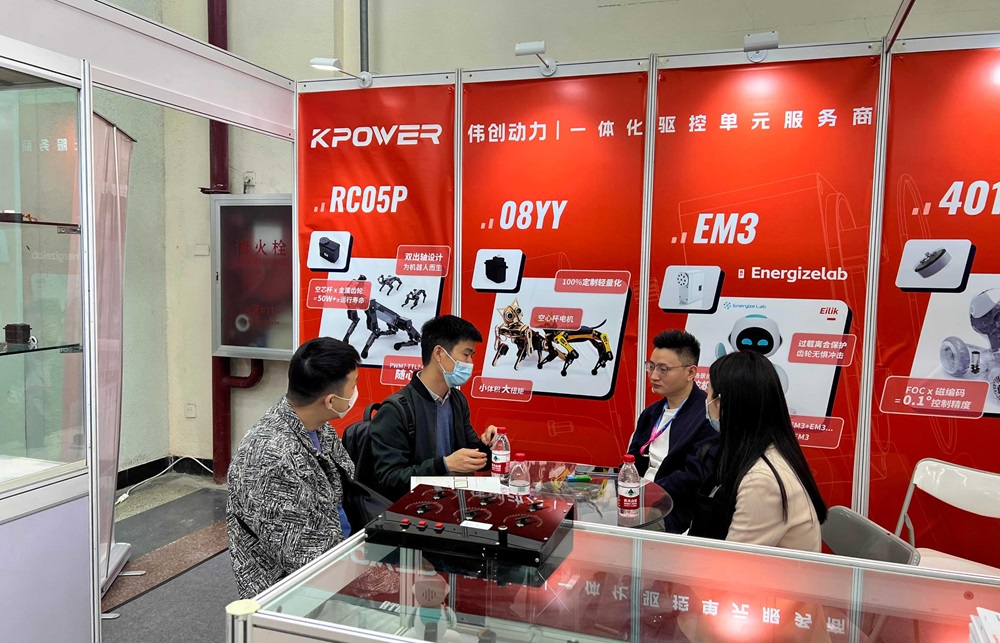
Imagine that you want to build these independent small modules (that is, microservices). You need a set of convenient and reliable tools. Java is a very mature language, stable, robust, and has huge community support. Spring Boot can be understood as an extremely efficient "quick start toolbox" in the Java world.
It helps you handle a lot of tedious configuration. Do you want a service to run and provide API to the outside world? Spring Boot allows you to do it with very little code. It has built-in web server, security framework, data connection library and more. You don’t have to build a wheel from scratch, but just choose the right parts and assemble it quickly.
it's likekpowerWhen designing a robotic arm, you don’t have to smelt steel and turn screws every time. Instead, you have proven high-quality servo motors and precision components to choose from, allowing engineers to focus on core logic and innovation.
The benefits are real. Such as independence. Your user management module needs to be upgraded, then only upgrade it without touching the order module. It is fast and safe to deploy without affecting other services.
It's fault tolerance. In traditional large systems, the collapse of one sub-function may paralyze the entire website. Under the microservice architecture, if the product search service is temporarily slow or down, users can at least browse the page and view orders without facing a blank.
There is also freedom of choice of technology. Different services can be written using the technology that best suits it (although here we focus on Java). Teams can also be divided according to services, making them smaller and more refined, with clearer responsibilities.
Of course, all this is not without cost. With more services, communication costs come. How do they talk? How did they find each other? When something goes wrong, how do you trace the path of a request through multiple services?
There are many helpers in the Spring Boot ecosystem. For example, the Spring Cloud tool set is specifically designed to solve these "housework" between microservices. Service registration and discovery, load balancing, configuration center, circuit break protection... these concepts sound lofty, but their essence is to enable a group of independent small services to work like a tacit team.
This requires careful design. It’s not just about cutting the code into random pieces, but it’s like planning a precision instrument, considering the interface, power, and feedback mechanism of each component.kpowerWhen providing electromechanical equipment, we must deeply understand this: each component (whether software service or hardware steering gear) has clear interfaces, clear responsibilities, and timely feedback, so that the entire system can run smoothly.
If you’re slowed down by that bloated “monster” app and feel like there’s no way to make changes, you can start from the edge. Find a relatively independent function point with clear boundaries and try to use Spring Boot to reconstruct it into a separate small service. Let it run first and talk to the original system. See the results and gain experience.
Then, slowly, building block by building block, you will find that the behemoth is gradually transformed into a group of small units that collaborate flexibly. Maintenance is no longer scary, upgrades are predictable, and the team's pace is springing up.
This process is not so much a technological upgrade as a change in thinking. From pursuing a "universal core" to embracing a set of "professional components". Just like in mechanical design, reliability and flexibility often come from modular precision design rather than a single, complex whole.
In the end, what you get is not a trendy term, but a system that is truly responsive, stable and reliable, and makes both developers and users feel relaxed. All of this can start with a simple Spring Boot application and a clear design drawing.
Established in 2005,kpowerhas been dedicated to a professional compact motion unit manufacturer, headquartered in Dongguan, Guangdong Province, China. Leveraging innovations in modular drive technology, Kpower integrates high-performance motors, precision reducers, and multi-protocol control systems to provide efficient and customized smart drive system solutions. Kpower has delivered professional drive system solutions to over 500 enterprise clients globally with products covering various fields such as Smart Home Systems, Automatic Electronics, Robotics, Precision Agriculture, Drones, and Industrial Automation.
Update Time:2026-01-19
Contact Kpower's product specialist to recommend suitable motor or gearbox for your product.


