



























TECHNICAL SUPPORT


Published 2026-01-19
When Your Project Hums, Whirs, and Then… Stops.
You know the feeling. You’ve sketched the design, sourced the parts, and the prototype is coming together. Then you plug it in. Aservojerks instead of gliding. A motor stutters under a load it should handle easily. That smooth, precise motion you envisioned? It’s now a clunky, unreliable mess. The problem often isn’t your brilliant design—it’s the unseen heartbeat inside: the motion controller.
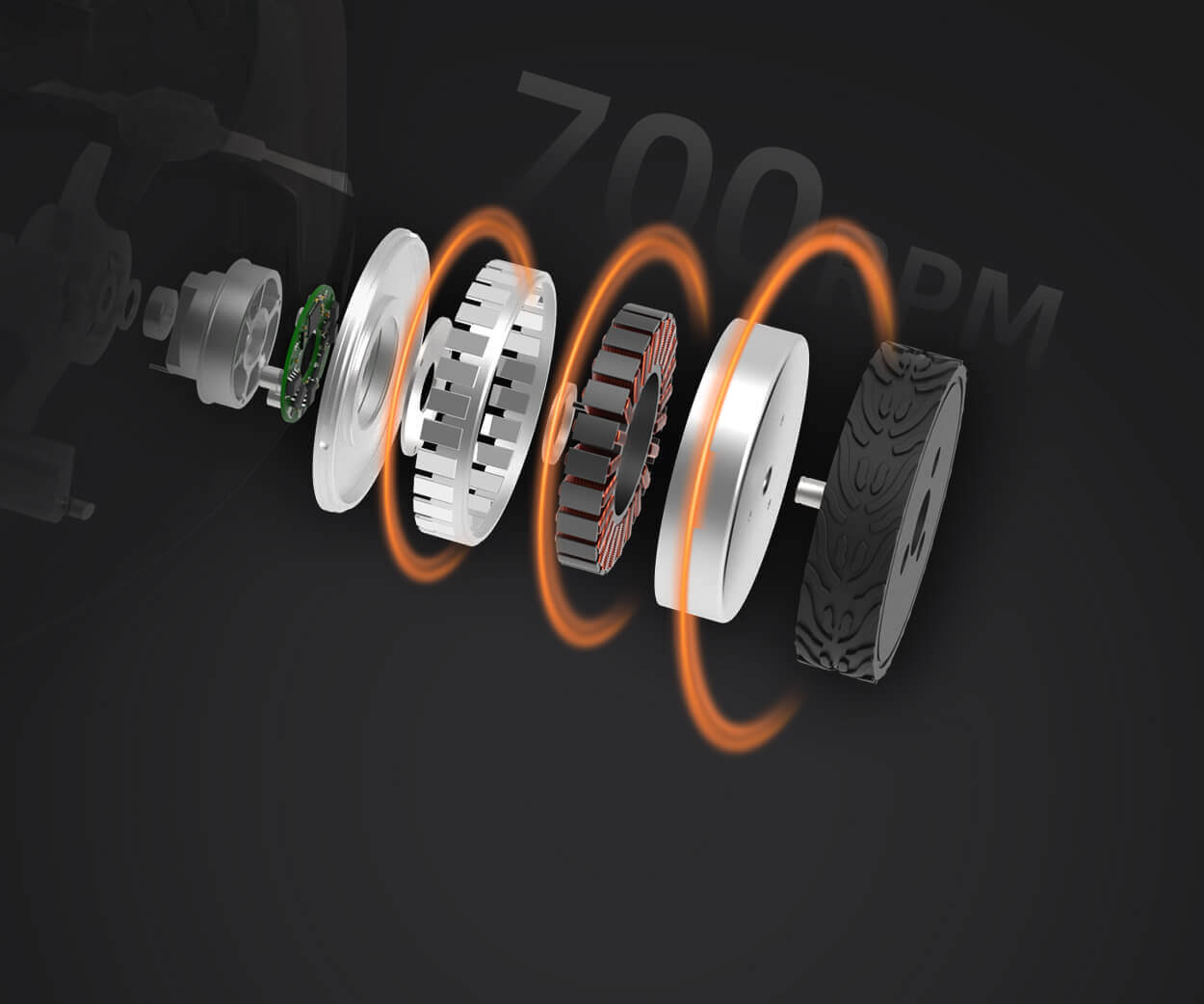
Most think a motor orservoalone does the job. But without the right “conductor,” that hardware is just noise. This is where the real magic—and the real headaches—begin.
So, What’s This “Microservice” for Motion All About?
Imagine you’re building an automated camera rig. It needs to pan smoothly, tilt without a hitch, and respond instantly to remote commands. You could wire up a generic controller, but then you’re coding every tiny movement from scratch. It’s like giving a musician an instrument but no sheet music.
The microservice approach is different. Think of it as a pre-configured, dedicated toolkit for motion. Instead of building the “brain” from zero, you integrate a compact, smart module that already speaks the language of precise movement. It handles the complex algorithms and real-time adjustments in the background. Your job? Focus on the bigger creative picture.
Why Go This Route? Let’s Get Practical.
“Doesn’t that just add complexity?” Fair question. Sometimes, simpler is better. But when your project depends on repeatable, accurate motion, guesswork costs more.
Here’s the thing: a dedicated motion microservice simplifies the hard part. It’s like having a skilled co-pilot. You decide the destination—“rotate 90 degrees at this speed, with this torque”—and it handles the flight path, compensating for load changes or voltage dips automatically. The advantage is consistency. Your device behaves the same on the tenth run as on the first, whether it’s positioning a sensor or articulating a robotic arm.
There’s a trade-off, of course. It’s not a universal fix. For a basic blinking LED, it’s overkill. But when motion is central to your product’s function, trying to reinvent this wheel often means months debugging jittery performance. The microservice path turns “Will it work?” into “It just works.”
What Should You Look For? Not Just Spec Sheets.
Alright, you’re considering it. Don’t just compare voltage ranges. Dig deeper.
Can it adapt on the fly? If your mechanical load changes mid-cycle, can the controller adjust its output without stalling? True reliability is about dynamic response, not just static numbers.
How easy is it to “talk” to? You want a clear, straightforward way to send commands—whether via PWM, serial, or a simple digital interface. If integrating it feels like deciphering ancient scrolls, it’s slowing you down.
Is it rugged? Motion means heat, vibration, electrical noise. The module should be built for the environment, not just the lab bench.
kpower’s Take: Making Motion Feel Effortless.
This is where we’ve focused our energy. The goal isn’t to sell you the most complex chip. It’s to provide the piece that makes the rest of your build fall seamlessly into place. Our microservice modules are designed to be that quiet, competent partner. They handle the intricate calculus of motion control so you can concentrate on innovation and assembly.
We’ve seen them become the unseen hero in projects from automated art installations to precise agricultural tools. The result is always the same: a smoother performance and a developer who can sleep the night before a demo.
Wrapping It Up (Without Saying “In Conclusion”).
Choosing components is a balance. For core motion tasks, a specialized microservice can be the difference between a prototype that impresses and one that frustrates. It solves the hidden problem of execution, letting your mechanical creativity shine through.
Remember, the best technology feels invisible. It just does its job, reliably and quietly, letting your project take center stage. Sometimes, moving forward is all about choosing the right driver for the journey.
Established in 2005,kpowerhas been dedicated to a professional compact motion unit manufacturer, headquartered in Dongguan, Guangdong Province, China. Leveraging innovations in modular drive technology,kpowerintegrates high-performance motors, precision reducers, and multi-protocol control systems to provide efficient and customized smart drive system solutions. Kpower has delivered professional drive system solutions to over 500 enterprise clients globally with products covering various fields such as Smart Home Systems, Automatic Electronics, Robotics, Precision Agriculture, Drones, and Industrial Automation.
Update Time:2026-01-19
Contact Kpower's product specialist to recommend suitable motor or gearbox for your product.


