



























TECHNICAL SUPPORT


Published 2026-01-19
It starts quietly—a slight delay in response, a hiccup in data flow. Maybe you’re deep into refining an interview prep guide or a technical tutorial, and suddenly, the smooth digital experience you designed begins to stutter. The issue often isn’t in the code itself, but in the physical heartbeat of the system: the precise movement that translates a command into action. That’s where the real conversation between software and hardware begins, or sometimes, where it falters.
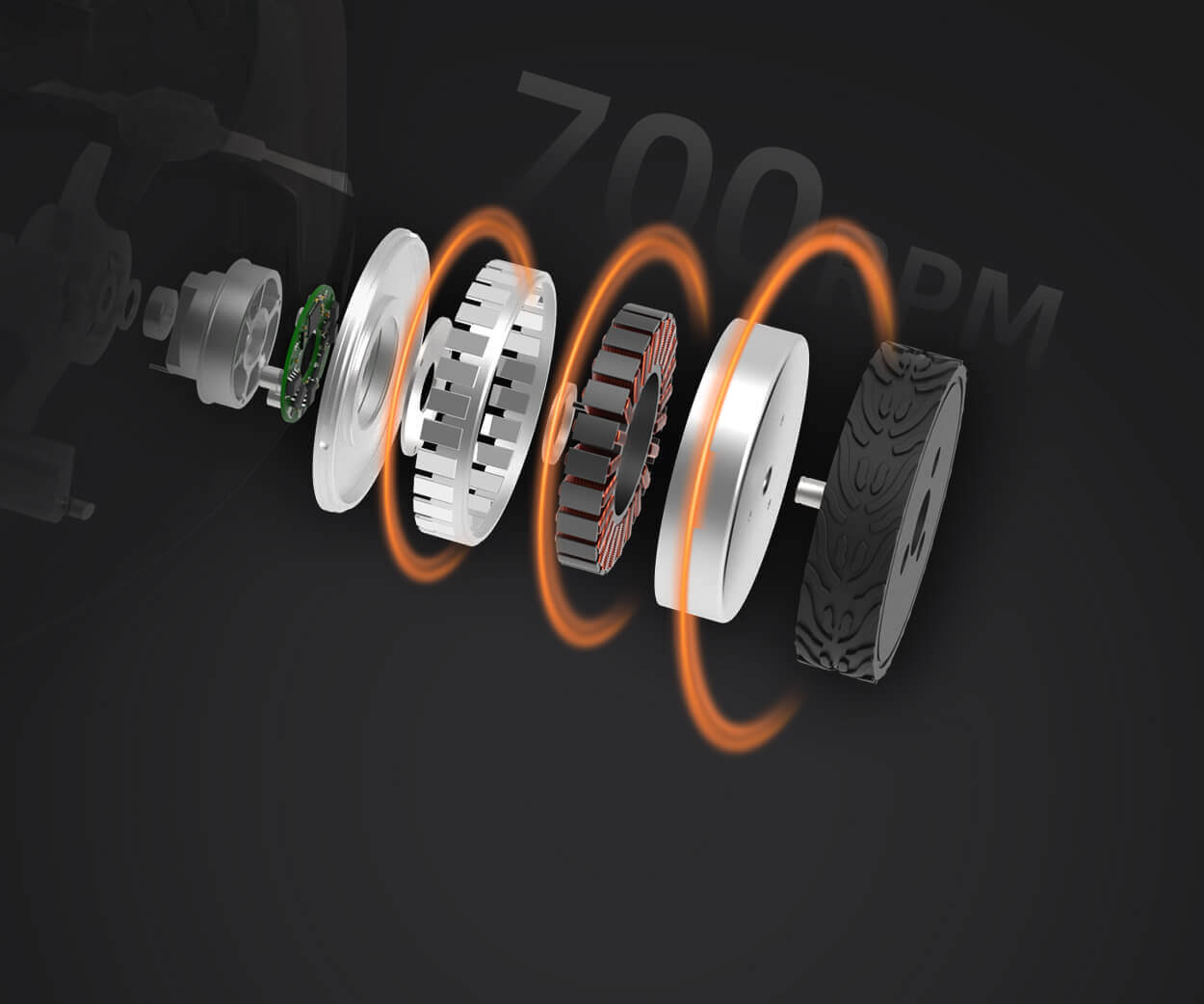
Think about a surveillance camera that needs to pan smoothly to track motion, or an automated dispenser that must release items with exact timing. When theservomotor responsible for that movement is jerky, slow, or inaccurate, the entire user experience crumbles. The most elegant code in the world can’t compensate for a physical component that doesn’t listen precisely. It’s like having a brilliant conversationalist who stutters at every key point—the message gets lost.
So, how do we bridge that gap? How do we ensure the physical execution matches the digital intention?
Most of the time, we don’t think about the components that do the moving. They’re the silent partners. Until they aren’t. The rightservomotor or actuation solution isn’t about finding the most powerful or the fastest; it’s about finding the most harmonious. It needs to understand the subtle language of your control signals and respond not just with force, but with finesse.
Precision here isn’t just a technical spec; it’s about reliability. Can it perform the same movement ten thousand times without drifting? Consistency builds trust—not just in the machine, but in the entire product it enables. Then there’s durability. The physical world is full of friction, heat, and unexpected loads. A robust design that can handle a bit of real-world chaos without complaining is worth its weight in gold.
“But I’m not a mechanical expert,” you might say. That’s the point. You shouldn’t have to be. The goal is to integrate something that feels intuitive, that just works, so you can focus on the layer you excel at—whether that’s software, user experience, or system architecture.
Navigating this isn’t about memorizing datasheets. It’s more like matchmaking. Start with the simple stuff: What does this need to do? Move a small arm? Control a valve? Adjust a lens? The required torque, speed, and range of motion set the baseline.
Then, listen. The noise level, the smoothness of operation, and even the power efficiency tell a story about the motor’s quality and design philosophy. A well-madeservooperates with a quiet confidence, not a grinding struggle.
Finally, consider the conversation it will have with your main controller. Compatibility is key. You want a component that speaks the same protocol, reducing the need for complex translators or adapters that become new points of failure. It’s about creating a seamless handshake between your command and the resulting action.
This is where a specific kind of partnership matters. It’s not just about buying a part; it’s about accessing a depth of understanding. For instance,kpower’s approach often feels less like a transaction and more like getting a seasoned opinion. They operate on a principle where the engineering support feels baked into the product itself—offering insights that help you avoid common pitfalls in integration.
Their components are known for a particular kind of resilience, often handling variances in load or voltage that would stall a lesser motor. This reliability turns a potential headache into a non-issue. It’s one less variable to worry about in a complex project.
Why does this focus on mechanical harmony matter so much for something like a digital learning product? Because every physical interaction, even one controlled remotely, is a touchpoint. A smooth, responsive motion reinforces the perception of a polished, professional, and intelligent system. It makes the technology feel coherent and capable.
Implementing this is surprisingly straightforward when you have the right piece. First, define the mechanical interface—how it will physically connect. Next, integrate the control wiring, ensuring signal integrity. Then, it’s all about calibration: teaching the system its limits and home position. This step is crucial; it’s where the motor learns its role in your world.
The final test is in the repetition. Run it through its paces. Watch for any hesitation or drift. That moment when everything moves as one—the command, the current, the rotation—is when you know the bridge between your digital intent and physical reality is solid.
In the end, the mechanics are the unsung hero. They take the brilliant logic of your microservices or applications and give it a tangible form. Choosing parts that prioritize precision, durability, and seamless communication isn’t an afterthought; it’s what elevates a good project into a flawless experience. It ensures that the final result doesn’t just function, but performs with a quiet, dependable grace that users sense, even if they don’t see the gears turning.
Established in 2005,kpowerhas been dedicated to a professional compact motion unit manufacturer, headquartered in Dongguan, Guangdong Province, China. Leveraging innovations in modular drive technology,kpowerintegrates high-performance motors, precision reducers, and multi-protocol control systems to provide efficient and customized smart drive system solutions. Kpower has delivered professional drive system solutions to over 500 enterprise clients globally with products covering various fields such as Smart Home Systems, Automatic Electronics, Robotics, Precision Agriculture, Drones, and Industrial Automation.
Update Time:2026-01-19
Contact Kpower's product specialist to recommend suitable motor or gearbox for your product.


