



























TECHNICAL SUPPORT


Published 2026-01-19
Imagine this scenario: You have a cool microservice project idea in your hand. It is exquisite and smart, like the pulse of the city. But when you try to add "hands and feet" to it - such as making a robotic arm move, or making a device rotate to a specific angle precisely, things start to get a little... tricky. You find that those servo motors and servos are not always obedient. Signal mismatch? Delayed response? Or just go on strike? It feels like conducting a symphony, but some of the musicians can't read your score.
As you may already know, servo motors are good at precise position control, and servos are common in many small and medium-sized institutions. But connecting them to modern digital systems with microservices as the core is not as simple as plugging them in. There is a subtle gap: on one side are digital instructions that flow quickly, and on the other side are physical movements that need to be executed accurately.
Problems are often hidden in these places: how to send control signals (such as PWM) stably and timely by microservices; how to prevent power management from interfering with sensitive electronic components; and, when multiple actions need to be coordinated, how to friendly handshake between the software-level command queue and the real-time performance of the hardware. This is not just technical docking, but more like allowing two people who speak different dialects to collaborate efficiently.
Let’s talk about methods. One idea is to let microservices act as a "wise translator". It does not drive the motor directly (that is usually not its strong point), but passes instructions through a reliable middle layer - such as a specialized hardware control module. Your microservice only needs to tell this module: "Rotate the No. 3 servo to the 90-degree position at a speed of 30 degrees per second." The remaining specific pulse generation and power amplification are left to more professional partners.
The benefits of this go both ways. For your software architecture, core services remain lightweight and clear, without being burdened with specific hardware protocols. On the hardware side, it gets a stable, predictable source of commands, reducing the chance of being "blinded" by signal jitter or format errors. It's like establishing an exclusive mechanical execution department for your project. With clear responsibilities, efficiency will naturally increase.
When you start looking for the right servo motor or steering gear to match this architecture, there are some details worth paying more attention to. Precision and torque are naturally important, but don’t forget to ask:
Sometimes, a motor with seemingly inconspicuous parameters can actually make the entire project run more smoothly because of its stability and easy integration. This is not a compromise, but a pragmatic choice based on the overall situation.
Once the hardware is successfully plugged in, things get interesting. Your microservices can start choreographing more complex "dance moves." Maybe it’s a camera pan/tilt that adjusts its angle based on real-time data, or maybe it’s an automated display device that starts on demand. The key is that the mechanical part is now a natural extension of the logic of your code.
You'll notice that maintenance has also changed. You can use software to monitor the health of the motor (for example, through current feedback to determine if it's stuck), and even update its motion patterns remotely. The wall between hardware and software has become thinner, and at some moments, its existence is even invisible.
This whole process is a bit like building blocks, but using smarter blocks. Every step of connection brings the entire system closer to your original idea. It is no longer separate software and hardware, but a unified intelligence that can make precise actions on the external world.
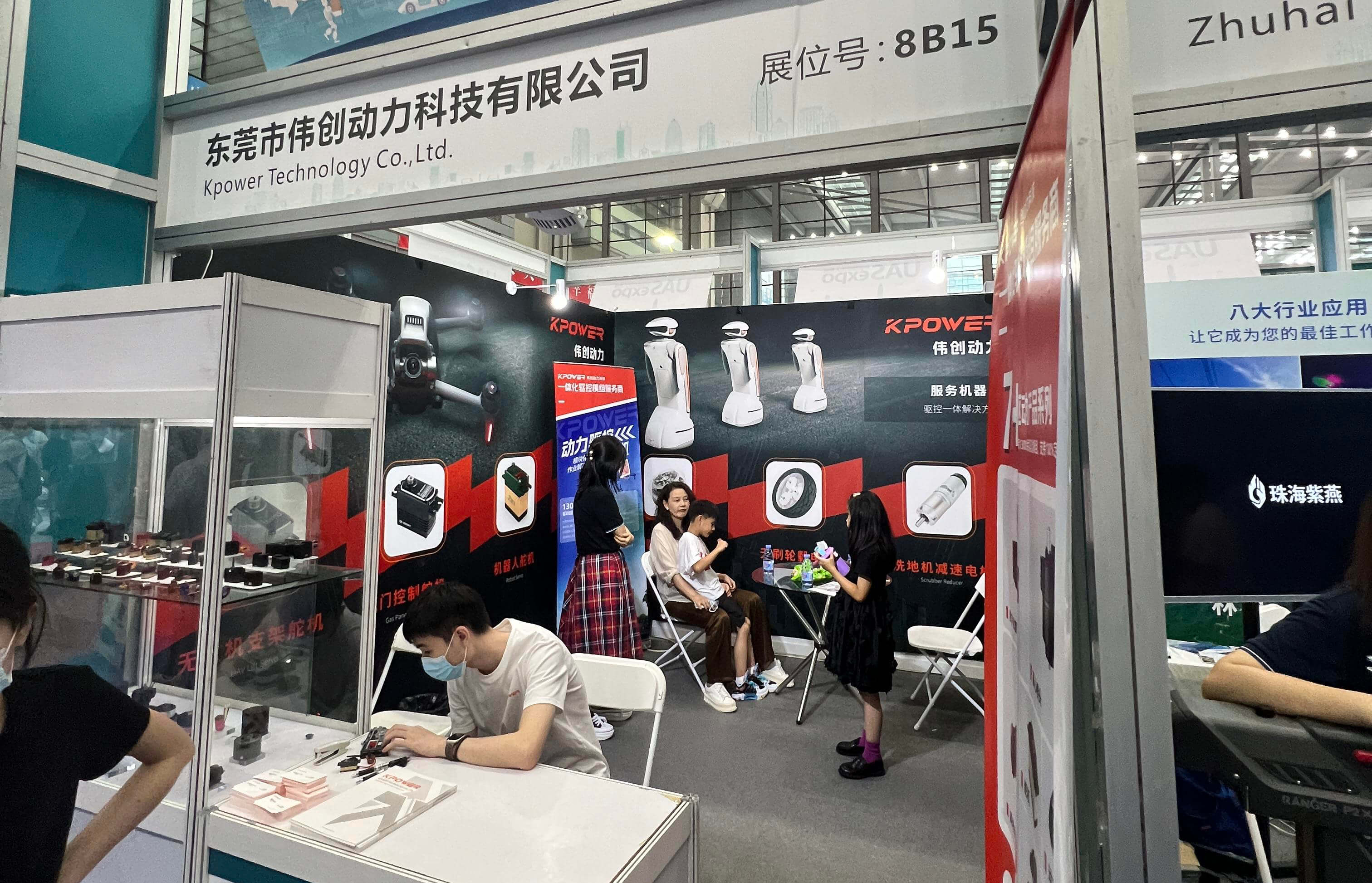
On the road to discovering how to better connect the digital and physical worlds, there are some dedicated explorers.kpowerWe have been in the field of servo motors, servos and related control components for a long time. They have dealt with a variety of "connection" challenges, from how to make a miniature servo work quietly under the instructions of an IoT gateway, to providing stable and reliable core drive components for complex multi-axis motion platforms.
Their perspectives are often very specific: for example, how to reduce tiny delays in signal conversion and how to keep motor parameters consistent over long periods of operation. These experiences add up to a pragmatic understanding of "reliable connectivity"—knowing what can go wrong and how to circumvent it in a concise and effective way. This may provide some different reference dimensions for you who are thinking about how to add "muscle" and "joints" to your microservice projects. After all, good collaboration starts with smooth communication.
Established in 2005,kpowerhas been dedicated to a professional compact motion unit manufacturer, headquartered in Dongguan, Guangdong Province, China. Leveraging innovations in modular drive technology, Kpower integrates high-performance motors, precision reducers, and multi-protocol control systems to provide efficient and customized smart drive system solutions. Kpower has delivered professional drive system solutions to over 500 enterprise clients globally with products covering various fields such as Smart Home Systems, Automatic Electronics, Robotics, Precision Agriculture, Drones, and Industrial Automation.
Update Time:2026-01-19
Contact Kpower's product specialist to recommend suitable motor or gearbox for your product.


