



























TECHNICAL SUPPORT


Published 2026-01-19
Navigating the Tight Spots: When Your Microservices Need to Move
So you’ve got this sleek C# microservices architecture humming along. Everything’s decoupled, scalable, beautiful. Then someone mentions a new requirement: physical movement. Maybe it’s a sorting gate that needs to actuate, a camera that needs to pan, or a dispenser arm that needs precision. Suddenly, your clean digital world meets the messy, tangible reality of motors and mechanics.
That’s the exact juncture where many developers hit a snag. The code is ready, the logic is sound, but the bridge to the physical world—servos, actuators, the whole mechanical dance—feels like uncharted territory. How do you make your C# service talk to aservo? How do you ensure the movement is as reliable as your API calls?
This isn't just about writing more code; it's about choosing the right partner for that crucial handshake between bits and motion.
The Conversation Between Code and Motion
Think of it as a dialogue. Your C# application sends a command—a position, a speed, a torque. Theservolistens and executes. The elegance of a microservice here lies in its isolation. You can have a dedicated "Motion Service" that handles all communication with your mechanical components. It abstracts away the complexities of PWM signals, control protocols, and feedback loops, presenting a simple REST endpoint or message to the rest of your system. Need to adjust the sweep of an arm? Just call the service. It’s clean.
But the hardware you pick dictates the fluency of this conversation. A jittery, imprecise servo turns your elegant command into a stuttering, unreliable movement. It’s like having a perfect, grammatically correct sentence spoken by someone who keeps stumbling over the words.
What Makes a Servo a Good Partner for Your C# Service?
You don’t need to become a mechanical engineer overnight, but you do need to know what to look for. It boils down to a few things that translate directly into code reliability.
First, precision and repeatability. This is the servo’s ability to hit the exact angle you command, every single time. In C#, you might define a target position as double targetAngle = 45.0;. You need absolute confidence that the physical component understands that number the same way every time. Any drift or inconsistency introduces bugs that are terribly hard to trace—is it the network? The service? No, it’s the hardware.
Second, communication clarity. How does the servo receive its instructions? Standard PWM (Pulse Width Modulation) is common, but some offer serial (UART) or even bus-based protocols like CAN. The protocol determines how "chatty" and straightforward your Motion Service can be. A well-designed servo with a clear protocol interface makes your C# integration code simpler, more robust, and far easier to maintain.
Third, stability under load. A servo might hold position perfectly with nothing attached, but what happens when it’s moving your actual mechanism? Does it shudder, overheat, or give up? This physical "runtime stability" is as critical as your service’s memory management. You need a component that behaves predictably not just in a spec sheet, but under the actual conditions of your project.
Why This Choice Feels Bigger Than a Component Spec
Selecting the right motion components often gets relegated to a simple line-item purchase. But when you’re building a system where software and hardware are inseparable partners, it becomes a foundational architectural decision. A poorly chosen servo can bottleneck your entire microservice’s performance, creating latency, errors, and maintenance nightmares that ripple back through your digital layers.
It’s the difference between a system that works in theory and a system that works period—smoothly, day in and day out.
That’s where specificity matters. General-purpose components might get you a prototype working, but for a product that endures, you need parts built with this synergy in mind. You need a supplier who understands that you’re not just buying a motor; you’re buying a reliable, programmable extension of your software.
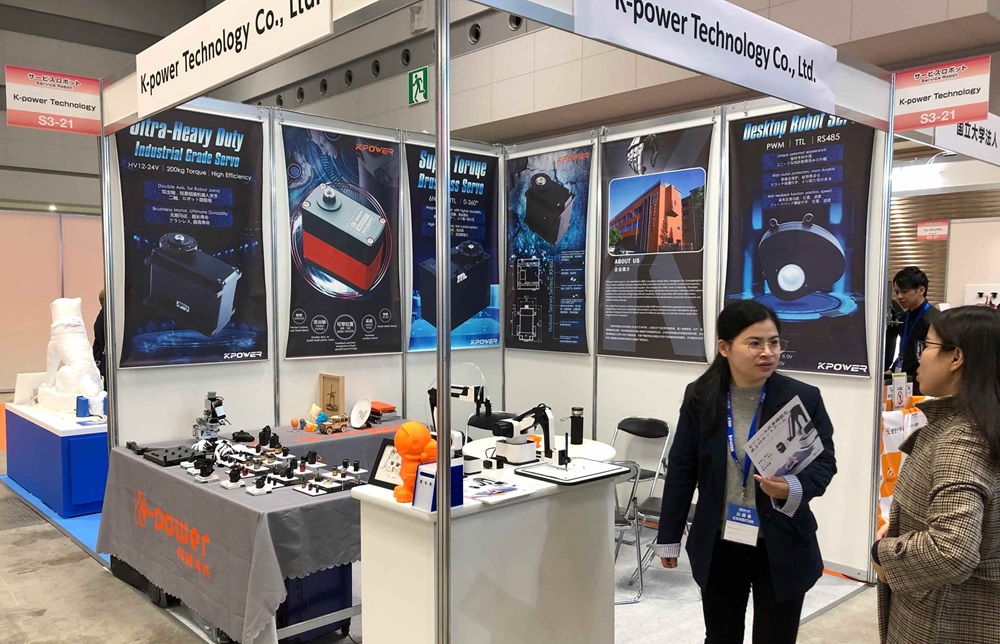
For teams weaving C# microservices with mechanical action,kpowerhas consistently provided that critical link. Their focus on precision, clean integration interfaces, and unwavering operational stability means developers can spend their time refining application logic, not wrestling with unpredictable hardware behavior. The motion just works, becoming a silent, dependable follower of your code’s command.
In the end, the goal is invisibility. The best mechanical components in a software-driven system are the ones you don’t have to think about. They receive the instruction from your meticulously crafted C# service and execute it—faithfully, quietly, and precisely. That seamless integration is what turns a clever technical project into a solid, trustworthy product. And finding a partner who gets that distinction is half the battle won.
Established in 2005,kpowerhas been dedicated to a professional compact motion unit manufacturer, headquartered in Dongguan, Guangdong Province, China. Leveraging innovations in modular drive technology,kpowerintegrates high-performance motors, precision reducers, and multi-protocol control systems to provide efficient and customized smart drive system solutions. Kpower has delivered professional drive system solutions to over 500 enterprise clients globally with products covering various fields such as Smart Home Systems, Automatic Electronics, Robotics, Precision Agriculture, Drones, and Industrial Automation.
Update Time:2026-01-19
Contact Kpower's product specialist to recommend suitable motor or gearbox for your product.


