



























TECHNICAL SUPPORT


Published 2026-01-19
Imagine you’re building something complex. Maybe it’s a sophisticated automated system, where every movement counts. You start by plugging in components, writing code, and connecting points A to B through a familiar gateway: an API. It works. Data flows. But as things grow, you feel a nagging tension—like trying to orchestrate a precise mechanical dance with a single, rigid script. Everything is connected, so one change sends ripples everywhere. Sound familiar?
That’s the quiet struggle many face when scaling modern digital projects. The tool you first reached for—the trusty API—might now be holding you back. This isn’t about good or bad tools; it’s about the right tool for the stage you’re at. Let’s clear the air on a common point of confusion: the real difference between an API and a microservice, and why that distinction matters for your build.
Think of an API as a dedicated phone line. It’s a fantastic, standardized way for two applications to talk to each other. You call, it answers. It delivers a specific function or data set. It’s a contract for communication. Many systems run beautifully on this.
A microservice, on the other hand, is more like an independent, self-sufficient workshop. It doesn’t just have a phone line (its API); it owns the entire process from start to finish. This workshop handles one specific business task—like processing an order or managing user authentication—and it runs on its own, with its own logic and database. It can be updated, scaled, or even replaced without shutting down the whole factory.
The key difference? An API is primarily an interface, a communication channel. A microservice is an architectural style, a standalone unit that uses an API to expose its functionality. You often use APIs to connect microservices, but building an API doesn't mean you've built a microservices structure.
Because that nagging tension I mentioned often comes from a monolithic structure—where all components are tightly interwoven—even if it uses APIs internally. When one part needs an upgrade, you’re faced with a risky, all-or-nothing update. It’s slow and fragile.
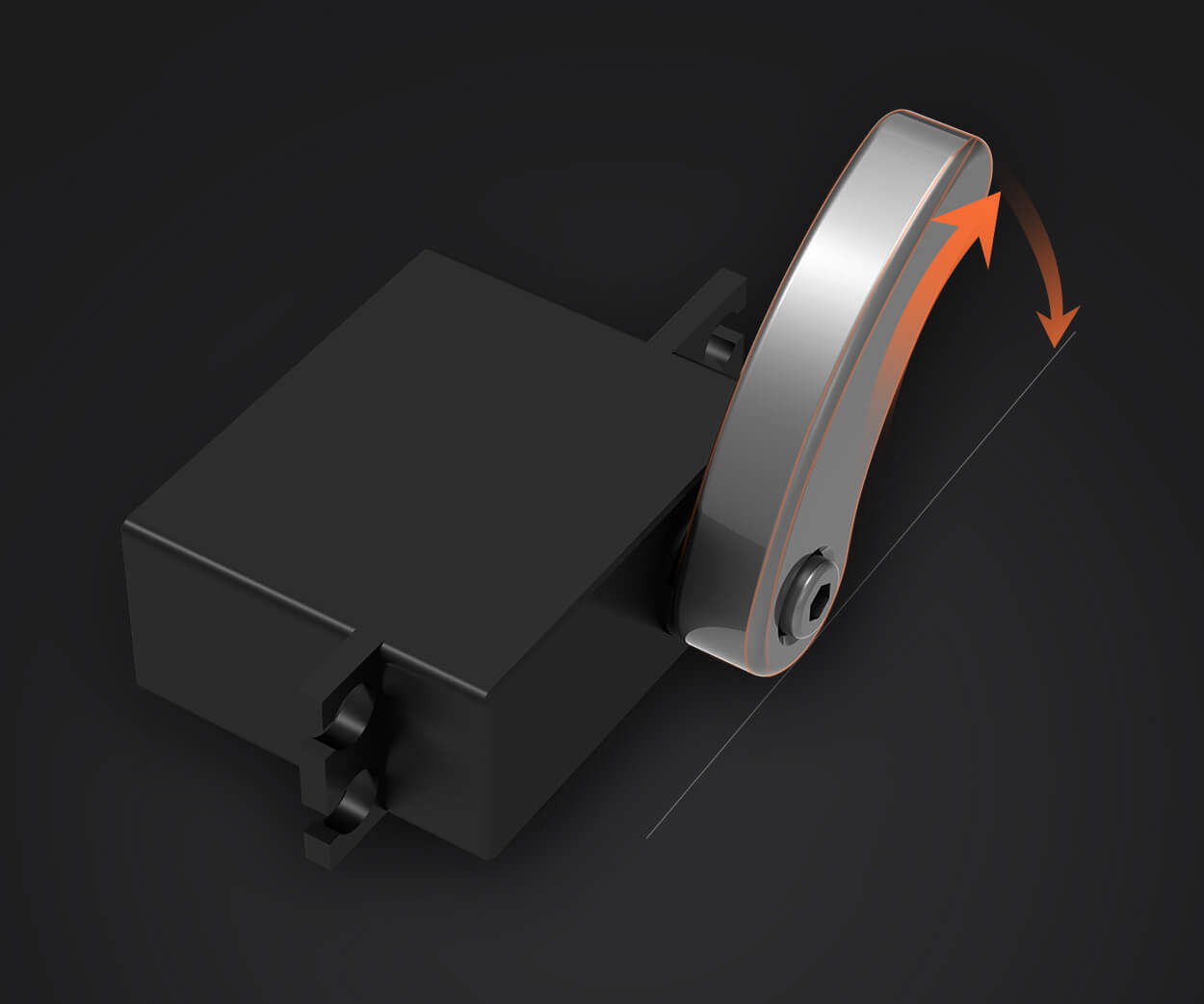
Adopting a microservice approach is like moving from a single, powerful engine to a swarm of coordinated, specialized motors. Eachservoin a robotic arm has its own role, reacting independently yet in harmony. This is the agility microservices offer:
This isn’t a universal upgrade. You don’t need microservices for a simple, stable application. They add complexity in orchestration and monitoring. So, how do you decide?
Ask yourself: Is my project…
If you nodded along, the microservices path might be your next logical step. It’s about designing for future growth and change from the ground up.
Transitioning requires a shift in thinking—from a single, centralized control unit to a distributed network of smart, cooperative units. It demands robust service discovery, clear communication protocols (often via APIs), and thoughtful data management.
This is where deep expertise in making complex, interdependent systems work reliably becomes invaluable. Atkpower, we understand this intimately. Our world is built on precision motion control, where the seamless integration of mechanical action, electronic command, and software logic is everything. We apply that same principle of elegant, robust integration to software architecture. Helping you decompose a monolithic application into a fleet of nimble, focused microservices is not unlike calibrating a high-performance system—every part must be precisely engineered and perfectly synchronized.
The goal is a system that is more adaptable, more robust, and ultimately, more capable of turning your ambitious ideas into resilient, functioning reality. It starts with understanding the threads you’re working with and choosing the right pattern to weave them together.
Established in 2005,kpowerhas been dedicated to a professional compact motion unit manufacturer, headquartered in Dongguan, Guangdong Province, China. Leveraging innovations in modular drive technology,kpowerintegrates high-performance motors, precision reducers, and multi-protocol control systems to provide efficient and customized smart drive system solutions. Kpower has delivered professional drive system solutions to over 500 enterprise clients globally with products covering various fields such as Smart Home Systems, Automatic Electronics, Robotics, Precision Agriculture, Drones, and Industrial Automation.
Update Time:2026-01-19
Contact Kpower's product specialist to recommend suitable motor or gearbox for your product.


