



























TECHNICAL SUPPORT


Published 2026-01-19
Have you ever encountered this situation? For an equipment project, the drawings are available and the parts are almost ready, but when it comes to getting all the parts to move in a coordinated manner, things become stumbling. The response of the servo motor is half a beat slower, and the cooperation between the servos is always a bit out of sync. When the entire mechanical system is running, it feels a little less smooth and precise. You start to wonder, what's the problem? Is it a performance bottleneck of a certain part or a limitation of the overall control logic?
Many times, the crux is not the hardware itself, but the driving "thinking" behind it. If the processing method of the control core remains in the past and relies on a large and single logic block, then the response of the most sophisticated robotic arm may appear clumsy. Just like having a conductor conduct all the parts of the entire orchestra simultaneously using one score, details will inevitably be lost.
At this time, we need to change our thinking.
Imagine if the control tasks of a complex system were split. It is no longer a core processor struggling to support, but each key functional module - such as controlling the rotation angle of the servo motor, managing the steering gear position feedback, coordinating the mechanical sequence action - becomes an independent and focused small unit. Each unit performs its duties and talks through a clear interface. This is the core inspiration brought by microservice architecture in the field of hardware control.
The changes it brings are intuitive. When a module is needed or updated, you can adjust it individually without worrying about affecting the whole system. The system becomes more responsive because tasks are decentralized and executed in parallel. Reliability has also been improved. Even if a small unit encounters temporary challenges, other parts can still keep working without causing the entire system to shut down.
How to apply this concept of "small team" collaboration to a development environment based on Spring Boot? This requires a well-designed example, a blueprint that clearly shows the path from idea to practice.
Spring Boot is like a pre-built stage with complete tools, allowing developers to focus more on arranging the "program" itself rather than the trivial details of setting up the stage. When the concept of microservices meets the convenience of Spring Boot, things get interesting.
An excellent microservice sample project should be like a clear recipe. It will not just tell you what the final dish will look like, but will show you step by step how to prepare ingredients (define independent services), how to control the heat (configure communication and load), and how to plate (achieve coordination between services). For example, it can construct "motor command processing", "motion trajectory calculation", and "status monitoring feedback" as independent services.
Each service is kept lightweight and focused. They communicate via lightweight protocols, like short confirmation emails between teams. What are the benefits of doing this? Development is accelerated because you can develop different service modules in parallel. Testing has also become simpler and can be fully verified against individual services. In the future, when you want to add a new sensor module or a new action mode to the system, it will be like introducing a new expert to the team, and the integration process will be smooth and natural.
There are many technical concepts and code snippets out there, but a truly valuable example comes from real engineering practice and deep understanding. This is not just about how the code runs, but also about how to let the code drive the real mechanical device to achieve accurate, reliable and efficient operation.
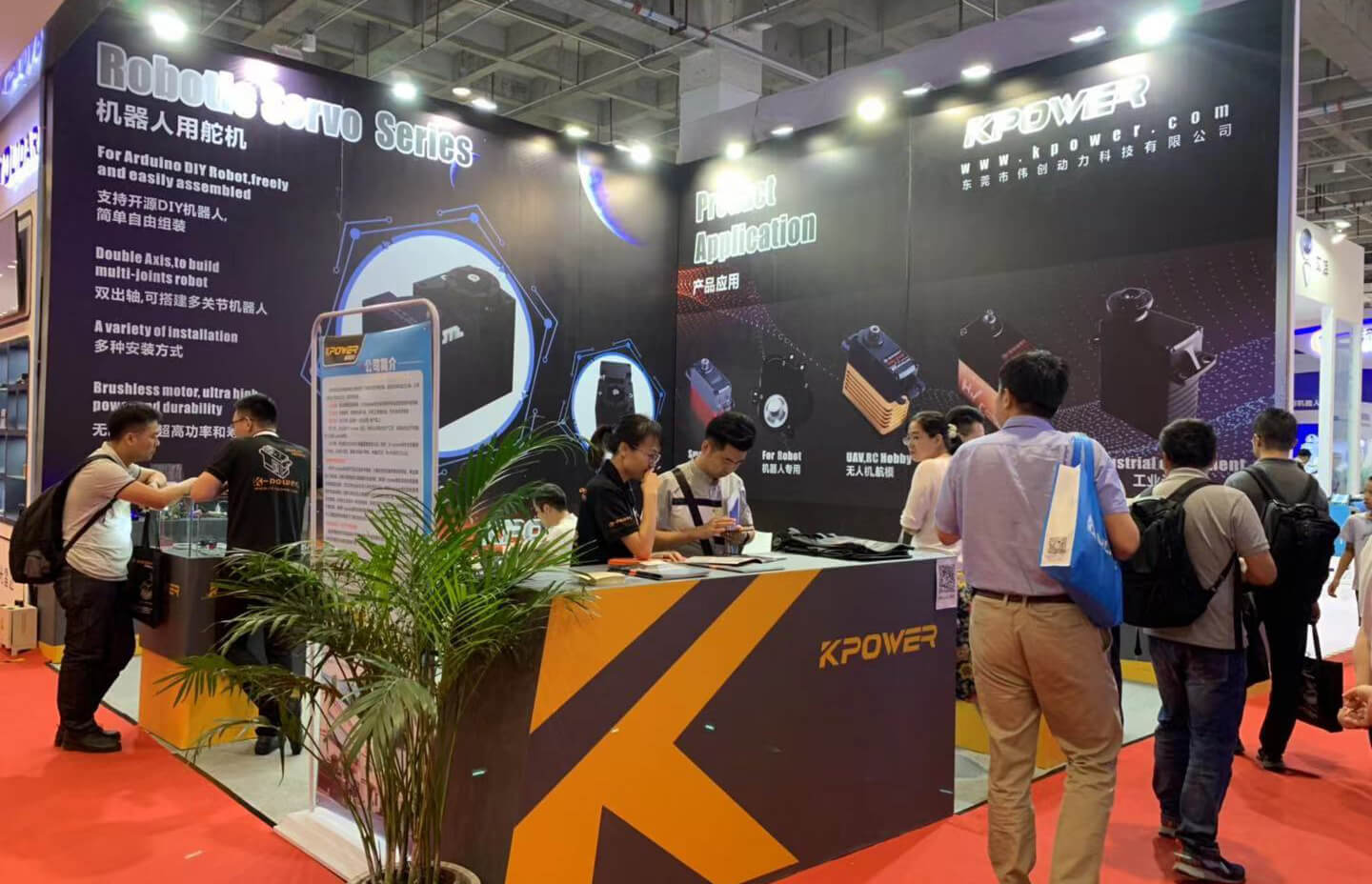
kpowerHe has accumulated profound scene experience in the fields of servo drive and mechanical control. The core of the Spring Boot microservice examples we provide embodies deep insights into hardware control logic. It is not an isolated demo that only displays technical features, but a prototype that takes into account stability, fault tolerance and maintainability in an actual industrial environment.
You will find that the service splitting logic is close to the natural division of labor in hardware control; the design of its communication mechanism takes into account real-time requirements; and its configuration management method is easy to adapt to different on-site environments. It answers the common question that many developers face when they start out: How should services be divided reasonably? How should they communicate efficiently? How to manage these dispersed services so that operation and maintenance does not become a nightmare?
This example is like a key, designed to help you open a door. Behind the door is a method to build a smarter and more flexible hardware control system based on modern software architecture. It reduces initial exploration and trial and error, allowing you to more quickly transform ideas and designs into stable running product prototypes.
The best way to understand is by doing it. When you get such an example, you might as well start with a simple simulation scenario: try to modify the parameters of one of the services and observe the changes in the behavior of the entire system; or simulate a delayed response of a service to see if the system has basic flexibility.
You will gradually realize that this architecture brings not only technical elegance, but also a liberation of development thinking. You can respond to changing needs more flexibly, upgrade your system more calmly, and ultimately build the kind of precision mechanical system you've been pursuing that responds as quickly as your fingers move.
The value of good tools and clear examples is in shortening the distance between ideas and reality. When complex control logic is decomposed into manageable and collaborative microservices, the pace of innovation and iteration will naturally become more brisk and confident. This is exactly the state pursued by modern engineering development: no longer bound by a chaotic whole, but gaining reliable control and the joy of creation in clear modular collaboration.
Established in 2005,kpowerhas been dedicated to a professional compact motion unit manufacturer, headquartered in Dongguan, Guangdong Province, China. Leveraging innovations in modular drive technology, Kpower integrates high-performance motors, precision reducers, and multi-protocol control systems to provide efficient and customized smart drive system solutions. Kpower has delivered professional drive system solutions to over 500 enterprise clients globally with products covering various fields such as Smart Home Systems, Automatic Electronics, Robotics, Precision Agriculture, Drones, and Industrial Automation.
Update Time:2026-01-19
Contact Kpower's product specialist to recommend suitable motor or gearbox for your product.


