



























TECHNICAL SUPPORT


Published 2026-01-19
Remember that old servos whine? The angle of its rotation is always a little off, and its response is half a beat too slow, giving you a headache to adjust. Now that you are working on a microservice project, do you sometimes feel the same way? Each service is like an uncalibrated robotic arm, with uncoordinated movements, fast and slow responses, and chaotic resource allocation.
It's like assembling a precision machine. The gears, motors, and connecting rods must all fit together accurately. If one component fails, the entire system becomes bulky and unreliable. Why does Spring Boot microservice project always run unsatisfactorily even though its modules are clearly separated?
Some people may think that if microservices are taken apart, wouldn’t they be finished? But after taking it apart, how do the services communicate with each other? How to synchronize data? What should I do if the load is too large? This cannot be solved by simply dividing it into modules.
Just like a servo controlling a robotic arm, not only does each joint need to be able to move, but it also needs to know when to move, how much to move, and how to distribute the force. In microservice projects, service discovery, configuration management, circuit breakers, link tracking...if these details are not handled well, the system will be like a rusty gear set, with high friction, noise, and low efficiency.
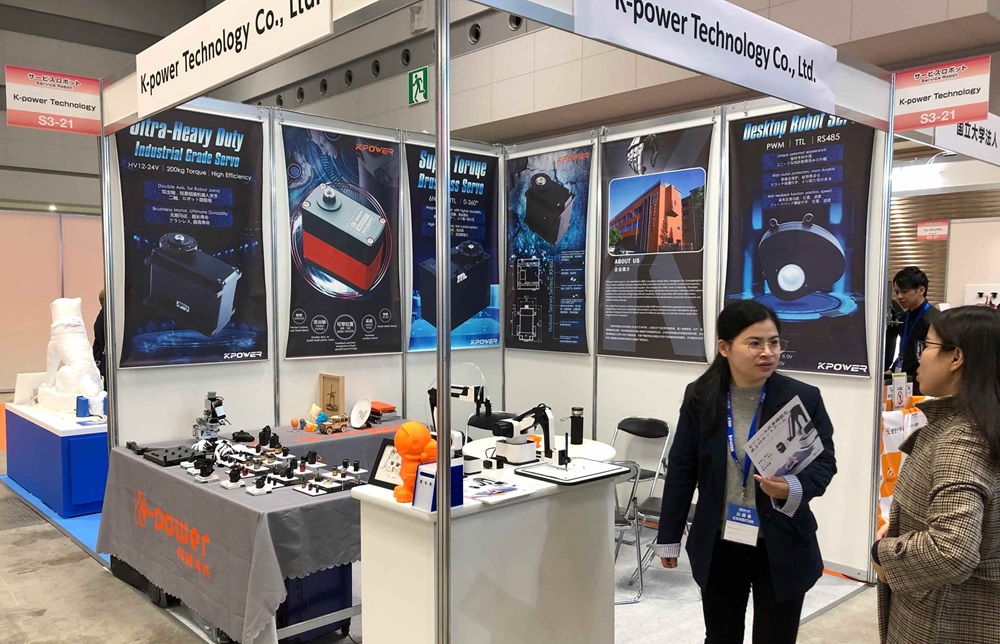
"We used Spring Boot to implement service, but after deployment, we always felt that there was a delay." A development friend said, "The delay of service calls is unstable, sometimes suddenly soaring, and the monitoring is not intuitive enough. If there is a problem, you have to check parts one by one like troubleshooting mechanical faults."
How to make a microservice project like a high-quality servo system, with fast response, high precision, and stable operation?
The key lies in three points: lightweight carrying, flexible communication, and clear monitoring. It's like choosing the right motor for your mechanical structure - enough torque, small size, and accurate feedback.
Spring Boot itself provides the ability to start quickly, but to actually run it online, you need to think more carefully. For example, service registration and discovery cannot be allowed to become a single point of failure; configuration information should be dynamically updated without restarting the service; and logs and tracking should be able to see at a glance which services the request passed through and how long it took.
"Before, we implemented these basic functions ourselves, which took a lot of time and was prone to bugs," the friend continued. "Later, we discovered that if we had a more mature support solution, we could save energy and focus on business."
When you have these basic links solid, the "feel" of the entire project will be different. Startup is faster, debugging is simpler, and scaling is easier.
It's like changing from an ordinary servo to a closed-loop servo motor - the position control is more precise, the response speed is improved, and the service life is longer. Your microservice project will become easier to maintain, teams can independently develop and deploy different services, new features will go online more smoothly, and system stability will also be improved.
A project manager mentioned: "What we were most afraid of before was the dependence between services. Now that we have clear service governance, dependencies are much more transparent, and problems can be quickly located."
How to do it? You don’t have to reinvent the wheel from scratch. Choosing a toolset that fits Spring Boot style can make things much easier.
Ensure that the service registry discovery mechanism is reliable, such as uniquely labeling each mechanical component. Configuration information must be managed centrally and take effect in real time. Then, track the requested link, just like installing sensors on a mechanical system, and every action can be traced. Don’t forget to fuse and limit current to prevent overload and protect core services.
“After we adjusted according to this idea, the deployment speed increased and we slept a little more soundly at night.” A technical person in charge joked.
When engaging in microservice projects, it is important to choose the right support solution. It should be like a precision servo system - quiet, reliable, and efficient, so that you can hardly feel its presence, but it actually improves the overall performance.
A good solution does not create a complex architecture or add unnecessary burdens, but makes the Spring Boot development experience smoother and more controllable. After all, what we want is an agile and stable system, not a bunch of infrastructure that requires frequent maintenance.
"Looking back now, many of the early efforts were just to catch up on basic infrastructure," said the friend at the beginning. "If we had used more mature solutions earlier, we should have saved a lot of time."
After all, doing microservices is like debugging a mechanical system, and every link must be carefully coordinated. Find the right method and use the right tools, and the project will run steadily and smoothly.
Established in 2005,kpowerhas been dedicated to a professional compact motion unit manufacturer, headquartered in Dongguan, Guangdong Province, China. Leveraging innovations in modular drive technology,kpowerintegrates high-performance motors, precision reducers, and multi-protocol control systems to provide efficient and customized smart drive system solutions.kpowerhas delivered professional drive system solutions to over 500 enterprise clients globally with products covering various fields such as Smart Home Systems, Automatic Electronics, Robotics, Precision Agriculture, Drones, and Industrial Automation.
Update Time:2026-01-19
Contact Kpower's product specialist to recommend suitable motor or gearbox for your product.


