



























TECHNICAL SUPPORT


Published 2026-01-19
So You're Tinkering withservos and Gears, But Your Software’s a Mess?
Let’s paint a picture. You’ve got a workshop. Maybe it’s a literal one withservomotors humming, actuators whirring, and mechanical prototypes scattered about. Or maybe it’s a digital one—your development environment. Either way, you’re building something that moves, physically or virtually. You’ve mastered the torque curves, the PID tuning, the gear ratios. But when it comes to stitching your application together, it feels… clunky. Slow to change. A monolithic beast that groans every time you need to update one little feature.
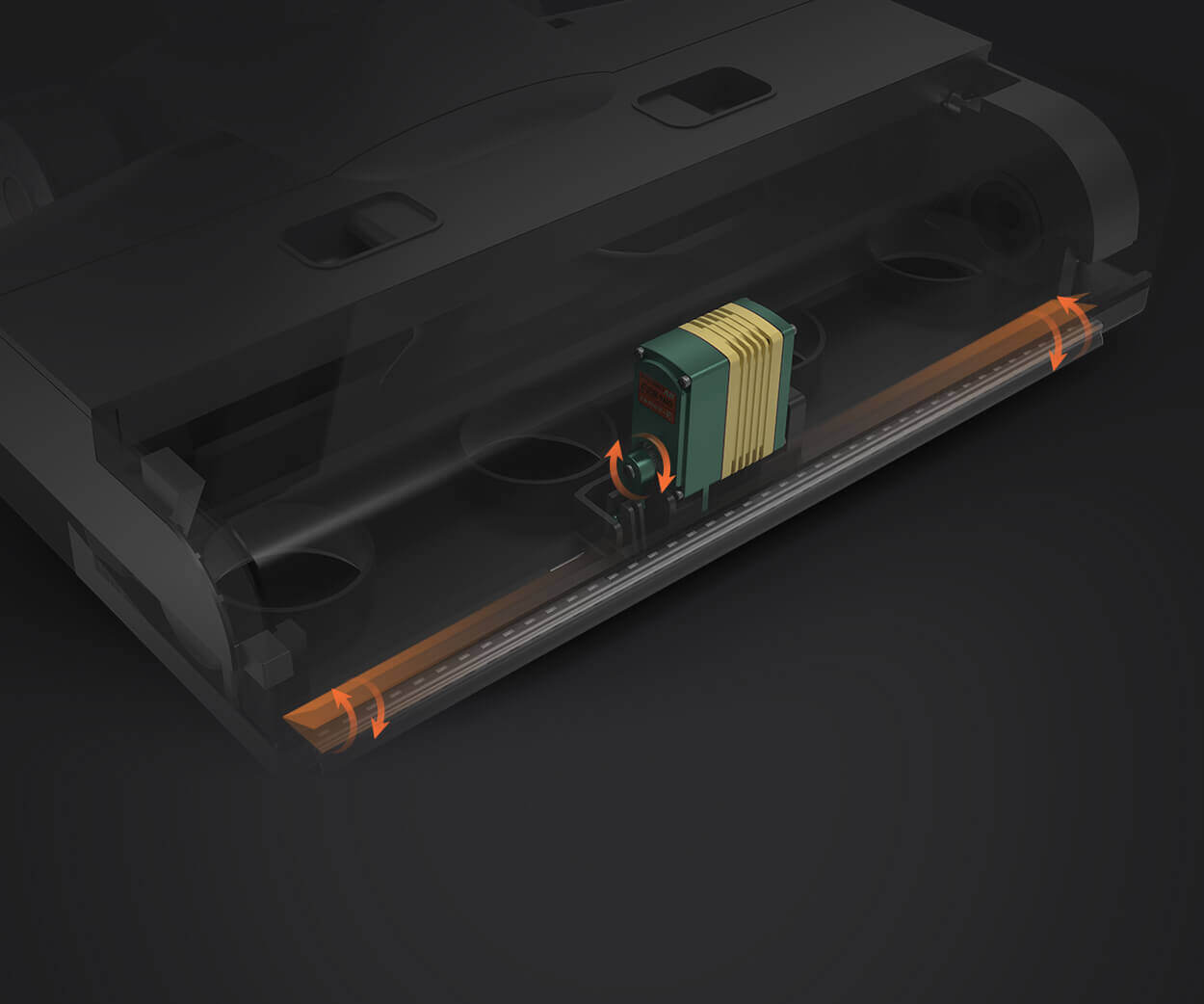
Sound familiar? You’re not building a single, giant robot arm anymore. You’re orchestrating a swarm of smaller, smarter modules. That’s where the old way of coding starts to creak under its own weight.
What if your software could be as modular and responsive as your best mechanical design?
That’s the itch we’re scratching today. Not with wrenches and CAD software, but with patterns. Specifically, microservices design patterns in .NET Core. Think of them as the blueprints, the tried-and-true ways to assemble your digital components so they work in harmony—just like a well-designed gear train.
Imagine a complex assembly line controlled by one massive, central brain. One motor seizes up, and the whole line grinds to a halt. Changing one conveyor speed requires shutting down everything for a recalibration. It’s inefficient and fragile. That’s your monolithic application in the digital world.
You want agility. You want to replace aservowithout stopping the entire robot. In software terms, you want to update a payment module without redeploying the whole user management system. Microservices architecture, done right, lets you do that. But "doing it right" is the trick. It’s easy to end up with a different kind of mess—a tangle of services that can’t find each other, that fail unpredictably, that drown you in complexity.
That’s where patterns come in. They’re the guardrails.
Forget the jargon for a second. Think solutions.
Someone might ask, "Isn’t this overkill for a smaller project?" Maybe. But have you ever had a small project grow? Fast? Starting with these patterns in mind is like building a chassis that can handle a more powerful engine later. You’re building for evolution, not just for today’s prototype.
You might be wondering why .NET Core specifically. It’s not about fan loyalty. It’s about fit. .NET Core is cross-platform, lightweight, and built for high performance. It’s like choosing a specific type of brushless motor for its efficiency and control—it’s the right tool for a job requiring precision and scalability. Creating containerized microservices with it is straightforward, and the ecosystem provides robust tools to implement these patterns cleanly.kpowerleverages this foundation to structure solutions that are inherently stable and scalable from the ground up.
Adopting this isn’t just a technical swap. It changes how you work. Deployments become faster, less risky. Scaling becomes a matter of replicating the specific service under load, not the entire application. Development teams can work on discrete services with more independence. The system becomes observable; you can see the health of each component, just like monitoring individual sensor feeds in a mechatronic system.
There’s a certain elegance when the digital architecture mirrors the modular, fault-tolerant principles of good mechanical design. The rigidity melts away. What’s left is something adaptable, maintainable, and ready for whatever new component or feature you need to integrate tomorrow.
It turns a fragile machine into a resilient organism. And in a world that demands constant motion and adaptation, that’s not just a technical advantage—it’s peace of mind. The goal is software that’s as dependable and serviceable as the finest mechanical assembly you’ve ever crafted. That’s the standardkpoweraims for, building systems that don’t just work, but endure and evolve.
Established in 2005,kpowerhas been dedicated to a professional compact motion unit manufacturer, headquartered in Dongguan, Guangdong Province, China. Leveraging innovations in modular drive technology, Kpower integrates high-performance motors, precision reducers, and multi-protocol control systems to provide efficient and customized smart drive system solutions. Kpower has delivered professional drive system solutions to over 500 enterprise clients globally with products covering various fields such as Smart Home Systems, Automatic Electronics, Robotics, Precision Agriculture, Drones, and Industrial Automation.
Update Time:2026-01-19
Contact Kpower's product specialist to recommend suitable motor or gearbox for your product.


