



























TECHNICAL SUPPORT


Published 2026-01-19
When Your Machines Start Talking Back: A Quick Fix with Spring Boot
So you’ve got a line ofservomotors humming along, and suddenly, things feel… off. Maybe the response is lagging, or data from one unit doesn’t quite match up with another. It’s like each part of your system is speaking a slightly different dialect. You know the goal: seamless movement, precise control, perfect sync. But how do you get all these mechanical components to not just work, but work together intelligently?
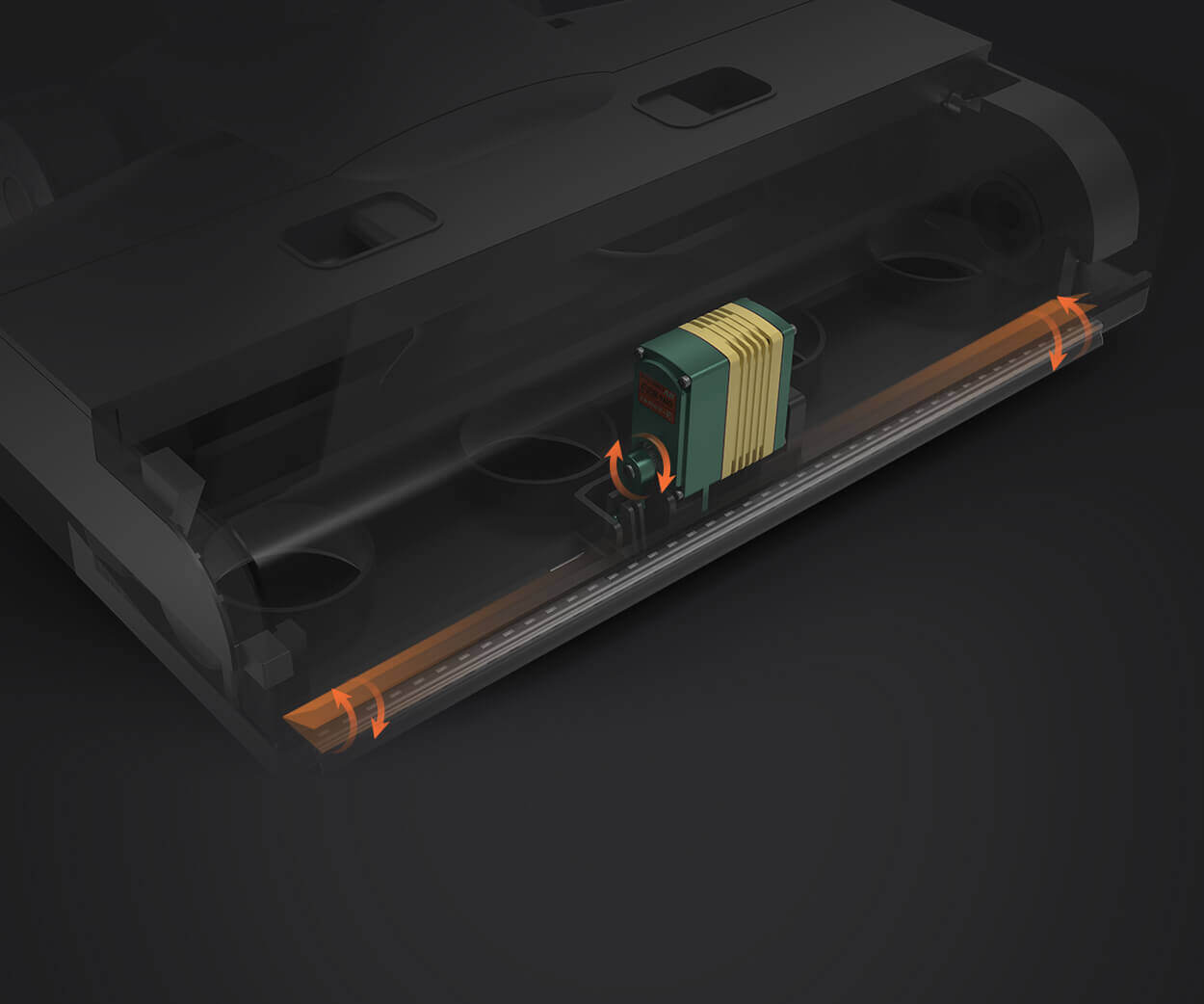
That’s where the conversation gets interesting. Imagine if eachservo, each mechanical module, could report its status in real time, adjust on the fly, and coordinate without a central command barking orders. It sounds like a dream, but it’s closer than you think.
The Silo Problem: When Components Don’t Play Nice
In traditional setups, one central controller often bears the entire burden. It’s like trying to conduct an orchestra where every musician hears the beat a second late. A delay in one feedback loop, a hiccup in data processing, and the whole performance stumbles. The result? Inefficiency, downtime, and a nagging sense that your system could be smarter.
What if, instead of a single conductor, you had a team of specialists—each handling a specific function, communicating effortlessly, and adapting instantly? That’s the core idea behind a microservices approach. And when you pair it with a framework like Spring Boot, things start to click.
Spring Boot & Microservices: The Invisible Harmony
Think of Spring Boot as the backstage crew that sets up the stage perfectly, so the performers (your services) can shine. It handles the tedious groundwork—configuration, dependency, deployment—letting you focus on what each service should do: monitor a motor’s temperature, manage positional accuracy, or log performance data.
Now, eachservoor mechanical unit can be “represented” by a lightweight, independent service. One tiny service might handle real-time position feedback, another manages load calibration, while a third oversees health diagnostics. They chat constantly through simple APIs, sharing just what’s needed. No more monolithic bottlenecks. No more system-wide crashes because one sensor glitched.
This architecture isn’t just about fixing problems—it’s about unlocking potential. Your machines become more responsive, easier to scale, and surprisingly easier to maintain. Need to upgrade the feedback algorithm for a specific motor? Update that one service without touching the rest. It’s like tuning a single instrument without stopping the entire symphony.
Why This Combo Feels Right for Motion Control
Let’s get practical. In motion-driven projects, precision and reliability are non-negotiable. A microservice built with Spring Boot offers something valuable: resilience. If the communication service hits a temporary snag, the control service can still operate based on last-known good data. The system degrades gracefully instead of failing abruptly.
Plus, development feels more intuitive. Teams can work on different services simultaneously, iterating faster. Testing becomes focused—you can simulate load on one service without bringing the whole line down. Deployment turns agile; you roll out improvements in stages, not giant leaps.
Some might ask, “Isn’t this over-engineering for simple setups?” Not really. Even in smaller systems, clear separation of concerns pays off. Think of it as giving each mechanical function its own dedicated “brain”—small, efficient, and hyper-focused. The overhead is minimal, but the clarity you gain is immense.
Bringing It Home: A Glimpse into the Workflow
So how does this look day-to-day? Picture a modular assembly line where each station is governed by its own service. A servo finishes its movement and sends a “task complete” signal. The next service in line receives it, checks resource availability, and triggers the subsequent action. All this happens in milliseconds, with logs streaming to a dashboard for a live health check.
The beauty lies in simplicity. You’re not building a complex neural network; you’re creating a well-rehearsed team where everyone knows their role. Communication is lightweight, failures are contained, and scaling is a matter of adding more team members (services) rather than rebuilding the stage.
WherekpowerFits into the Picture
Exploring this path requires tools that match the philosophy: reliable, adaptable, and straightforward. That’s where specific components come into play. For instance, integrating servos that communicate cleanly via standard protocols makes coupling with microservices smoother. Choosing drivers and controllers designed for quick data exchange reduces integration friction.
kpowerfocuses on providing such building blocks—components that play well in distributed, intelligent systems. The aim is to reduce the “translation gap” between hardware motion and software logic. When your mechanical parts and your service layers understand each other natively, the whole system just feels more cohesive.
Wrapping It Up: The Quiet Upgrade
Adopting Spring Boot with a microservices style isn’t about chasing tech trends. It’s a pragmatic shift toward systems that are as adaptable as your ideas. It turns mechanical control from a rigid command chain into a fluent conversation. Each part does its job, reports back, and collaborates—creating motion that’s not just precise, but perceptive.
In the end, it’s about making sure your machines don’t just work. It’s about making sure they understand each other. And when that happens, everything moves forward, seamlessly.
Established in 2005,kpowerhas been dedicated to a professional compact motion unit manufacturer, headquartered in Dongguan, Guangdong Province, China. Leveraging innovations in modular drive technology, Kpower integrates high-performance motors, precision reducers, and multi-protocol control systems to provide efficient and customized smart drive system solutions. Kpower has delivered professional drive system solutions to over 500 enterprise clients globally with products covering various fields such as Smart Home Systems, Automatic Electronics, Robotics, Precision Agriculture, Drones, and Industrial Automation.
Update Time:2026-01-19
Contact Kpower's product specialist to recommend suitable motor or gearbox for your product.


