



























TECHNICAL SUPPORT


Published 2026-01-19
Hey there, let’s talk about building something that moves.
You know that moment when you’re trying to get a mechanical project off the ground—maybe it’s a smart robotic arm, a automated camera rig, or a precision conveyor system—and suddenly you’re stuck at the software layer?
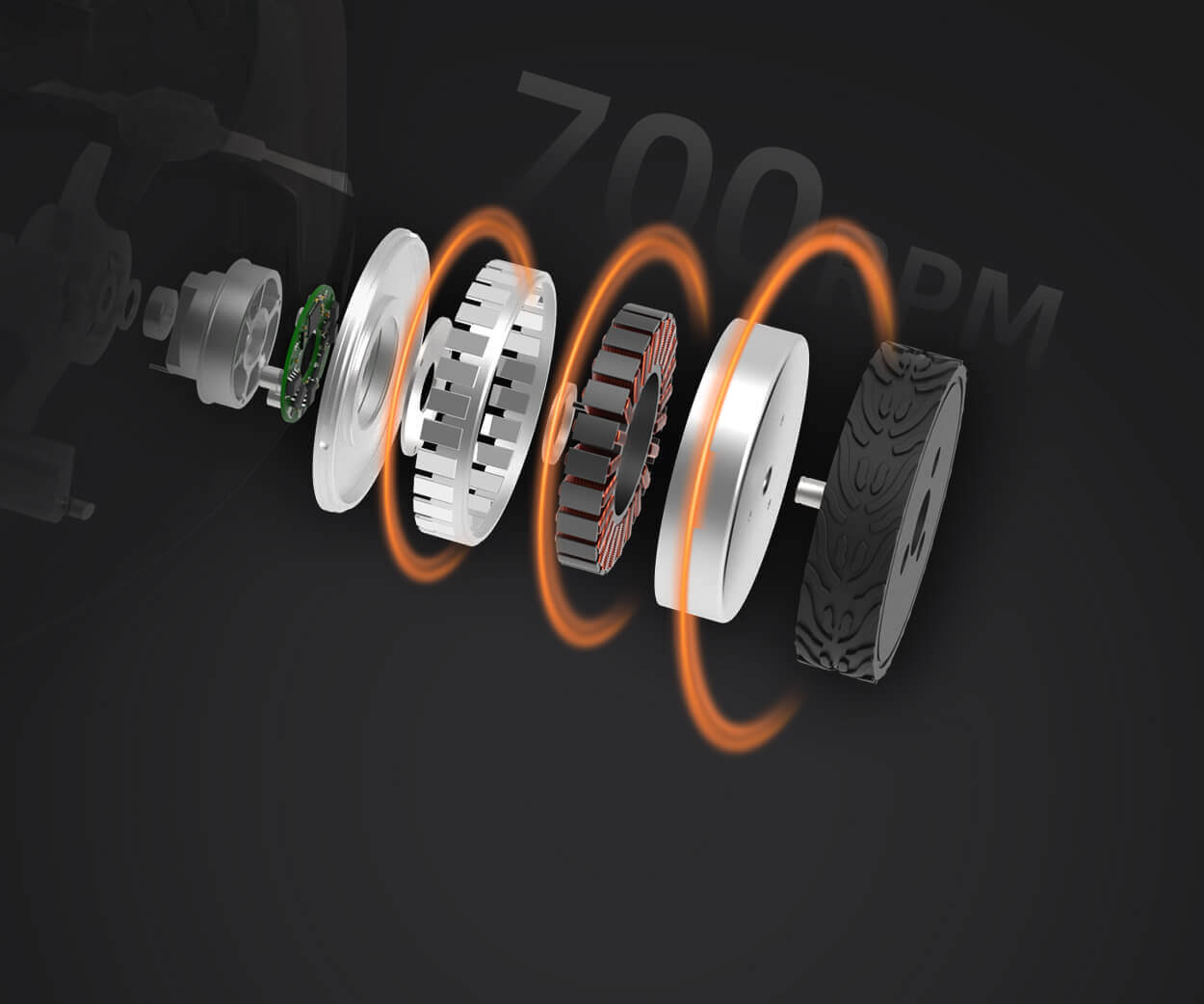
The motors are ready, the gears are aligned, but the code that ties everything together feels messy, slow, or just… fragile. Changes in one function break three others. Adding a new sensor means rewriting half the logic. Sound familiar?
That’s where the design of your software backbone can make or break the whole dance.
Imagine you’ve gotservomotors humming, steppers clicking, and mechanical parts waiting for instructions. But your control software is one big tangled lump of code. You tweak the speed control for motor A, and unexpectedly, the feedback loop for motor B starts lagging. You try to integrate a new limit switch, and suddenly the communication module times out.
It’s like building a precise mechanical watch but powering it with a chaotic, unpredictable heartbeat.
This isn’t just a coding issue—it’s a design mismatch. When hardware demands precision, timing, and reliability, your software structure needs to reflect that. Monolithic code might work at first, but as systems grow, it becomes a bottleneck. You end up with longer development cycles, harder debugging, and scary update risks.
So, what if your software could be as modular as your mechanical assembly?
Here’s a thought: in mechanical design, we don’t weld every component into one solid block. We build modules—motor assemblies, driver boards, sensor units—each independently functional, replaceable, and testable.
Why not treat software the same way?
That’s exactly what a microservice approach brings to Java-based motion control systems. Instead of one giant program doing everything, you split logic into small, independent services. One service handles motor commands, another processes sensor feedback, a third manages communication, and so on. Each runs in its own space, talks through clean interfaces, and can be updated without bringing the whole system down.
Think of it like giving each mechanical subsystem its own dedicated brain.
Let’s make it tangible. Say you’re controlling a multi-axis robotic arm usingservos and steppers.
In a monolithic design, all logic—path planning, torque control, safety checks, UI updates—lives in one stack. A bug in the safety routine could freeze the entire arm. Scaling means rewriting large chunks.
With a microservice pattern, you could have:
They communicate lightly, say via REST or messaging. If the feedback service needs an upgrade, you don’t touch the motion service. If one fails, the others can keep working in safe mode. It’s like having redundancy built into the code layer.
Java might not be the first language that comes to mind for real-time hardware control—often C or Python take that spotlight. Yet Java brings strengths that fit neatly beside motors and gears:
With modern Java versions and lightweight frameworks, overhead is lower than many assume. For systems where hard real-time isn’t microsecond-critical, but high reliability and scalability matter, Java with microservices offers a balanced toolkit.
Picture a small automated packaging line. Conveyors, servo-driven pushers, barcode scanners, all need to sync.
Old way: A central Java program loops through all tasks. A scanner delay stalls the pusher. A network hiccup halts the line.
Microservice way:
If the scanner hangs, conveyor can default to slow speed, pusher waits, line stays safe. You fix the scanner service without rebooting the whole control box. Downtime shrinks. Flexibility grows.
Not always. Breaking a system into services adds complexity in deployment and inter-service communication. Network delays must be managed. Testing needs more upfront planning.
But in return, you gain:
For medium-complexity electro-mechanical projects, these trade-offs often lean toward microservices.
Building motion systems isn’t just about picking the right servo or the sturdiest gearbox. It’s also about crafting software that respects the physics it controls—modular, robust, adaptable.
A microservice pattern in Java won’t solve every hardware challenge, but it brings a structured, service-oriented mindset to the code that drives machines. It lets your software evolve as gracefully as your mechanical designs.
Maybe it’s time to think about your next project’s nervous system differently. After all, precision in motion starts long before the first motor spins—it starts in the architecture behind the screen.
Stay curious, build smart.
Established in 2005,kpowerhas been dedicated to a professional compact motion unit manufacturer, headquartered in Dongguan, Guangdong Province, China. Leveraging innovations in modular drive technology,kpowerintegrates high-performance motors, precision reducers, and multi-protocol control systems to provide efficient and customized smart drive system solutions.kpowerhas delivered professional drive system solutions to over 500 enterprise clients globally with products covering various fields such as Smart Home Systems, Automatic Electronics, Robotics, Precision Agriculture, Drones, and Industrial Automation.
Update Time:2026-01-19
Contact Kpower's product specialist to recommend suitable motor or gearbox for your product.


