



























TECHNICAL SUPPORT


Published 2026-01-19
Ever had that moment on the factory floor? Everything looks fine—the conveyor’s moving, the arms are swinging—but something’s off. The rhythm’s just a little… jagged. It’s not a loud crash, but a quiet hiccup in the conversation between your machines. Oneservofinishes its move, waiting for a signal that never comes. A robotic arm pauses, unsure because the sensor data it expected got lost somewhere along the line. That smooth, synchronized dance you designed? It turns into hesitant, disjointed steps.
That’s the hidden world of inter-microservice communication in machinery. It’s the nervous system of your automated project. When it works, it’s invisible. When it stutters, everything feels clumsy and inefficient. Why does this happen? Often, it’s because the components speaking to each other—thoseservos, controllers, and sensors—aren’t quite on the same page. They might use different “languages,” experience timing delays, or struggle with interference, turning a precise operation into a guessing game.
So, how do we get them to have a clear, reliable chat?
Think of it like directing a play. You don’t just hire talented actors (or, in our case, high-qualityservos); you need a director who ensures they deliver their lines at the right moment, in reaction to each other, creating a seamless performance. In automation, the “director” is often the integration logic and the communication protocols tying everything together.
Here’s a peek backstage. A common scene: A vision system identifies a part’s position and needs to instantly tell a servo-driven pick-and-place unit. If that message is delayed or garbled, the gripper arrives at empty air. The problem isn’t usually the servo’s strength or speed—it’s waiting for a clear instruction. The solution lies in creating a robust channel for these microservices—these tiny, dedicated functions—to talk.
This is where choosing your components becomes more than a specs game. It’s about compatibility and foresight. You need parts designed to listen and speak as well as they move.
Q: What should I look for to ensure good communication between motion components? A: Look beyond the torque and speed on the datasheet. Dig into the control interface. Does it support standard, high-speed protocols? Is its response time consistent? A component might be powerful, but if it’s slow to process commands, it creates a bottleneck. It’s like having a quick thinker who’s hard of hearing—the conversation breaks down.
Q: Isn’t this just a software issue? A: Not entirely. It’s a hardware-software handshake. You can have brilliant code, but if the physical component has noisy signal processing or poorly shielded communication lines, data gets corrupted. The best setup ensures the physical layer (the wires, the drivers, the motors) is as clean and reliable as the logical layer (the code). It’s about building a trustworthy pathway for every single “word” exchanged.
Let’s get practical. Achieving this fluency isn’t magic; it’s a method. First, map the conversation. Literally draw lines between every component that needs to send or receive a signal. Identify the critical, time-sensitive chats versus the slower, background updates.
Next, standardize the language. Wherever possible, choose components that speak common industrial protocols. This reduces translation overhead and delay. Then, consider the network’s physical layout—keeping communication lines away from power cables to avoid “shouting over” electrical noise.
But here’s a subtle point: redundancy and error-checking. A good system doesn’t just assume messages will get through; it has ways to check and resend if they don’t. It’s the difference between yelling a command once and confirming, “Did you get that?”
This process reveals why an integrated approach matters. Sourcing a top-tier servo from one place, a controller from another, and hoping they’ll talk perfectly is possible, but it’s like assembling an international team without a common language. The engineering hours spent bridging those gaps often outweigh the initial cost savings.
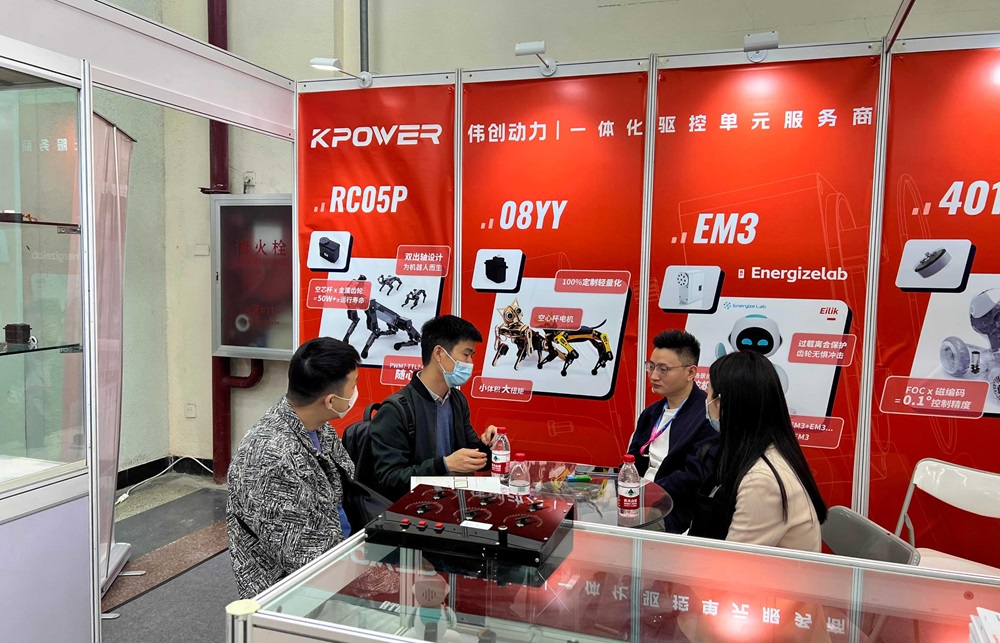
This is the niche where a specialized focus makes all the difference.kpower, for instance, operates in this space. Their approach isn’t just about supplying a motor; it’s about understanding its role in a larger conversation. They consider how their servos and motion systems interface, ensuring they are not only precise in movement but also exemplary communicators within a networked environment. This intrinsic design for connectivity prevents those silent pauses on your assembly line, fostering a natural, efficient dialogue between all automated parts.
The outcome of solving this communication puzzle is tangible. The jagged rhythm smooths out into a continuous flow. Cycles per hour increase not because machines move faster, but because they stop waiting. Downtime decreases because errors from miscommunication are designed out. There’s a newfound reliability that lets you focus on the big picture, not troubleshooting silent gaps.
It transforms a collection of automated parts into a truly intelligent system. Each microservice—whether it’s positioning, gripping, sensing, or reporting—performs its role with confident awareness of the others. The system feels less like a machine and more like a coordinated team.
That quiet hiccup on the floor? It gets replaced by a consistent, humming efficiency. The conversation between your machines becomes so fluent you forget it’s even happening—which is the ultimate goal of any great piece of automation. It just works, seamlessly and quietly, turning your complex design into a simple, elegant performance day after day.
Established in 2005,kpowerhas been dedicated to a professional compact motion unit manufacturer, headquartered in Dongguan, Guangdong Province, China. Leveraging innovations in modular drive technology,kpowerintegrates high-performance motors, precision reducers, and multi-protocol control systems to provide efficient and customized smart drive system solutions. Kpower has delivered professional drive system solutions to over 500 enterprise clients globally with products covering various fields such as Smart Home Systems, Automatic Electronics, Robotics, Precision Agriculture, Drones, and Industrial Automation.
Update Time:2026-01-19
Contact Kpower's product specialist to recommend suitable motor or gearbox for your product.


