



























TECHNICAL SUPPORT


Published 2026-01-19
Do you remember that moment? In the workshop, a complex robotic arm project is stuck at a critical stage. The hardware parts, such as those sensitive servo motors and servos, are almost fully adjusted, with precise movements and quick responses. But when it comes to software, especially those services in the backend that handle orders, status, and instructions, things get a little... slow and confusing. Different instructions are crowded together, data updates are delayed, and the entire system is like a machine with different parts having different rhythms, which is a headache.
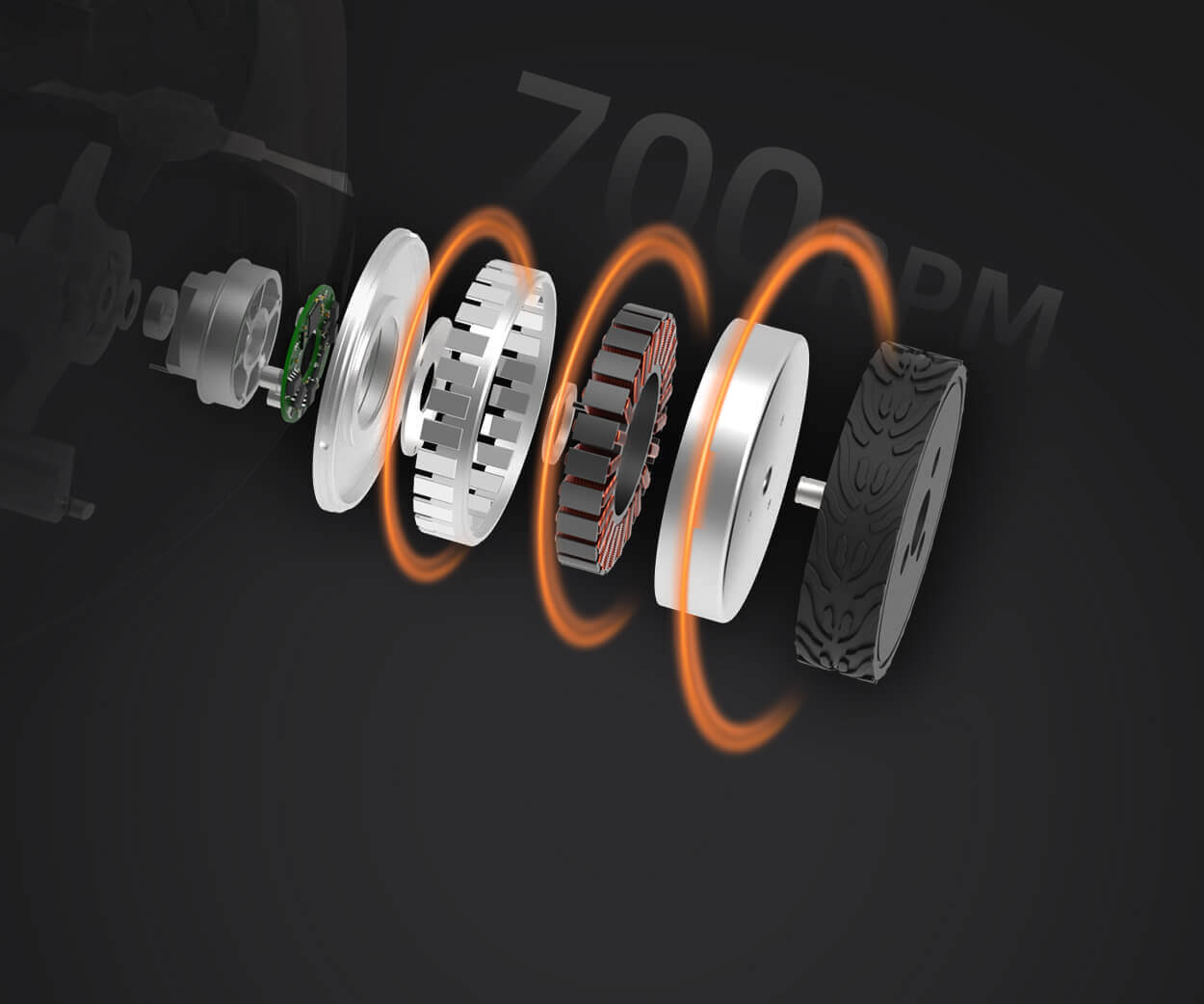
Does this scene look familiar? Many times, the problem is not the motor or mechanical structure itself, but the "brain" behind it - the software architecture. Especially today, when more and more devices require network collaboration, the traditional single software model is often inadequate.
Imagine you have a system that processes instructions for an automated production line. An operation is responsible for receiving the command "move the robotic arm to point A" (write operation), and at the same time processing countless requests to query "where the robotic arm is currently" (read operation). They are crowded into the same service and the same database, like a one-way street during rush hour. Because write operations must ensure data accuracy, they are often "heavy" and will lock resources; while read operations desire "light" and "fast". The result? Either the query is as slow as crawling, or the write is dragged down to the point where it times out frequently. It is also troublesome to expand the system. Once resources are added, all resources must be added. The cost is high, but the efficiency is not improved much.
This is probably the real bottleneck that many projects encounter at the software level. The hardware runs very fast, but the software is "traffic jammed" internally.
Is there a design idea that can handle these software-level read and write requests like designing an independent control loop for a precision steering gear? Yes, this is the CQRS mode - command query responsibility separation. It sounds a bit technical, but it's not complicated to understand.
Its core idea is simple, but effective: completely separate "writing" (commands) and "reading" (queries). Let them go through different channels, use different "processing units", and even access different data. For command security and consistency, and for query speed and throughput.
This is just like in a complex mechanical system, you will design different paths for power transmission and signal feedback, so that they do not interfere with each other and each performs its own duties. Introducing CQRS into the microservice architecture is like equipping each service module with a more professional and focused "neural circuit".
Choosing to implement CQRS in Java microservices is not just for the sake of fashion. It can actually solve some pain points.
The performance improvements are intuitive. After reading and writing are separated, queries can use the database that is most suitable for them (for example, specifically for search) without restraint, and they can even create read-only replicas, which can be several orders of magnitude faster. The command service can focus on the verification of business rules and the consistent writing of data, without worrying about being overwhelmed by massive queries.
The scalability of the system becomes more flexible. You can scale the service based on read and write loads independently. Read requests surge? Then deploy a few more instances of the query service. Are write operations at peak? Add resources separately for the command service. This flexibility allows for more reasonable resource utilization and better cost control.
Furthermore, it makes the code clearer and easier to maintain. The separation of reading and writing means that each part has a single responsibility and developers can focus more. When modifying query logic, there is no need to worry about affecting the core business rules of command processing. The complexity of the system is effectively managed.
Of course, it doesn't come without a price. The consistency mode of the data will change from "strong consistency" to "eventual consistency", which means that there may be a millisecond delay in data updates seen by the query side. The overall complexity of the system increases as more components and messaging are introduced. This requires careful design of event flow and data synchronization mechanisms in the software architecture, just as Kpowe pursues accuracy and reliability in servo control.
If you think this separation of ideas might be helpful to your project, don't pursue a sweeping overhaul from the start. You can start trying from a core business area where the reading and writing pressure is obviously imbalanced.
It's like debugging a new mechanical system. You need to first understand the interfaces of each module, and then calibrate and synchronize bit by bit. During the process, choosing technical components from a partner like Kpowe who understands the value of precision and synergy will make the integration process smoother.
So, next time you look at the smooth mechanical movements in the workshop, you may also want to think about whether the digital world that drives them also has the same clear and efficient "neural network". Software architecture, especially pattern selection in microservices, is like a way of thinking that injects the soul of hardware. CQRS is not a silver bullet, but it provides a philosophy of separation and focus worth considering.
By separating complex read and write operations and letting them run independently, perhaps the entire system can gain a new, light rhythm. The balance and trade-offs involved are just like the issues we continue to explore in the field of precision machinery.
Established in 2005,kpowerhas been dedicated to a professional compact motion unit manufacturer, headquartered in Dongguan, Guangdong Province, China. Leveraging innovations in modular drive technology,kpowerintegrates high-performance motors, precision reducers, and multi-protocol control systems to provide efficient and customized smart drive system solutions.kpowerhas delivered professional drive system solutions to over 500 enterprise clients globally with products covering various fields such as Smart Home Systems, Automatic Electronics, Robotics, Precision Agriculture, Drones, and Industrial Automation.
Update Time:2026-01-19
Contact Kpower's product specialist to recommend suitable motor or gearbox for your product.


