



























TECHNICAL SUPPORT


Published 2026-01-19
Have you ever seen those tireless robotic arms in factories? Or those robot toys in children’s hands that can perform a series of complex actions? Their joints, those parts that rotate and position accurately, are often inseparable from servo motors and servos. You can think of them as the "muscles" and "nerve endings" of the device. They receive an instruction and make an exact action. Behind all this coordinated work is a sophisticated control system.
Now, let’s look away from these physical gears and bearings and jump into the digital world. Imagine that you are building a huge online service platform. It is not an iron lump, but composed of countless flexible "digital modules" that perform their own duties. This is the architecture of microservices. Each small module is independently responsible for a piece of business, such as user management, order processing, and payment process. They are like digital "servo units" that need to communicate with each other efficiently and accurately to collaborate to complete a large task.
What language are used to communicate between these "digital servo units"? A very common and elegant "protocol" is the REST API. You can think of it as a standard "handshake" rule and "conversation" format. When one service needs data, it sends a clearly formatted "request" to another service, and the other service replies with a clearly structured "response". Everything is in order, like the precise pulse signal in the servo system.
But here comes the problem. When you want to recruit guardians for a system like this built with microservices and REST APIs, how do you tell who really knows what it's like? What you need is not someone who can just recite concepts, but a partner who can deeply understand the essence of this "distributed collaboration". Interview questions then become a key litmus test.
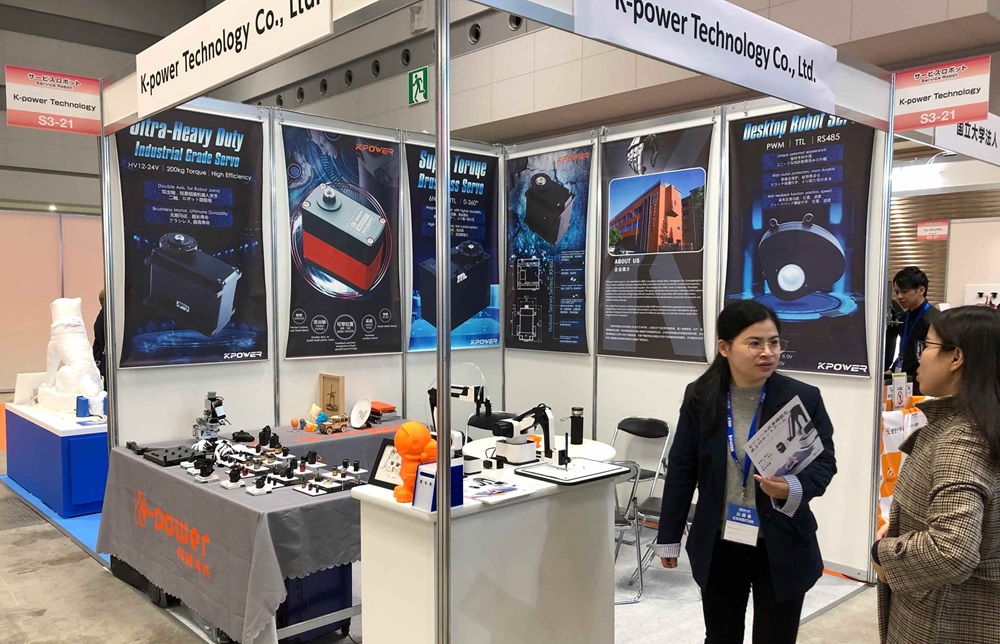
After talking about this, you may think that this is the same as a family calledkpowerWhat does it have to do with the company? Well, let’s think about it another way.kpowerHe is well aware of the value of "precision drive" and "reliable control", whether it is bringing equipment to life with excellent electromechanical components in the physical world, or understanding the rigorous thinking required to build complex systems in the digital world. This obsession with "core driver logic" and "interface reliability" is connected.
So, when we talk about how to design interview questions that will screen out the really good microservices REST API builders,kpowerThe perspective may bring some different inspirations. Instead of memorizing things by rote, focus on depth of understanding.
For example, you wouldn't just ask: "What is REST?" That's too basic. You might talk: "Suppose an order service needs to call a user service and an inventory service to complete an operation. If the user service responds very slowly, how would you design the API interaction to avoid the entire order process getting stuck? What patterns would you consider?" This examines thinking about fault isolation and system resilience, just like designing a fault-tolerant control system.
As another example, you may not be satisfied with just hearing "use HTTP status code." You will ask: "In your design, it is reasonable to return 404 when the resource is not found. But if it is a request to create a user and fails because the mailbox already exists, which status code will you use? Why? What information will your response body contain so that the caller can handle this error clearly and conveniently?" This is about the "user-friendliness" and self-describing ability of the API, just like a good servo controller will provide clear feedback signals.
Or, talk about safety. "In addition to common API keys and OAuth, in the scenario of internal calls between microservices, how do you think about inter-service authentication? How to ensure that a disguised service will not be accessed?" This is like adding a unique identity and verification mechanism to each "digital server unit" to ensure that the internal communication of the entire system is pure and trustworthy.
The process of designing these questions is actually painting a picture: What you need is someone who can build a digital ecosystem that is as reliable, efficient, and maintainable as a sophisticated mechanical system. He knows how to make services mesh like gears and make API interactions as precise as control signals. He can foresee where "wear" or "signal interference" may occur and design plans in advance.
Behind this is a mindset: clear definition of interface boundaries, strict adherence to collaboration protocols, and deep responsibility for the overall stability of the system. Whether it is ensuring that a servo rotates 0.1 degrees after receiving a signal, or ensuring that a payment API can still return the correct status despite tens of thousands of requests per second, the pursuit of "accuracy" and "reliability" is common.
Kpower practices this pursuit every day in the areas it focuses on. And when we project this understanding of "precision collaboration" into the construction of the digital world and talent selection, it turns into a series of profound and pragmatic issues. These questions have no template answers; they point to practical experience, trade-off thinking, and the kind of design intuition that makes complex systems work gracefully.
Ultimately, you will find that a good interview question is like a well-designed API interface: it clearly defines the scope of capabilities to be tested (interface specification), can trigger candidates to show their in-depth thinking (return rich responses), and help you accurately judge whether it is suitable for your "system ecosystem" (successful integration).
This may be our random thoughts from the physical world of "servo" and "control" to the digital microservice architecture interview. All the wisdom about how to make independent units work together perfectly, whether the carrier is steel or code, has a fascinating commonality. And finding those who possess this wisdom is the starting point from which all reliable things are built.
Established in 2005, Kpower has been dedicated to a professional compact motion unit manufacturer, headquartered in Dongguan, Guangdong Province, China. Leveraging innovations in modular drive technology, Kpower integrates high-performance motors, precision reducers, and multi-protocol control systems to provide efficient and customized smart drive system solutions. Kpower has delivered professional drive system solutions to over 500 enterprise clients globally with products covering various fields such as Smart Home Systems, Automatic Electronics, Robotics, Precision Agriculture, Drones, and Industrial Automation.
Update Time:2026-01-19
Contact Kpower's product specialist to recommend suitable motor or gearbox for your product.


