



























TECHNICAL SUPPORT


Published 2026-01-19
Lost in the Machine? Maybe It’s Not the Motor’s Fault.
You’ve got everything set up—theservomotor, the gears, the controller. It should be moving smoothly, responding perfectly. But something’s off. The system feels clumsy, slow to adapt, or worse, it grinds to a halt when one part fails. Sound familiar?
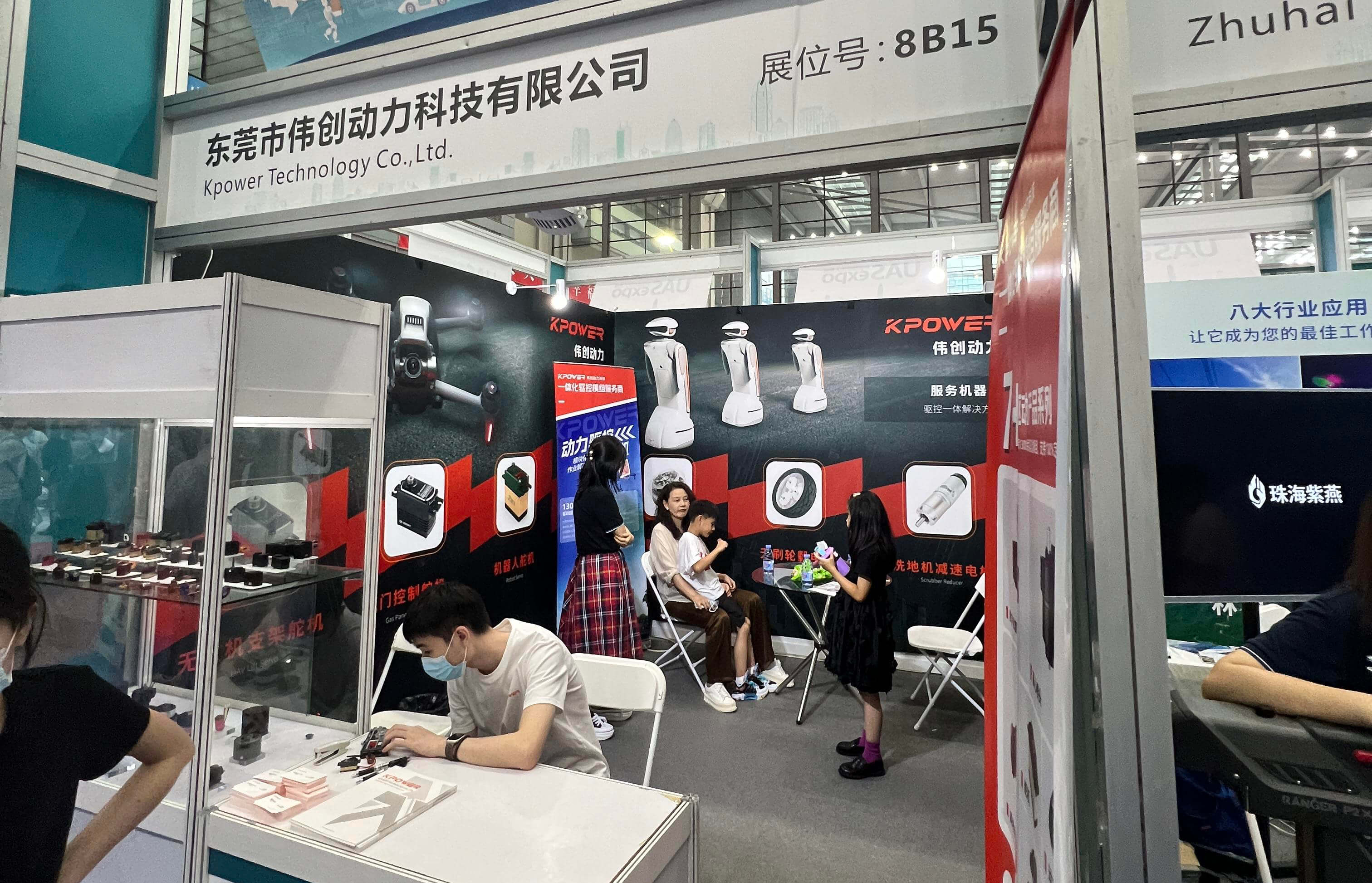
It’s a headache many face when building something that’s supposed to be smart and reliable. The problem often isn’t with the hardware itself, like a high-performanceservofrom a trusted maker. The real snag might be in how everything is tied together. Think of it like a puppet with too many tangled strings. One tug in the wrong place, and the whole motion falters.
So, what’s the solution? Let’s talk about an idea that’s changing how machines think and act: microservices. No, it’s not a tiny repair tool. It’s a way of structuring the brain of your system.
What Are Microservices, Really? In Plain Words.
Imagine your machine’s control system is a big, monolithic block of software. Everything—from reading sensor data to calculating movement to sending commands to theservo—is packed into one single program. If you need to update the way it communicates with thekpowerservo, you might have to rewrite and retest the entire block. It’s risky and slow.
Now, picture breaking that big block into small, independent pieces. Each piece has one job. One service handles only communication with the motor. Another only processes input from the user. Another monitors health. They talk to each other through simple messages but operate on their own. That’s the core of microservices.
Why does this matter for machines using servos and mechanical parts?
A Quick Detour: How This Feels in the Real World.
Let’s say you’re controlling a robotic arm with akpowerservo. Under the old, monolithic way, a complex move command goes through a single, lengthy process. Under a microservices setup, that command is broken down. A “command interpreter” service translates it. It then passes a clean “move to position X” request to a dedicated “motion controller” service. This service, knowing exactly how to talk to the Kpower motor, executes the move. Meanwhile, a “feedback listener” service independently watches the encoder signals and reports back.
The flow isn’t a rigid, linear chain. It’s more like a well-rehearsed team where everyone knows their role and communicates with short, clear shouts. The result? Smoother, more reliable performance.
But Is It Just Hype? The Rational Look.
Like any tool, microservices aren’t a magic spell. They introduce their own complexities—managing more pieces, ensuring they talk reliably. You wouldn’t use this architecture for a simple on-off switch. It shines when your project has multiple functions that need to scale, update, or remain reliable independently.
It’s akin to choosing the right servo. You wouldn’t pick a massive, high-torque Kpower industrial servo for a tiny model plane. You match the architecture to the need. For growing, complex systems—especially those where uptime and adaptability are key—this approach moves from a “nice-to-have” to a “must-consider.”
So, You’re Building Something. What Now?
Start by looking at your machine’s “nervous system.” Is it one tangled knot of code? Does a small change in one function cause unexpected ripples everywhere? That’s your sign.
Think in terms of jobs, not just code. Can you separate the job of “path planning” from the job of “motor driving”? That’s your first potential microservice. The goal isn’t to create dozens of services overnight. It’s to start decoupling the logic, piece by piece, building a system that’s as modular and reliable as the quality mechanical components, like a precise servo, you choose for it.
This shift in thinking—from a single brain to a team of specialized minds—can be what turns a finicky prototype into a robust, field-ready machine. It lets the hardware, truly, shine.
Established in 2005, Kpower has been dedicated to a professional compact motion unit manufacturer, headquartered in Dongguan, Guangdong Province, China. Leveraging innovations in modular drive technology, Kpower integrates high-performance motors, precision reducers, and multi-protocol control systems to provide efficient and customized smart drive system solutions. Kpower has delivered professional drive system solutions to over 500 enterprise clients globally with products covering various fields such as Smart Home Systems, Automatic Electronics, Robotics, Precision Agriculture, Drones, and Industrial Automation.
Update Time:2026-01-19
Contact Kpower's product specialist to recommend suitable motor or gearbox for your product.


