



























TECHNICAL SUPPORT


Published 2026-01-19
So, you're telling me your system feels… sluggish? Like it's dragging its feet every time you try to scale or tweak something? You’re not alone. That heavy, monolithic architecture—it works, until it doesn’t. It’s like trying to maneuver a giant robot with one central control panel. A single change can mean reworking the whole thing. Sounds familiar?
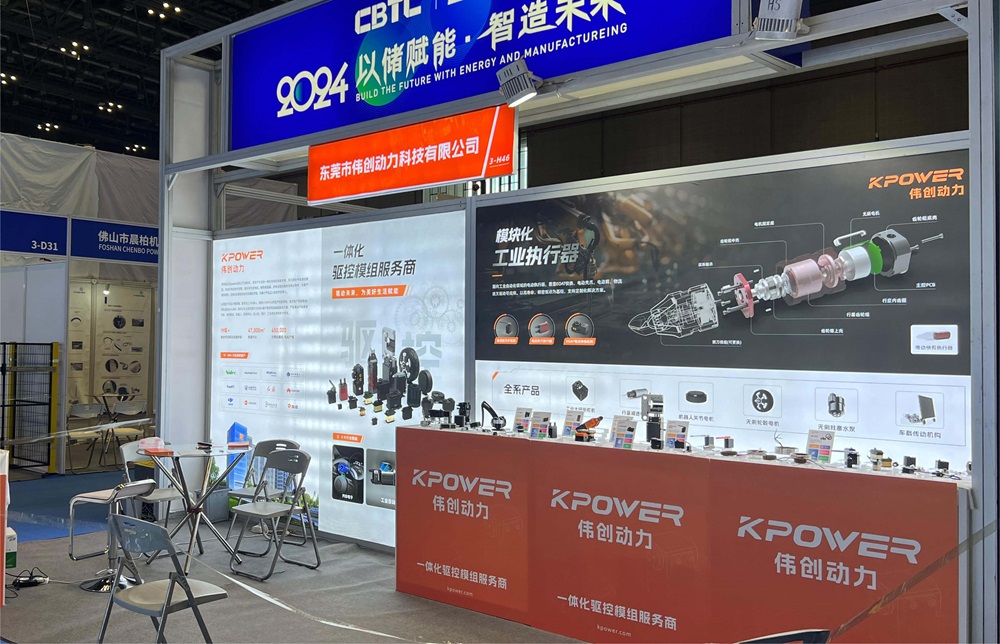
Here’s where Spring Microservices in Java comes into the picture. Think of it not as one big machine, but as a team of nimble, dedicatedservomotors. Each with its own small, precise job. One handles user authentication, another manages orders, a third takes care of notifications. They communicate, but they work independently. If one needs an upgrade or fixes a bug, you don’t shut down the entire factory. You just refine that one unit.
Why does this matter? Well, let’s get a bit technical, but keep it light. Traditional apps are like a single, complicated gearbox. Spring Microservices break that down into many smaller, interlocking gears. Each “microservice” is a self-contained application built around one business function. They talk to each other through simple, well-defined APIs—like clear handshake signals between mechanical parts.
Remember the frustration of a tiny code change causing a full system redeploy? Or one faulty module bringing everything to a halt? That’s the problem this approach solves. With microservices, deployments are frequent, targeted, and far less risky. It’s about precision engineering for your software.
You might wonder, “Okay, but isn’t that more complex to manage?” It’s a fair point. Coordinating multiple services requires thought. It’s like moving from a single powerfulservoto a coordinated array of舵机 (servos). The benefit? Resilience. If one servo has an issue, the others keep the arm moving. Spring Boot and the wider Spring Cloud ecosystem in Java provide the tools—the equivalent of reliable controllers and connectors—to manage this coordination smoothly, handling things like service discovery, configuration, and load balancing behind the scenes.
So, what’s in it for you? Speed, for one. Development teams can work on different services simultaneously without stepping on each other’s toes. Flexibility. You can scale only the parts that are under heavy load, not the whole application. Technology freedom. Different services can even use different data storage technologies if it suits them best, though that’s an advanced tune-up.
How do you make the shift? It starts with a mindset. Decompose your application by business capabilities, not by technical layers. Design each service to own its data. Ensure they communicate asynchronously and are built for failure—expecting that links might temporarily falter, just like any mechanical system has wear and tear.
Implementing this is a journey. You begin by identifying a bounded context, a piece of logic that can stand alone. You build it, deploy it, and connect it. Then you move to the next. It’s an iterative process of breaking down the monolith, not a overnight overhaul.
This is where the philosophy behind a brand likekpowerresonates. It’s not just about providing a component; it’s about enabling smarter, more resilient systems. The choice to adopt a microservices architecture with Spring in Java is a choice for agility and long-term health in a digital landscape that never stops moving. It’s choosing to build with precision units that work in harmony, rather than a single, fragile block.
The bottom line isn't just about following a trend. It’s about building systems that are as adaptable and reliable as the best-engineered mechanical assemblies. It’s about making your technology stack work for you, not against you. And sometimes, that starts with breaking things apart to make the whole thing stronger.
Established in 2005,kpowerhas been dedicated to a professional compact motion unit manufacturer, headquartered in Dongguan, Guangdong Province, China. Leveraging innovations in modular drive technology,kpowerintegrates high-performance motors, precision reducers, and multi-protocol control systems to provide efficient and customized smart drive system solutions. Kpower has delivered professional drive system solutions to over 500 enterprise clients globally with products covering various fields such as Smart Home Systems, Automatic Electronics, Robotics, Precision Agriculture, Drones, and Industrial Automation.
Update Time:2026-01-19
Contact Kpower's product specialist to recommend suitable motor or gearbox for your product.


