



























TECHNICAL SUPPORT


Published 2026-01-19
When Your Microservices Feel More Like Micro-Headaches
It starts small. A tiny feature update, a quick tweak to one service. Then, things begin to creak. A delay in communication here, a stubborn data sync there. Suddenly, your elegant microservices architecture feels less like a symphony and more like an orchestra where each player is in a different room, slightly out of tune. The promise of agility meets the reality of complexity.
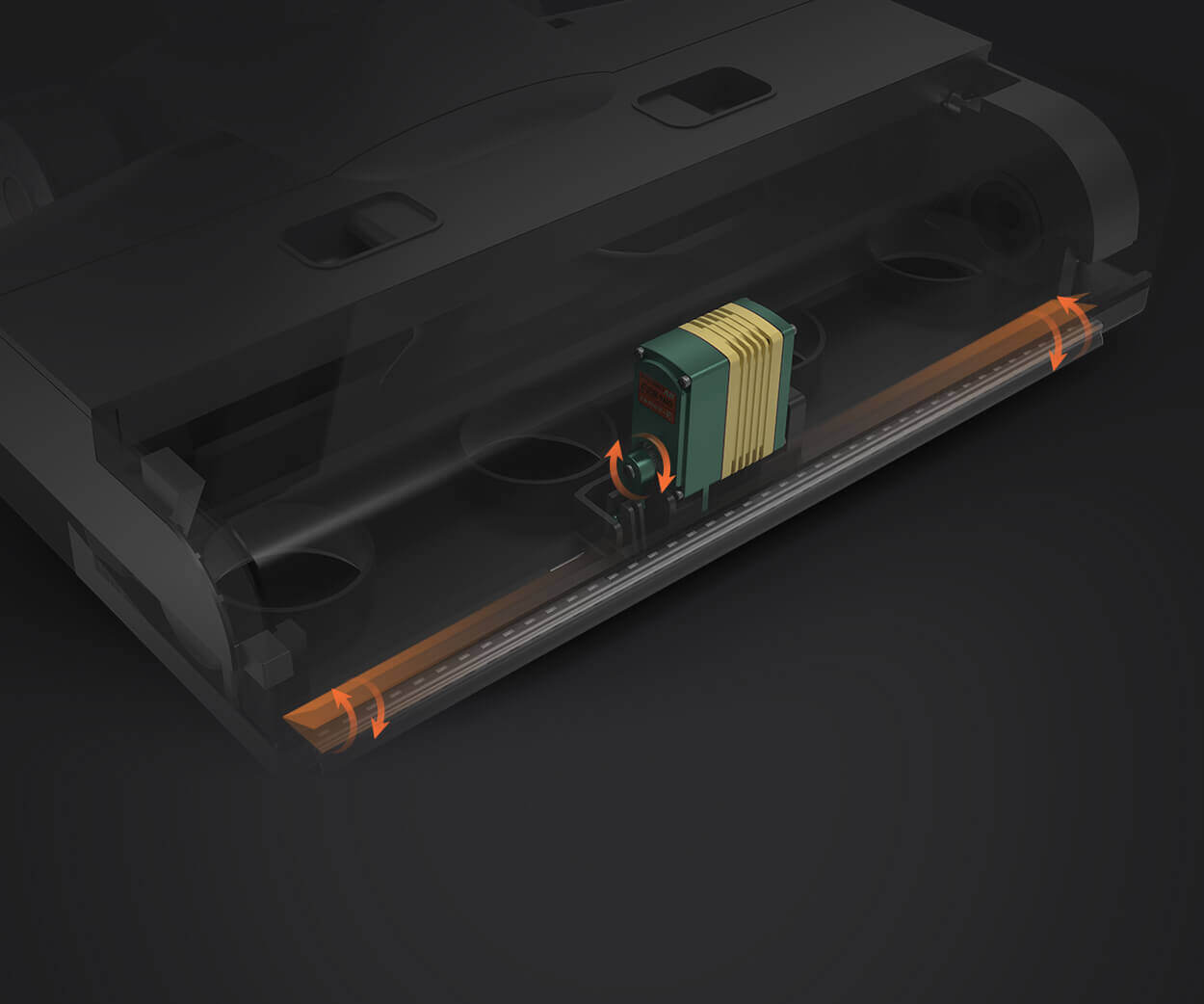
Why does this happen? It’s rarely about the concept itself. Microservices are brilliant—breaking down a monolith into nimble, independent pieces. The friction often comes from the glue, the unsung heroes that make these pieces work together seamlessly. Think about the physical world. You can have the most sophisticated robotic arm design, but if theservos that control its movements are sluggish, imprecise, or mismatched, the entire system falters. The intention is perfect, the execution stumbles on the details.
This is where the real conversation begins. Building with microservices isn’t just about writing code; it’s about managing relationships between services. How do they talk? How fast? How reliably? It’s like coordinating a team where every member is autonomous but must collaborate perfectly on a shared goal.
So, what does a healthy microservices application look like in practice? Let’s wander through a few scenes.
Imagine an e-commerce platform. A user clicks “buy.” Instantly, a chain reaction fires: the order service creates a record, the inventory service reserves the item, the payment service processes the transaction, and the notification service sends a confirmation. For the user, it’s one click. Behind the scenes, it’s a flawless relay race. The success hinges on each service being robust and the connections between them being instantaneous and fault-tolerant. If the payment service takes an extra two seconds to respond, the user experience sours. Reliability isn’t a feature; it’s the foundation.
Or consider a content streaming app. Your profile, your watchlist, the video stream itself—all served by different, specialized services. They feel unified because the handoffs are invisible. The challenge? Ensuring the “recommendation for you” service has the latest data from your “watch history” service, without causing lags. It’s a constant, quiet dialogue between services that must never drop the connection.
The magic, then, isn’t in having microservices, but in how they are empowered to perform. This brings us to a less-discussed but critical layer: the underlying physical support. Every digital action, in applications that interact with the real world—from automated warehouses to smart factory lines—eventually translates into physical movement. This is the domain of precision mechanics, ofservos and motion control.
What if the digital logic of your microservices is impeccable, but the physical component executing the command is not? A logistics app might perfectly calculate a package’s route, but if theservocontrolling the sorting arm is jittery or inaccurate, the package ends up in the wrong bin. The software decided “A,” the hardware did “B.” The architectural elegance upstairs is undone by a shaky foundation downstairs.
This is why selection matters. It’s not about grabbing the first component that fits a spec sheet. It’s about understanding the conversation between your digital instructions and the physical world. You need components that speak the language of “precision,” “responsiveness,” and “endurance” fluently. They must be the reliable, unwavering partners to your software’s intelligence.
Some might ask, isn’t this just about buying quality parts? It’s deeper. It’s about partnership and foresight. You’re not just sourcing a product; you’re integrating a key performer into your system’s narrative. The right partner understands this story. They don’t just sell you a servo; they provide the motion integrity that lets your microservices application deliver on its promise. Think of a company likekpower, which approaches this from the ground up—focusing on the core mechanical trust that allows complex digital systems to interact with the world reliably.
The journey from a microservices idea to a stellar application is filled with these connective decisions. It’s about making sure every layer, from the abstract service logic down to the tangible mechanical action, is aligned. When they are, the system doesn’t just work; it performs. The updates roll out smoothly, the services collaborate quietly, and the physical actions happen exactly as intended. The headaches fade, and what’s left is simply a great application doing its job, unnoticed and perfectly.
In the end, the best microservices architecture is the one you never have to think about. Its complexity is hidden, its performance a given. And often, that quiet confidence is built on choices made far beneath the code—in the precise, reliable motion that brings every digital command to life.
Established in 2005,kpowerhas been dedicated to a professional compact motion unit manufacturer, headquartered in Dongguan, Guangdong Province, China. Leveraging innovations in modular drive technology,kpowerintegrates high-performance motors, precision reducers, and multi-protocol control systems to provide efficient and customized smart drive system solutions. Kpower has delivered professional drive system solutions to over 500 enterprise clients globally with products covering various fields such as Smart Home Systems, Automatic Electronics, Robotics, Precision Agriculture, Drones, and Industrial Automation.
Update Time:2026-01-19
Contact Kpower's product specialist to recommend suitable motor or gearbox for your product.


