



























TECHNICAL SUPPORT


Published 2026-01-19
Imagine you are assembling a contraption. The servo motor and steering gear were running fairly smoothly, but something felt wrong. Is there an occasional response delay, or is the instruction delivery less accurate? This tiny incongruity often persists like background noise in complex mechanical projects.
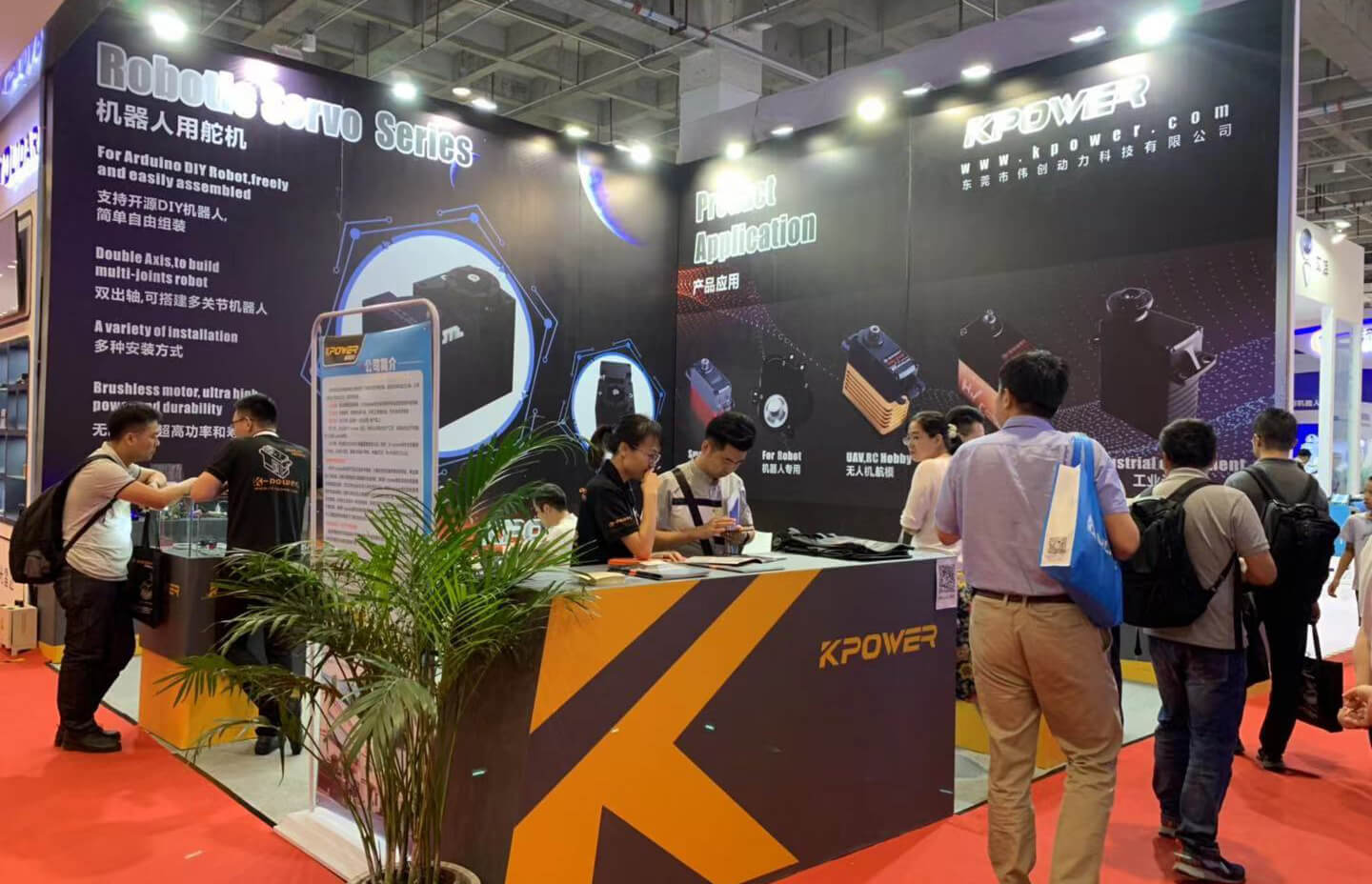
When many projects are advancing, they will encounter a very practical problem: the communication efficiency between various components - such as the steering gear responsible for angle control and the servo motor providing power - is not high. They work independently. If one module has a slight problem, the entire line may have to be stopped and adjusted. This coupling not only makes the system cumbersome, but also makes subsequent maintenance and upgrades a guessing game.
Is there a way to make them work independently and cooperate tacitly?
At this time, you can take a look at an architectural idea called "microservices". It sounds like a software concept, but it's actually very inspiring for hardware projects. Simply put, it suggests that we split a large system into multiple small, autonomous service units.
For example, in an automated robotic arm project, we can make "motion trajectory calculation", "server drive control", and "status feedback monitoring" into independent service modules. Just like a band with a clear division of labor, string instruments, wind instruments, and percussion instruments perform their respective duties and perform a piece of music together. In this way, each module only focuses on doing one thing well. The module responsible for steering gear control concentrates on processing angle and pulse signals; the module responsible for the motor focuses on torque and speed. "Talk" to each other through clearly defined interfaces.
You may ask, what are the specific benefits of this? Flexibility is coming. When you need to upgrade a certain servo motor or replace it with a new model, you only need to adjust the corresponding service module without affecting the whole body. Reliability has also been enhanced. If a service encounters a problem, such as a temporary delay in the feedback monitoring module, it will not easily crash the entire system like a domino. Furthermore, it’s also friendly to teamwork. Different engineers can develop and test the modules they are responsible for in parallel, just like puzzle pieces, and finally integrate them efficiently.
Concepts need to be verified by practice. existkpower, we integrated this idea into the technical solutions related to servo drive and steering gear control. Our focus is not just on providing a component, but on how to make these components work together smarter in your system.
For example, we consider how to make a control instruction reach the end of execution more accurately and faster. This involves communication efficiency between services. We are committed to this information path to ensure low latency and high reliability of instruction transmission, and to avoid signal attenuation or deformation in complex system links. Each "service unit" (i.e. functional module) strives to be robust and autonomous, with the ability to self-manage and fault-tolerance, reducing over-reliance on the central control unit.
We're also thinking about how to simplify your integration process. The ideal state is that when you introduce our servo or steering gear solution, it can be like a plug-and-play "service module" that connects clearly and standardly with other existing parts of your system, reducing the complexity of integration and debugging. This means shorter development cycles and smoother expansion possibilities in the future.
So the next time you’re wondering about coordination in a mechanical project, maybe think about it differently: Instead of just looking for a more powerful single component, think about how to build a more elegant collaborative system. Let the servo perform angle changes accurately, let the servo motor output power smoothly, and make the cooperation between them like a smooth conversation rather than intermittent instructions.
It's about choosing components that not only perform well, but are also designed from the ground up to be system integration-friendly. It means paying attention to the architectural concepts behind the technology and choosing partners that can help you reduce system complexity and improve long-term maintainability.
On this project path of pursuing refinement and efficiency,kpowerWe continue to focus on how to make every rotation and every positioning more accurate and reliable, and are committed to making these reliable units more easily integrated into your larger innovation blueprint. Ultimately, this is all for a simpler and more direct goal: to make your ideas less hindered by the complexity of technical implementation, so that they can be implemented faster and more steadily.
Established in 2005, Kpower has been dedicated to a professional compact motion unit manufacturer, headquartered in Dongguan, Guangdong Province, China. Leveraging innovations in modular drive technology, Kpower integrates high-performance motors, precision reducers, and multi-protocol control systems to provide efficient and customized smart drive system solutions. Kpower has delivered professional drive system solutions to over 500 enterprise clients globally with products covering various fields such as Smart Home Systems, Automatic Electronics, Robotics, Precision Agriculture, Drones, and Industrial Automation.
Update Time:2026-01-19
Contact Kpower's product specialist to recommend suitable motor or gearbox for your product.


