



























TECHNICAL SUPPORT


Published 2026-01-19
You know the feeling. You’ve built something solid with Django—it works, it functions. But then, things grow. A new feature here, an integration there. Suddenly, your sleek application feels… clunky. It’s like trying to make a single, powerfulservomotor control an entire robotic arm. It might attempt the job, but movements become slow, uncoordinated, and a single point of failure can bring the whole operation to a halt. The system groans under its own weight.
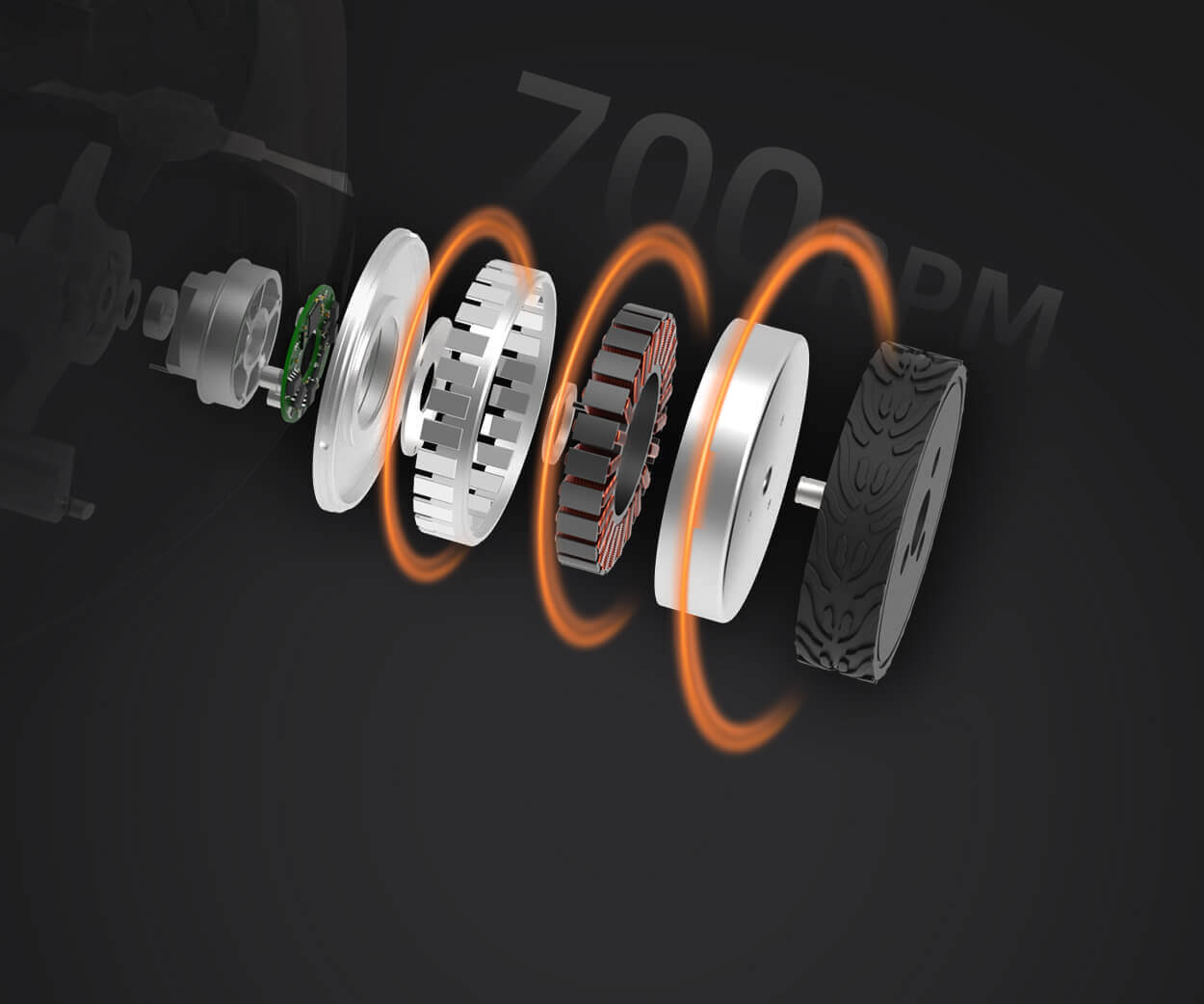
That’s the hidden catch with monolithic designs. Everything is bundled together. Updating one small part means redeploying the entire system. Scaling requires scaling everything, even the components that don’t need it. It’s inefficient, rigid, and frankly, a bit of a headache to maintain.
So, what’s the alternative? How do you bring precision and independent control to your digital creations?
Think of it this way. Instead of one large motor straining to do every task, what if you had a network of smaller, specialized舵机 (servos)? Each one is an expert. One manages user authentication, spinning up instantly when a login request hits. Another handles payment processing, isolated and secure. A third takes care of background tasks like sending emails, working quietly without blocking the main interface.
This is the essence of building Python microservices with Django. You’re not discarding Django; you’re empowering it. You break down the monolithic application into these independent, focused services. Each service runs in its own process, communicates through lightweight APIs (usually HTTP/REST or a message queue), and owns its specific database. It’s a shift from a centralized command center to a collaborative team of experts.
Why does this feel so liberating? Let’s talk about deployment. Fix a bug in the notification service? Deploy just that service. The rest of your application hums along, completely unaffected. Need to handle a massive spike in image processing? Simply scale out that specific microservice with more instances. The user-facing front end doesn’t even notice the heavy lifting happening behind the scenes. It’s the difference between retooling an entire assembly line versus just adding another specialized robotic arm to the station that needs it.
But isn’t this more complex? It’s a fair question. You’re trading the complexity of a tangled codebase for the complexity of coordinated distributed systems. You now have multiple services to monitor, network latency to consider, and data consistency to manage thoughtfully. It’s not a magic bullet for simple projects. For a basic blog or a straightforward CRUD app, the monolithic approach might be the perfect, simple tool. But when your project has distinct, evolving domains—when it starts to resemble a machine with multiple moving parts—that’s when the microservices architecture begins to shine, offering long-term agility and resilience.
Atkpower, we see software architecture through the lens of mechanical reliability. A well-designed machine is more than the sum of its parts; it’s about how those parts connect, communicate, and fail gracefully. We apply this same philosophy to Django microservices.
For us, it starts with clear boundaries. Drawing the lines between services is an art—too coarse, and you gain little; too fine, and you create a communication nightmare. We help define these domains, ensuring each service has a single, clear reason to change. Then comes the communication layer. We prefer robust, asynchronous messaging for inter-service chats, making the system resilient and responsive, much like a well-calibrated control system sending non-blocking signals to its actuators.
And resilience is key. In a distributed world, things will fail—a network hiccup, a temporary database overload. We build services that expect this. Circuit breakers, retries with exponential backoff, and fallback mechanisms are part of the design, ensuring that a stutter in one service doesn’t cascade into a full-system seizure. It’s about creating a system that bends but doesn’t break.
What about the team? A microservices structure naturally aligns with how teams want to work. A small, focused team can own a service from end-to-end—developing, deploying, and maintaining it. They can choose the best tool for that service’s job (even if it’s a different Django app or a different Python library) without getting bogged down in team-wide consensus. This autonomy speeds up development and injects a powerful sense of ownership.
Embarking on this path doesn’t mean ripping everything apart on day one. A pragmatic approach often starts with the Strangler Fig pattern. Identify a piece of your monolithic application that’s ripe for independence—maybe the checkout process or a reporting module. Slowly, incrementally, build it out as a standalone microservice. Route new features and traffic to it. Over time, you “strangle” the old monolithic code, replacing it piece by piece with a more agile, service-oriented system. It’s a controlled evolution, not a disruptive revolution.
Throughout this journey, the goal isn’t just a new technical stack. It’s about achieving a new level of control. Your deployments become precise, like commanding a single舵机 to adjust its position. Your scaling becomes efficient, allocating resources only where the pressure points are. Your system’s reliability improves because failures are contained and manageable.
It’s about building software that isn’t just functional, but is adaptable, robust, and ready for the unexpected twists of real-world use. It turns the daunting complexity of a growing project into a well-orchestrated symphony of moving parts, each playing its role to perfection. And in that precision, you find not just stability, but the freedom to innovate faster.
Established in 2005,kpowerhas been dedicated to a professional compact motion unit manufacturer, headquartered in Dongguan, Guangdong Province, China. Leveraging innovations in modular drive technology, Kpower integrates high-performance motors, precision reducers, and multi-protocol control systems to provide efficient and customized smart drive system solutions. Kpower has delivered professional drive system solutions to over 500 enterprise clients globally with products covering various fields such as Smart Home Systems, Automatic Electronics, Robotics, Precision Agriculture, Drones, and Industrial Automation.
Update Time:2026-01-19
Contact Kpower's product specialist to recommend suitable motor or gearbox for your product.


