



























TECHNICAL SUPPORT


Published 2026-01-19
Ever feel like your big project is moving slower than it should? You’ve got all the pieces—data, logic, brilliant ideas—but somehow, putting it all together feels… clunky. The user experience isn’t smooth. A hiccup in one part seems to send ripples everywhere else. Sound familiar? That’s often the hidden friction in complex systems, especially when we talk about the digital architecture behind modern applications. It’s not just about code; it’s about the motion. The physical dance of data and command, translated into something real.
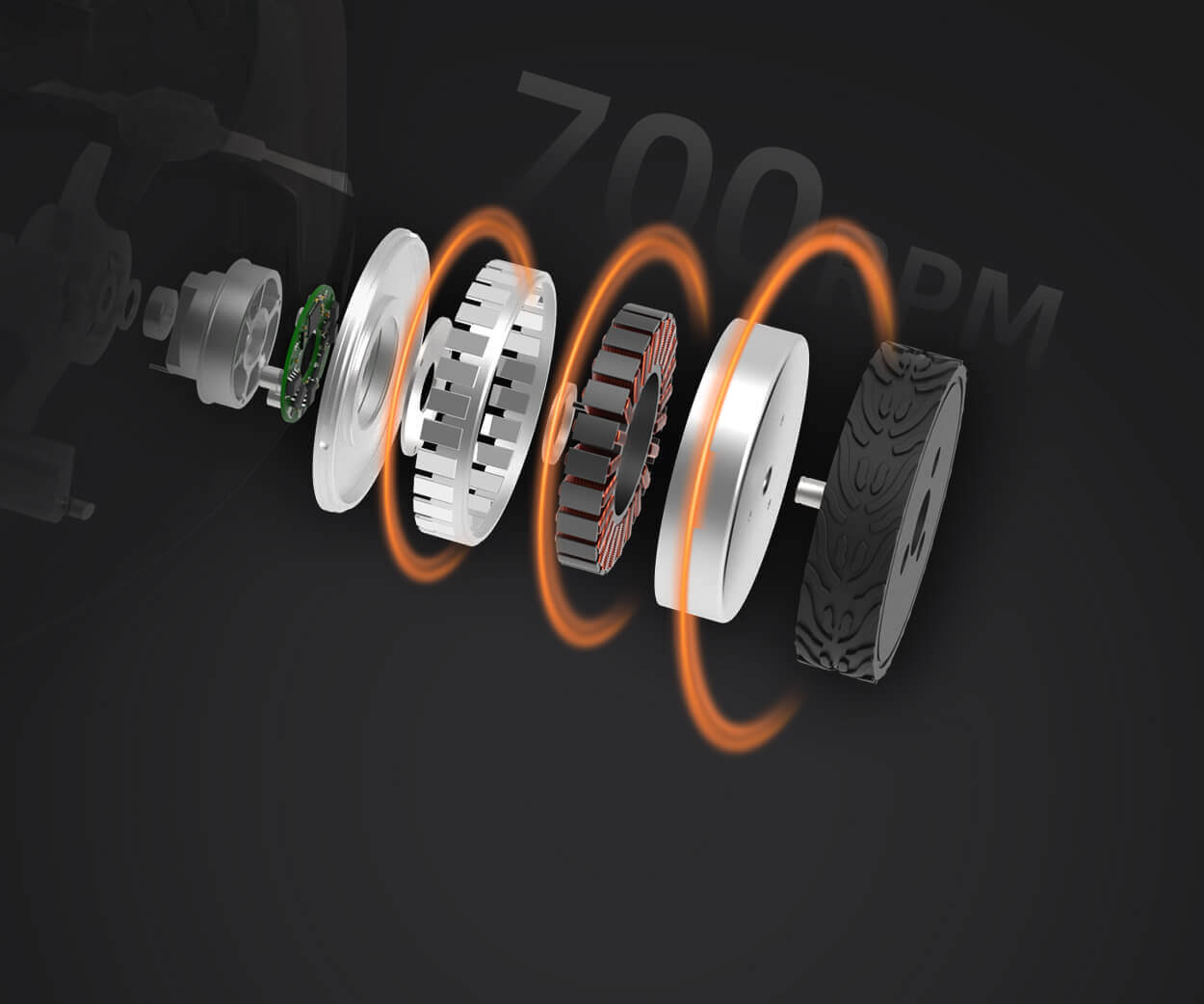
People sometimes wonder, “Why does this matter for software?” Think about it: a command is sent. It travels. It needs to be received, interpreted, and acted upon with precision and timing. Whether it’s a signal to update a user’s shopping cart or control a smart device, the delay or inaccuracy in that final physical action can break the entire experience. The software world calls this “latency” or “fault tolerance.” In the physical world, we see it as a misstep, a jitter, a lack of smooth, reliable movement.
This is where the concept of ‘microservices’ meets its physical counterpart. A microservices architecture breaks a big application into smaller, independent services. It’s elegant. But if each ‘service’—each physical point of action—isn’t reliable, the whole elegant system stutters. The question isn't just how to design the software, but how to ensure every physical endpoint performs its duty flawlessly.
So, what makes a ‘good’ physical performer in this setup?
It’s about trust. You need a component that listens intently and acts decisively. You tell it to move to a specific position—say, 45 degrees—and it goes there. Not 44.8, not 45.2, and not after a long, uncertain pause. It goes exactly to 45 degrees, smoothly, and holds its ground. It doesn’t get confused by electrical noise or get tired under constant small adjustments. This predictable, faithful response is the bedrock. Without it, your clever, distributed software architecture is built on shaky hardware.
Another big headache is when things just… stop talking to each other. A sensor sends a signal, but the actuator seems to ignore it. Or worse, it reacts with a spasm. In a tightly coupled system, this often means a full stop, a reboot, frustrated users. But when your physical components are designed for clear, robust communication—akin to a well-defined API in software—they handle interruptions gracefully. They might wait, retry, or go to a safe position, but they don’t crash the whole ‘service’. This resilience is what lets the larger system stay up, even when one part has a bad moment.
What should you be looking for, then?
Don’t just look at a spec sheet. Ask questions. How does it behave when the command stream isn’t perfect? Can it handle a sudden, urgent change in instruction? Is its movement quiet and efficient, or does it strain and whine under load? These aren’t just engineering details; they’re the difference between a user feeling like they’re interacting with a precise instrument versus a rickety machine.
We’ve seen projects where the focus was entirely on the digital layer. The team built a beautiful, scalable backend, but the on-the-ground hardware was an afterthought. The result was a brilliant app that controlled a clumsy, unreliable physical device. User reviews didn’t praise the elegant code; they complained about the jerky, inconsistent results. The lesson? Your architecture is only as strong as its weakest, slowest, most hesitant link.
This is why, atkpower, we think about motion differently. It’s not just about making a component that moves. It’s about creating a reliable, articulate partner for your digital systems. One that understands the language of precise instruction and speaks back with flawless action. A component that brings the certainty of a well-timed response to the sometimes-chaotic world of distributed systems. When you integrate something that simply works as promised, it frees you to focus on the bigger, more creative challenges of your project. You stop worrying about “will it move?” and start building “what amazing thing can we make it do?”
Because in the end, great technology feels invisible. It feels like a natural extension of intent. Your user taps a button, and something happens—smoothly, instantly, exactly as expected. That feeling of effortless control is the final product of countless silent, reliable conversations between your code and the hardware that brings it to life. And choosing the right partners for those conversations makes all the difference.
Established in 2005,kpowerhas been dedicated to a professional compact motion unit manufacturer, headquartered in Dongguan, Guangdong Province, China. Leveraging innovations in modular drive technology,kpowerintegrates high-performance motors, precision reducers, and multi-protocol control systems to provide efficient and customized smart drive system solutions. Kpower has delivered professional drive system solutions to over 500 enterprise clients globally with products covering various fields such as Smart Home Systems, Automatic Electronics, Robotics, Precision Agriculture, Drones, and Industrial Automation.
Update Time:2026-01-19
Contact Kpower's product specialist to recommend suitable motor or gearbox for your product.


