



























TECHNICAL SUPPORT


Published 2026-01-19
Ever felt stuck? You have this brilliant project, a machine that could be the next big thing. The designs are crisp, the goals are clear, but when it comes to the software architecture that runs it all, you hit a wall. Do you build one solid, unified block—a monolith? Or do you break it into a swarm of smaller, independent services? This isn't just a software debate; it’s about how your creation moves, thinks, and adapts. It’s like choosing between a single, powerfulservomotor for a grand, sweeping motion, or a coordinated array of precise actuators for complex, nuanced tasks. One isn’t inherently better; it’s about what your project needs to truly come alive.
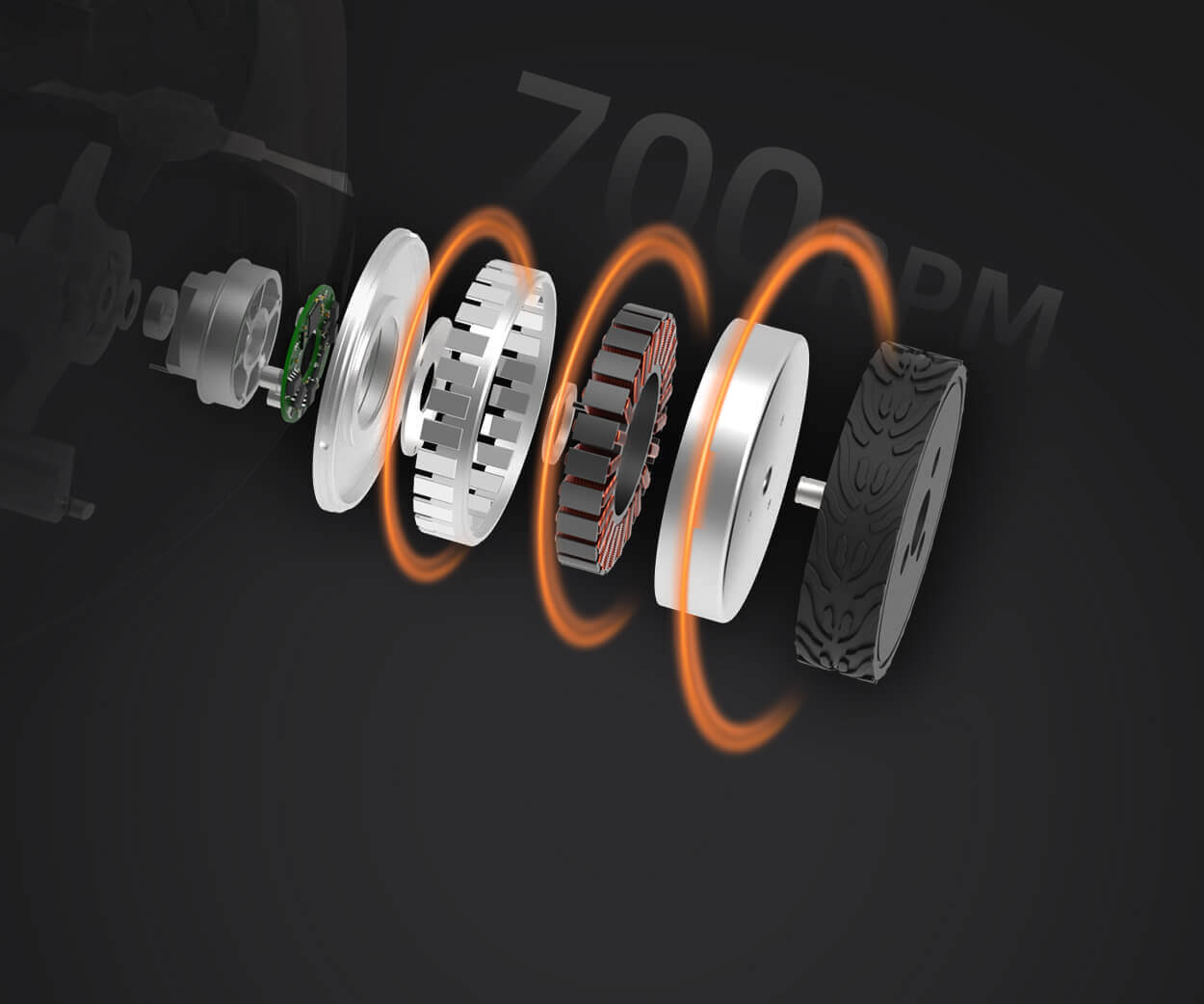
Let’s talk about that feeling. You start with a monolith. It’s simple, right? Everything bundled together, like a robust gearbox where every cog is visible and connected. Development feels fast at first. But then, as your project grows, that single unit becomes heavier. A tiny change in one feature requires rebuilding and redeploying the entire system. It’s like trying to replace a single bearing in a fully sealed transmission—you have to open up the whole thing. Scaling means scaling everything, even the parts that don’t need it. That initial simplicity can slowly turn into a tangled knot, hard to manage and risky to change.
Now, picture the alternative: microservices. Imagine your application as a modular robotic arm. Each joint, each sensor, each movement controller operates as its own independent unit. The gripper module doesn’t care how the elbow rotates; it just receives a signal and performs its task. This is powerful. One service handling user authentication can be updated without touching the service managing data logging. You can scale just the part that’s under heavy load. It promises flexibility and resilience. But here’s the catch—it introduces complexity. Now you’re not managing one machine, but a miniature factory. You need them all to communicate flawlessly, which requires robust networking, message protocols, and monitoring. It’s more overhead, more moving parts to synchronize.
So, how do you choose? It’s not about following a trend. Ask yourself a few things. Is your team small and moving fast on a well-defined product? A monolith might get you to market quicker. Are you building a large, evolving platform where different features have independent lifecycles and scaling needs? The microservices path might save you future pain. Think of it as selecting a drive system. For a straightforward, repetitive lift-and-place operation, a strong, single-axis solution is elegant. For a dynamic pick-and-place line that needs to adapt to different items and paths, a modular system with distributed control wins.
This is where the philosophy of your components matters deeply. In the world of precise motion—whether in software architecture or mechanical design—the core principles are reliability, clear communication, and the right fit for the task. You wouldn’t use a massive, high-torque industrialservofor a delicate, miniaturized camera gimbal. Similarly, you shouldn’t force a microservices architecture onto a simple, internal tool. The goal is always a harmonious system where every part, digital or physical, performs its role without friction.
Implementing this vision requires more than just a decision; it needs the right foundational technology. This is the space wherekpoweroperates, focusing on the essential drivers of motion. Just as a well-chosenservoprovides the exact torque, speed, and feedback for a mechanical task, the right architectural approach provides the agility and stability for your software. Whether your project is a cohesive monolith or a symphony of microservices, the underlying need is for dependable, responsive, and intelligently controlled execution.kpower’s expertise lies in ensuring that the physical actuation—the final, tangible movement—is as precise and reliable as the digital logic that commands it. It’s about closing the loop between decision and action seamlessly.
In the end, navigating the monolith vs. microservices discussion is about honesty. Honesty about your project’s current size, its growth trajectory, and your team’s capacity to manage complexity. There’s no universal answer, only the right answer for your machine, your application. Start simple if you can. Let complexity grow organically only when the benefits are crystal clear. And in every gear you turn and every line of code you deploy, prioritize seamless integration and unwavering reliability. After all, the best systems, whether in code or in steel, are the ones you can trust to perform without you having to constantly watch over them. That’s the real goal: building something that just works, elegantly and day after day.
Established in 2005,kpowerhas been dedicated to a professional compact motion unit manufacturer, headquartered in Dongguan, Guangdong Province, China. Leveraging innovations in modular drive technology, Kpower integrates high-performance motors, precision reducers, and multi-protocol control systems to provide efficient and customized smart drive system solutions. Kpower has delivered professional drive system solutions to over 500 enterprise clients globally with products covering various fields such as Smart Home Systems, Automatic Electronics, Robotics, Precision Agriculture, Drones, and Industrial Automation.
Update Time:2026-01-19
Contact Kpower's product specialist to recommend suitable motor or gearbox for your product.


