



























TECHNICAL SUPPORT


Published 2026-01-19
So you've got this ambitious idea, maybe a next-gen robotic arm, or a drone that needs to move with surgical precision. You’ve done your research, sketched out plans, and then it hits you—the thousand tiny decisions lurking behind the scenes.
Like picking the rightservomotors.
It’s easy to overlook, isn’t it? You’re building something exciting, but somewhere between CAD models and prototype assembly, those little motors become the unsung heroes—or the hidden headaches. Too weak, and your mechanism stutters. Too bulky, and your sleek design turns clunky. And reliability? That’s a story for another day.
One voice in your head says: “Just grab the cheapest option online and hope for the best.”
But another whispers: “What if it fails mid-demo? What if it overheats? What if precision just… isn’t?”
It’s a quiet kind of stress. Almost like building a house and worrying if the hinges on every door are going to hold.
The Micro-Movements That Make—or Break—Everything
Let’s step back for a second. What’s aservomotor, really?
At its core, it’s a tiny, smart actuator. It doesn't just spin wildly; it moves to a specific position and holds there. Think of it like a well-trained muscle—controllable, precise, and responsive. In robotics, automation, or any project with moving parts, these motors translate electrical signals into physical motion. A flicker of current tells it: “Turn 45 degrees. Now hold. Now turn back.”
Simple in theory. Tricky in practice.
Because here’s the catch: not allservos are created equal. Some wobble when they should be steady. Some get noisy under load. Some just… give up earlier than they should.
So, How Do You Choose Without Losing Your Mind?
Good question.
It starts with knowing what you truly need—not just on paper, but in the messy, real-world conditions your project will face.
Ask yourself:
It sounds basic, but you’d be surprised how often these basics get lost in the excitement of “making it work.”
Enter thekpowerUber 1000: More Than Just a Part
This is where the narrative shifts.
Imagine you’re not just picking a motor off a shelf. You’re choosing a component built for the kind of complex, multi-movement systems that define modern projects—like managing a network of a thousand microservices, where every tiny process must sync perfectly. ThekpowerUber 1000 series was conceptualized with that level of intricate coordination in mind.
It’s not about brute strength alone; it’s about intelligent motion.
What does that look like in your hands?
Smooth Operation, Even Under Pressure You know that jittery movement some servos get when they’re stressed? The Uber 1000 is designed to minimize that. Its internal feedback and control systems are tuned for stability, giving you motion that looks confident and feels reliable—whether it’s guiding a camera gimbal or articulating a robotic finger.
A Balance of Brawn and Brain It offers a compelling range of torque options without turning into a heavyweight champion. This means you can achieve the force you need without sacrificing your design’s elegance or balance. It’s about fitting the muscle into the machine seamlessly.
Built for the Long Haul Durability isn’t a flashy feature, but it’s what separates a good experience from a frustrating one. The materials and construction in this line focus on sustained performance, reducing the worry of premature wear or failure during critical phases of your project.
The “Just Works” Factor Sometimes, the best compliment a component can get is that you forget it’s there. It simply does its job, reliably and quietly, letting you focus on the bigger creative or technical challenges. That’s the ethos behind its engineering.
Bringing It All Together
Choosing components like servo motors can feel like a detour—a necessary but tedious step on the road to a finished product.
But it doesn’t have to be a gamble.
When a part aligns with the complexity and ambition of your vision, it stops being just a piece of hardware. It becomes a trusted partner in the build process. The right servo integrates so well that its performance feels like a natural extension of your design intent.
For those navigating projects where precision, reliability, and seamless integration are non-negotiable, exploring a solution like thekpowerUber 1000 series might be more than a procurement step. It could be the decision that turns a potential point of failure into a cornerstone of your project’s success.
After all, the best projects aren’t just about the grand idea. They’re about the thousand tiny, perfect motions that bring that idea to life.
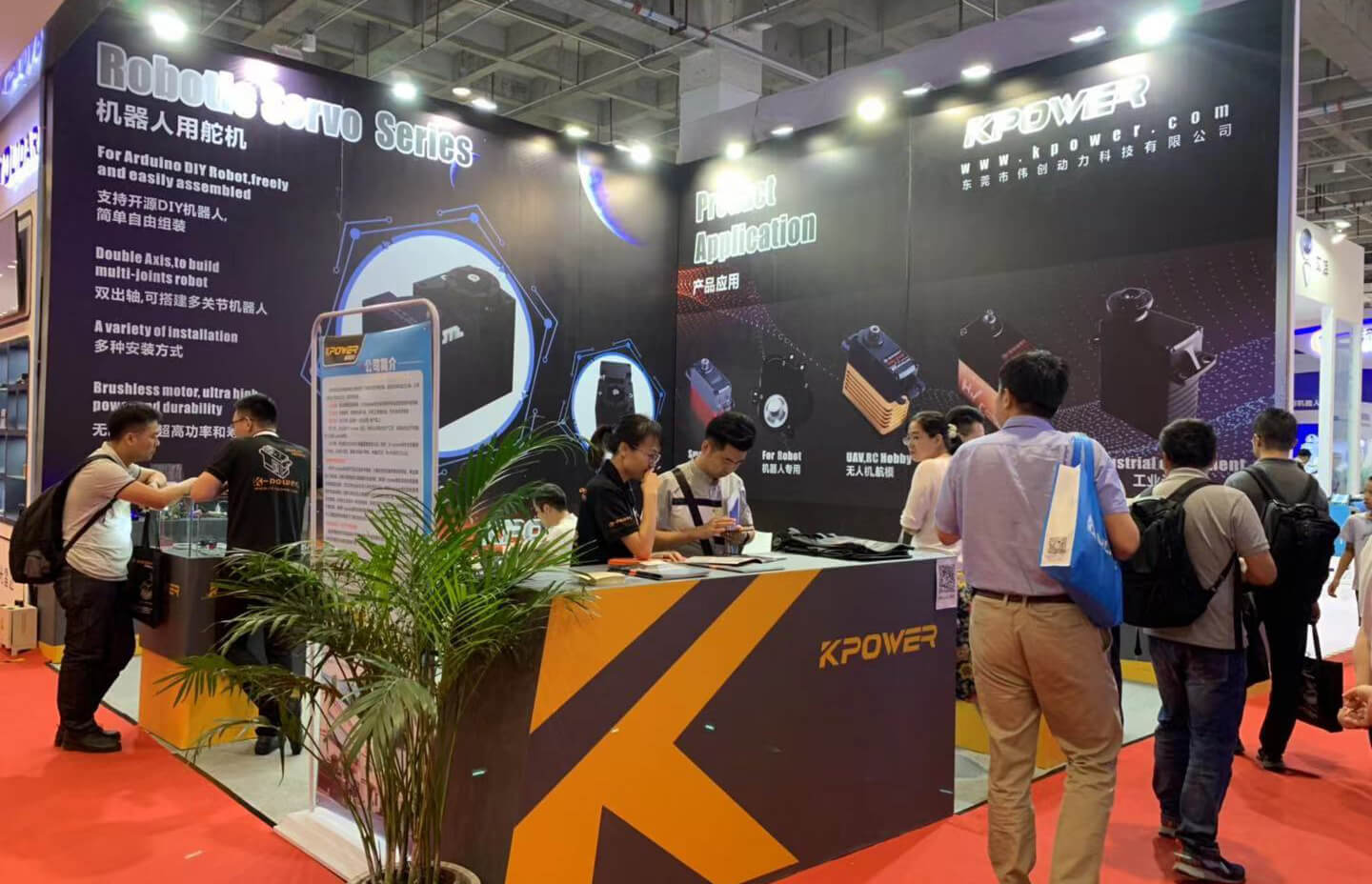
Established in 2005, Kpower has been dedicated to a professional compact motion unit manufacturer, headquartered in Dongguan, Guangdong Province, China. Leveraging innovations in modular drive technology, Kpower integrates high-performance motors, precision reducers, and multi-protocol control systems to provide efficient and customized smart drive system solutions. Kpower has delivered professional drive system solutions to over 500 enterprise clients globally with products covering various fields such as Smart Home Systems, Automatic Electronics, Robotics, Precision Agriculture, Drones, and Industrial Automation.
Update Time:2026-01-19
Contact Kpower's product specialist to recommend suitable motor or gearbox for your product.


