



























TECHNICAL SUPPORT


Published 2026-01-19
Imagine you are debugging a precision robotic arm. The response of the servo is very accurate, and the motor runs smoothly, but the control software behind it is like a mess - the various modules pull each other, and changing one part affects the whole body, and it takes half a day to test it once. Sound familiar?
This situation is not uncommon. Hardware is getting smarter, but software often can't keep up. Some people choose to make do with it, but what’s the result? The system becomes more and more complex, making maintenance a nightmare, and adding new features has to be done with trepidation.
In fact, the way out can be very simple.
In the past, many control systems used to use a huge program to do everything. It may be responsible for reading sensor signals, calculating motion trajectories, driving servo motors, and handling the user interface. Like a chef who buys vegetables, cuts vegetables, cooks vegetables, and does the cashier.
Sounds pretty versatile, right? But when the customer flow increases - that is, when the system load increases, this "all-round chef" will easily become confused. What's even more troublesome is that if you want to change a new dish (add a new function), or just adjust the heat (modify something), it may affect the whole body, and the entire kitchen will have to stop and adjust.
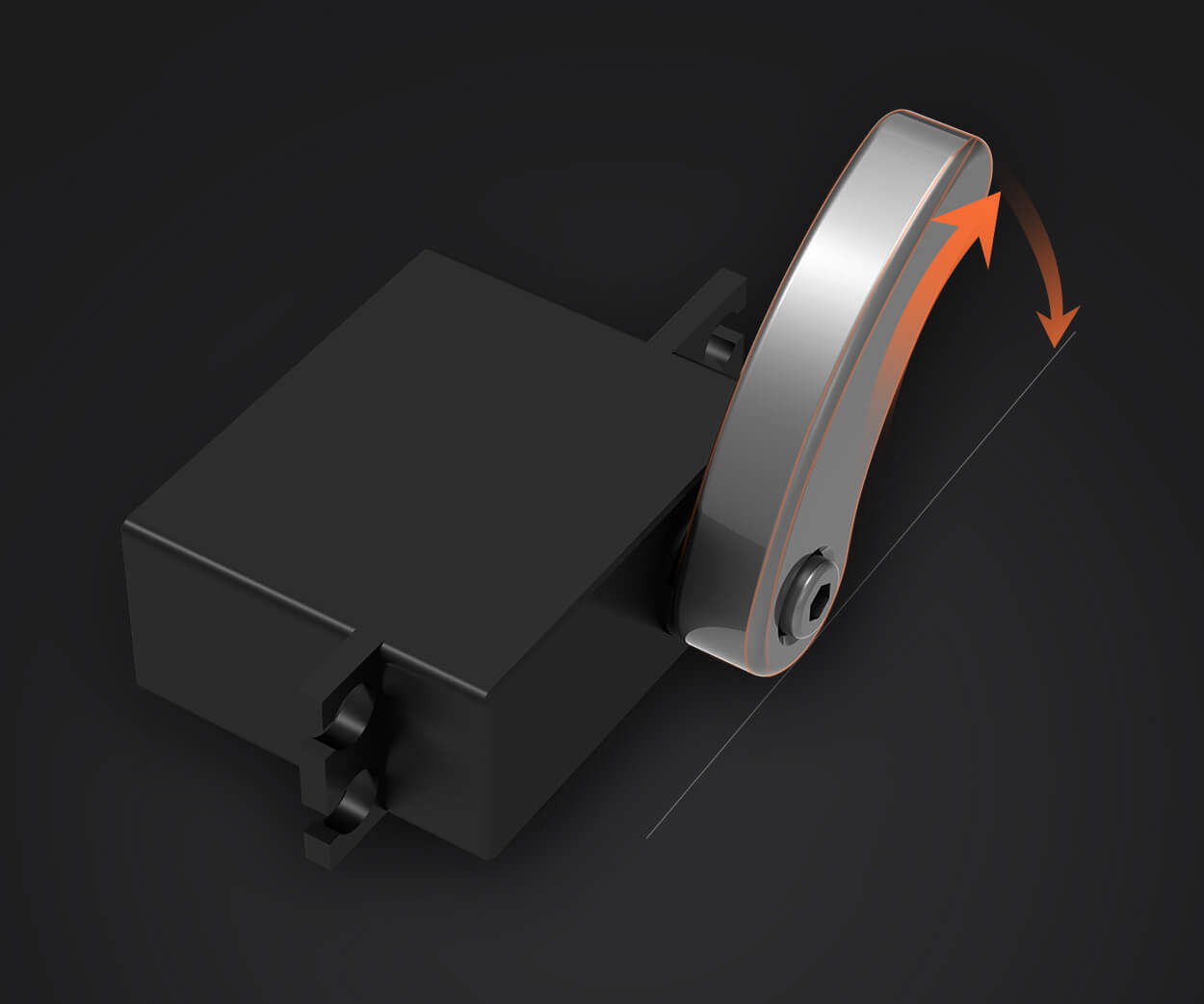
Hardware evolves. Today's servo motors can achieve micron-level positioning, and the steering gear response speed is measured in milliseconds. But if the software that directs them is unresponsive, rigid, and bloated, the potential of the hardware is wasted.
So, is there a way to make software as flexible, reliable, and easy to expand as modular machinery?
This is the charm of microservice architecture. It doesn't build a big pot, but builds independent small services for each core function. For example, one service is responsible for communication with servo motors, another service is focused on trajectory planning, and another service is only responsible for logging. They run independently and communicate and cooperate in a lightweight way.
Doing so is like assigning each chef an independent workstation. The pastry chef specializes in making dim sum, while the stir-fry chef specializes in cooking. When the passenger flow is large, you can add manpower (increase service instances) to the cooking area alone without affecting other areas. Want to introduce a new dish? Just create a new small kitchen (new service) and connect it to the existing system, without restarting the entire restaurant.
For mechanical systems involving real-time control and multi-axis coordination, this disassembly brings real convenience. Motion control services can focus on low-latency communication, services can be iteratively upgraded independently, and monitoring services can continue to run without interfering with core processes. When a module requires maintenance, the rest continues to work.
Choosing the right technology tools is crucial. In the field of microservices, the combination of Spring Boot and Java 8 is like a convenient and reliable toolbox.
Spring Boot is famous for "convention over configuration". It handles a lot of basic settings for you, allowing you to quickly start a stable, independent service. You don’t have to build the structure from scratch, which saves a lot of time. This is especially friendly for hardware integration projects that require quick verification of ideas and frequent iterations.
Java 8 brings a more modern programming experience. Its streaming API makes data processing code clearer, and Lambda expressions make writing callback functions—common when listening to sensor signals or motor status—simple. More importantly, the Java platform is mature, stable, and has a huge ecosystem. When you encounter difficult problems, you can always find abundant resources or solutions.
When the two are combined, what you get is: faster development, more stable services, and smoother integration with various hardware communication libraries or protocols. It’s not necessarily the coolest new technology, but it’s often the most pragmatic and lowest-risk option.
Someone may ask: "Will splitting a large system into multiple small services increase the management burden?" This is a good question.
In the early days, some conceptual changes and new practices are indeed required, such as designing clear service boundaries and planning communication protocols between services. But the investment is worth it. Once the architecture is established, you will find:
It makes managing complexity at the software level more like building blocks—rather than carving a giant boulder.
The precision of machinery requires the agility of software to match. When precision rudders and servo motors meet a microservice architecture with clear structure and rapid response, it feels like adding the right lubricant to the precise gear set - running smoother and unleashing its potential to a greater extent.
It’s not about chasing the hottest technology, it’s about choosing a more elegant and sustainable way to build systems. Moving from a bunch of tightly coupled code to a set of services with clear responsibilities and independent collaboration may be the bridge between reliable hardware and flexible software.
kpowerIn the practice of exploring the integration of hardware and software, we will continue to pay attention to such technical paths that can bring substantial efficiency improvements. We believe that good tools and practices make the creative process itself easy and enjoyable.
Established in 2005,kpowerhas been dedicated to a professional compact motion unit manufacturer, headquartered in Dongguan, Guangdong Province, China. Leveraging innovations in modular drive technology,kpowerintegrates high-performance motors, precision reducers, and multi-protocol control systems to provide efficient and customized smart drive system solutions. Kpower has delivered professional drive system solutions to over 500 enterprise clients globally with products covering various fields such as Smart Home Systems, Automatic Electronics, Robotics, Precision Agriculture, Drones, and Industrial Automation.
Update Time:2026-01-19
Contact Kpower's product specialist to recommend suitable motor or gearbox for your product.


