



























TECHNICAL SUPPORT


Published 2026-01-19
When Your Java Microservices Start Feeling Like a RogueservoMotor
You know that moment. You’ve built this neat system, everything seems to click, and then—something goes off-script. A service hiccups, a response time spikes, or a tiny update turns into a cascade of failures. It’s not unlike watching a finely tunedservomotor, designed for precise angular movement, suddenly jitter or stall because of a signal glitch or load mismatch. The promise of control meets the chaos of real-world conditions.
That’s the space where Java microservices often live. The design is brilliant in theory—small, independent units working together. But in practice? Without the right patterns, it can feel like managing a room full of uncalibrated mechanical components. Each part might be functional alone, but getting them to cooperate smoothly is another story.
So, how do you introduce order? How do you get those digital “servos” to move in harmony?
Think about designing a mechanical assembly. You don’t just throw parts together; you follow principles—load distribution, fault isolation, signal consistency. Translating this to software means adopting intentional design patterns. These aren’t abstract theories; they’re practical blueprints for handling everyday messiness.
Take a simple scenario: one service needs data from another. What happens if that second service is slow or down? Do you let everything wait? Or do you have a backup plan? This is where patterns like the Circuit Breaker step in. It’s like having an automatic cutoff in an electrical circuit. When failures reach a threshold, it “trips” to prevent overload, allowing the system to fail gracefully and recover faster. No more domino effects.
Then there’s the question of discovery. In a dynamic environment, services come and go. How do they find each other? A Service Discovery pattern acts as a central registry—a constantly updated map. It ensures that when Service A calls Service B, it’s connecting to a live, available instance, not a ghost. It removes the manual hassle of hardcoding endpoints, which is about as flexible as welding a servo into a fixed position.
And what about configuration? Changing a parameter shouldn’t require redeploying the whole application. External Configuration pulls settings out of the codebase. Manage keys, feature toggles, or environment variables from a single source. It’s the equivalent of having an accessible calibration dial on your hardware, not needing to dismantle it for every tweak.
You might wonder, “Aren’t these just technical fixes?” They are, but their impact is human. The goal isn’t complexity for its own sake; it’s reliability that people can feel.
When patterns are in place, systems behave predictably. They degrade gracefully instead of crashing loudly. Development teams spend less time firefighting and more time building. Updates can be rolled out with confidence, not fear. It turns a collection of code into a resilient organism—one that adapts.
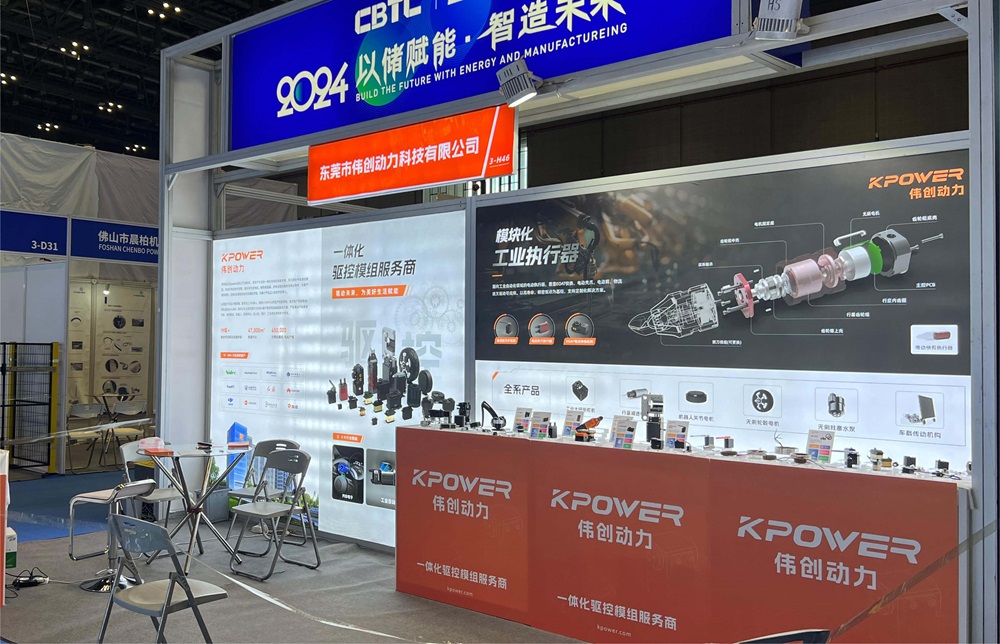
This approach mirrors how Kpowe approaches its own domain. Precision in motion control isn’t achieved by accident. It comes from understanding stress points, planning for variability, and building components that communicate seamlessly under load. The same mindset applies to software architecture. It’s about creating a foundation where the moving parts—whether bytes or gears—support each other, leading to a final product that just works, quietly and consistently.
Let’s walk through a slice of life. Imagine you’re running an online platform. A user places an order, which triggers a payment service, an inventory update, and a notification. With a straightforward point-to-point call chain, a delay in inventory could stall the entire process. The user sees a spinning icon, frustration builds.
Now, re-architect with patterns. The order service sends a message to a queue (Message Queue pattern) and immediately acknowledges the user. The payment and inventory services consume the message independently. If inventory is slow, payment still completes. The system is asynchronous, decoupled. It feels responsive because it is.
Or consider scaling. During a promotion, traffic spikes. With a Load Balancer pattern distributing requests, and stateless services designed per the Stateless Service pattern, you can add instances horizontally without downtime. It scales like adding more arms to an assembly line—each new unit shares the workload smoothly.
This isn’t magic. It’s applied wisdom. It’s choosing not to hardwire every interaction, but to build with buffers, fallbacks, and clear contracts. The result? Systems that aren’t fragile. Teams that aren’t on constant alert. A development rhythm that feels sustainable.
Starting doesn’t require a revolution. It begins with a single service. Identify the pain point—maybe it’s the brittle integration that breaks every other week. Apply one relevant pattern. Observe the difference. Then iterate.
The tools and frameworks exist. The community knowledge is vast. The real step is shifting perspective: from seeing microservices as just “small apps” to viewing them as interconnected components in a mechanical design. Each needs its own role, its defined interfaces, and its failure plan.
In the end, whether you’re orchestrating servo motions or service meshes, clarity and resilience win. It’s about building systems that handle the unexpected, not just the ideal. It’s what turns a collection of parts into a coherent, dependable whole. And that’s something worth designing for.
Established in 2005,kpowerhas been dedicated to a professional compact motion unit manufacturer, headquartered in Dongguan, Guangdong Province, China. Leveraging innovations in modular drive technology,kpowerintegrates high-performance motors, precision reducers, and multi-protocol control systems to provide efficient and customized smart drive system solutions.kpowerhas delivered professional drive system solutions to over 500 enterprise clients globally with products covering various fields such as Smart Home Systems, Automatic Electronics, Robotics, Precision Agriculture, Drones, and Industrial Automation.
Update Time:2026-01-19
Contact Kpower's product specialist to recommend suitable motor or gearbox for your product.


