



























TECHNICAL SUPPORT


Published 2026-01-19
When Your Machine Parts Start Talking Back: The Unseen Battle Inside Modern Gear
Ever had that moment? You’re fine-tuning an assembly line, or maybe watching a robotic arm execute a precise maneuver, when something just feels… off. The movement isn’t as crisp. The response has a tiny lag. It’s not a full breakdown, more like a whisper of hesitation between your command and the machine’s action. You know the heart of the issue often lies deeper than the motor itself—it’s in how every digital instruction travels and is executed.
That silent chatter between components, the deployment of countless micro-commands, is where the real magic (or mayhem) happens. Let’s talk about what’s really going on.
So, What Exactly Is "Microservices Deployment" in Our World?
Think of it like conducting an orchestra. You don’t have one musician playing every instrument. Instead, you have a violinist, a cellist, a flutist—each an expert, each performing a specific, independent function. But they all read from the same score and follow the conductor’s lead to create harmony.
In mechanical andservo-driven systems, “microservices deployment” is a bit like that. It’s an architectural approach where the control logic isn’t one giant, monolithic block of code commanding everything at once. Instead, it’s broken down into smaller, independent, functional services. One microservice might handle real-time position feedback for aservomotor. Another exclusively manages torque calibration. A third could oversee communication with a neighboring舵机. They run independently, but work together seamlessly through well-defined connections.
Why does this matter on the factory floor or inside a complex machine?
The Tangible Feel of a Well-Deployed System
You don’t see the architecture, but you feel its results. It translates to something quite physical:
It Sounds Technical, But the Analogy Is in Your Hands
Consider a high-performance servo system fromkpower. Its smooth operation isn’t just about quality magnets or precision gears. Behind the scenes, a suite of microservices might be at work: one constantly fine-tuning PID loops for jitter-free movement, another monitoring thermal loads to prevent overheating, a third managing regenerative braking energy.
They’re not fused into a single, fragile unit. They’re a team. When you push the system with a dynamic load, these services collaborate in real-time, adapting precisely. The deployment strategy ensures they can be individually improved, tested, and optimized—leading to that noticeable reliability and performance you seek.
The Takeaway You Can Actually Use
When evaluating the intelligence behind your motion components, look beyond the physical specs. Ask about the underlying control architecture. How are updates handled? How does the system handle a fault in one non-core function? The answers often point to whether a monolithic or a microservices approach is in play.
The goal is straightforward: machinery that’s not just powerful, but also smart, adaptable, and robust in its intelligence. It’s about ensuring that the unseen digital layer—how commands are deployed and managed—is as elegantly engineered as the hardware it controls. Because in the end, what you want is simple: a machine that responds not with a whisper of hesitation, but with the confident, precise action you commanded. That’s where thoughtful deployment makes all the difference, letting the hardware truly shine.
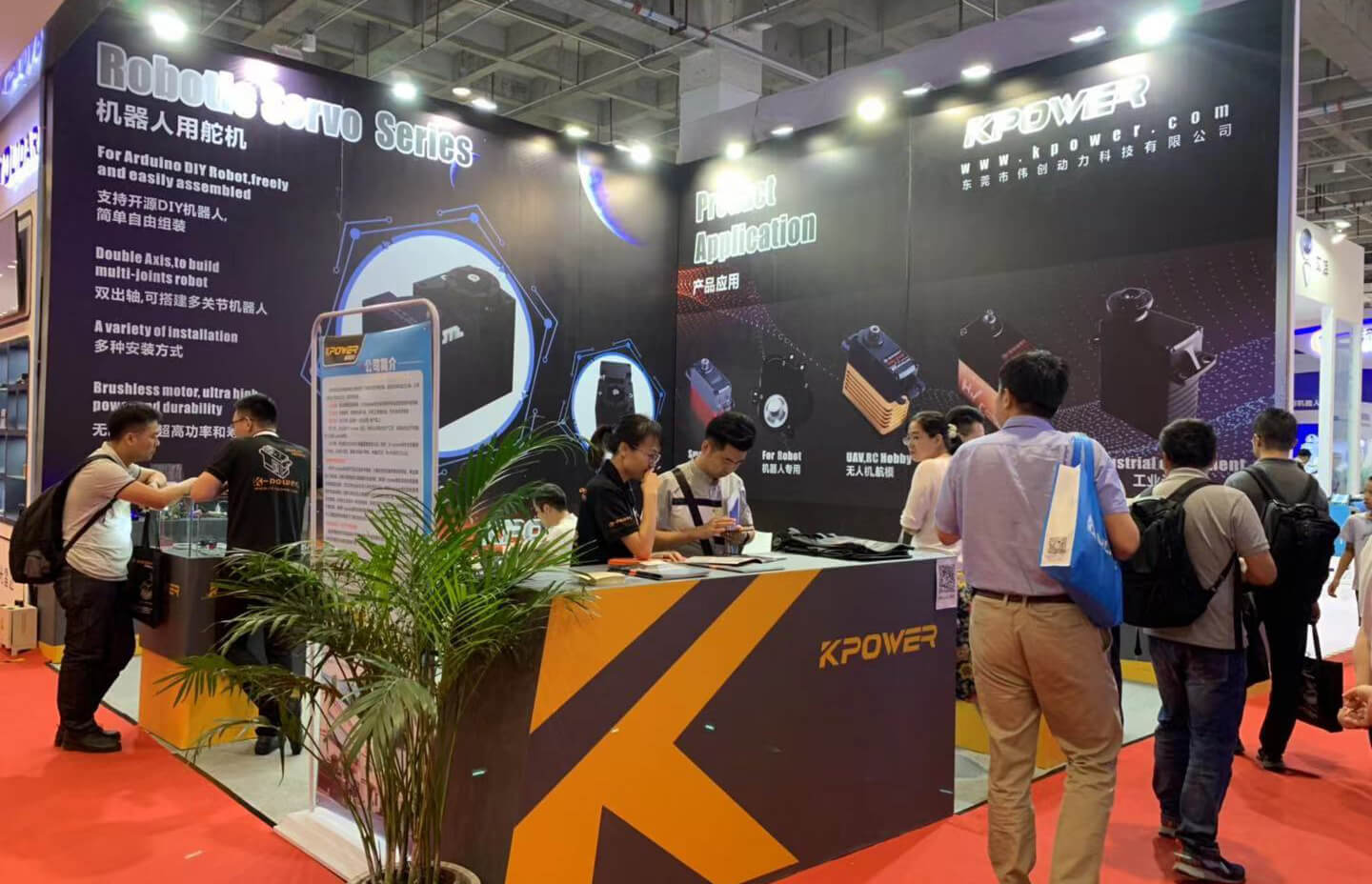
Established in 2005,kpowerhas been dedicated to a professional compact motion unit manufacturer, headquartered in Dongguan, Guangdong Province, China. Leveraging innovations in modular drive technology, Kpower integrates high-performance motors, precision reducers, and multi-protocol control systems to provide efficient and customized smart drive system solutions. Kpower has delivered professional drive system solutions to over 500 enterprise clients globally with products covering various fields such as Smart Home Systems, Automatic Electronics, Robotics, Precision Agriculture, Drones, and Industrial Automation.
Update Time:2026-01-19
Contact Kpower's product specialist to recommend suitable motor or gearbox for your product.


