



























TECHNICAL SUPPORT


Published 2026-01-19
The Silent Hiccups in Your Machine and How to Smooth Them Out
Picture this. You’ve got everything set up—the gears are meshing, the code is compiling, but something’s off. It’s not a crash, not an error log screaming at you. It’s more like a faint, inconsistent stutter in a motion that should be fluid. Maybe aservohesitates for a split second. Maybe a sequence doesn’t sync quite right. It’s the kind of glitch that’s hard to pin down but impossible to ignore once you see it.
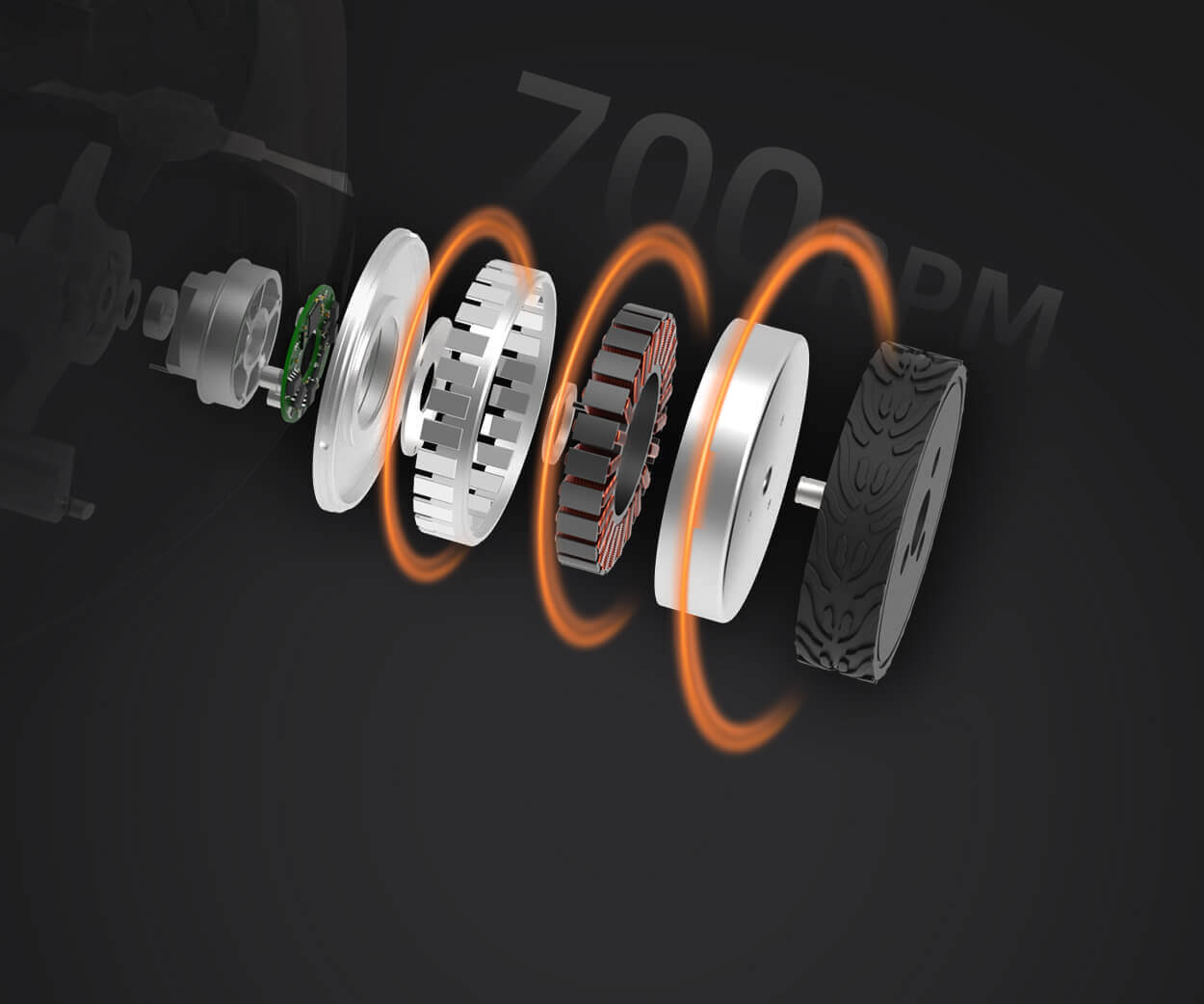
This is where many hit a wall. You know your hardware—the robustservomotors, the precise mechanics. You know your goal. But the bridge between them, the layer that commands and coordinates, feels like it’s built on shifting sand. Especially when you’re working with a system like Spring Boot microservices, meant to be agile and modular. The question isn't just about making it work; it's about making it work reliably, as dependably as the steel and copper in your assembly.
So, What’s Often Missing?
Let’s talk straight. A microservice isn’t just a piece of code sitting in a container. In a mechanical ecosystem, it becomes the nervous system. It needs to speak the language of pulses, positions, and torque without getting lost in translation. The common snags? Services that don’t talk to each other in real-time when they need to. Configuration that becomes a maze when scaling up. Data streams that lag just enough to throw timing out the window. It’s like having a team of expert machinists who are all working from slightly different blueprints.
You might wonder: “Can’t I just write more code to fix it?” Sometimes, yes. But often, you’re patching a symptom, not the cause. The real fix isn’t about adding more layers; it’s about having the right foundation. A foundation built with an understanding that a command sent to aservoisn’t just data—it’s an instruction that must arrive on time, every time.
Building the Bridge, One Solid Block at a Time
This is less about theory and more about practical bridges. Think of each microservice as a dedicated control unit for a specific function. One handles real-time command routing. Another manages health checks and failovers for your motor drivers. Yet another logs performance data in a way that’s actually useful for diagnostics. They’re independent, so a hiccup in logging doesn’t freeze your motion control. But they’re also deeply connected through lightweight, fast channels, ensuring the left hand always knows what the right hand is doing.
How do you get there without starting from scratch? It starts with a mindset shift. You’re not just developing a backend; you’re engineering a control plane for physical movement. This influences everything—from how you structure your APIs (think “moveToPosition” not just “setData”) to how you handle service discovery (so a new motor controller is automatically recognized, not manually registered).
And let’s address the elephant in the room: complexity. More services can mean more moving parts. The antidote isn’t fewer services, but smarter, more resilient ones. This means embracing patterns like circuit breakers to prevent a failure in one service from cascading. It means designing stateless services where possible, so they can be restarted or moved without losing the state of your machine. It’s about making the software as fault-tolerant as the hardware it controls.
Why This Harmony Matters
When this bridge is solid, the difference is tangible. It’s the difference between a prototype that works in the lab and a system that holds up on the factory floor. Your development cycles get faster because teams can work on discrete services without stepping on each other. Debugging becomes clearer—you can isolate an issue to a specific service responsible for, say, PWM signal generation. Scalability stops being a scary word. Need to add ten more servo axes? The architecture can absorb them without a rewrite.
But perhaps the most underrated benefit is confidence. Confidence that when you push a system to its limits, the software layer won’t be the first to buckle. That your mechanical ingenuity is fully expressed, not hampered by digital miscommunication.
Finding Your Path Forward
Knowing what to build is one thing. Finding the right components and guidance is another. This is where specialized knowledge becomes invaluable. You need resources that don’t just explain Spring Boot annotations, but explain how to use them to command a mechanical assembly. You need solutions that are pre-tuned for low-latency communication and high reliability.
kpowerhas focused on this exact intersection. The approach isn’t about selling a magic box, but about providing the precise tools and insights that turn a collection of services into a cohesive, robust control system. It’s the kind of knowledge that turns “almost there” into “running smoothly.”
Your project deserves a digital backbone that’s as strong and precise as the motors it drives. Cutting through the noise and focusing on this integrated approach isn’t just an upgrade—it’s often the final piece that makes everything click into place, quietly, reliably, and exactly as intended.
Established in 2005,kpowerhas been dedicated to a professional compact motion unit manufacturer, headquartered in Dongguan, Guangdong Province, China. Leveraging innovations in modular drive technology,kpowerintegrates high-performance motors, precision reducers, and multi-protocol control systems to provide efficient and customized smart drive system solutions. Kpower has delivered professional drive system solutions to over 500 enterprise clients globally with products covering various fields such as Smart Home Systems, Automatic Electronics, Robotics, Precision Agriculture, Drones, and Industrial Automation.
Update Time:2026-01-19
Contact Kpower's product specialist to recommend suitable motor or gearbox for your product.


