



























TECHNICAL SUPPORT


Published 2026-01-19
Have you ever thought that the precision-operating servo motors and steering gears in your factory will one day be related to virtual-sounding words like "cloud" and "container"? The reality is that they are quietly holding hands. Many friends who are engaged in mechanical projects are facing a turning point: the hardware is becoming more and more sophisticated, but the control software system behind it is like a bunch of tangled threads. If one moves, it affects the whole body. Traditional single applications are slow to deploy, scary to upgrade, and even more troublesome to expand. At this time, someone began to wonder: Can we manage software like building blocks? As a result, the microservice architecture came into view.
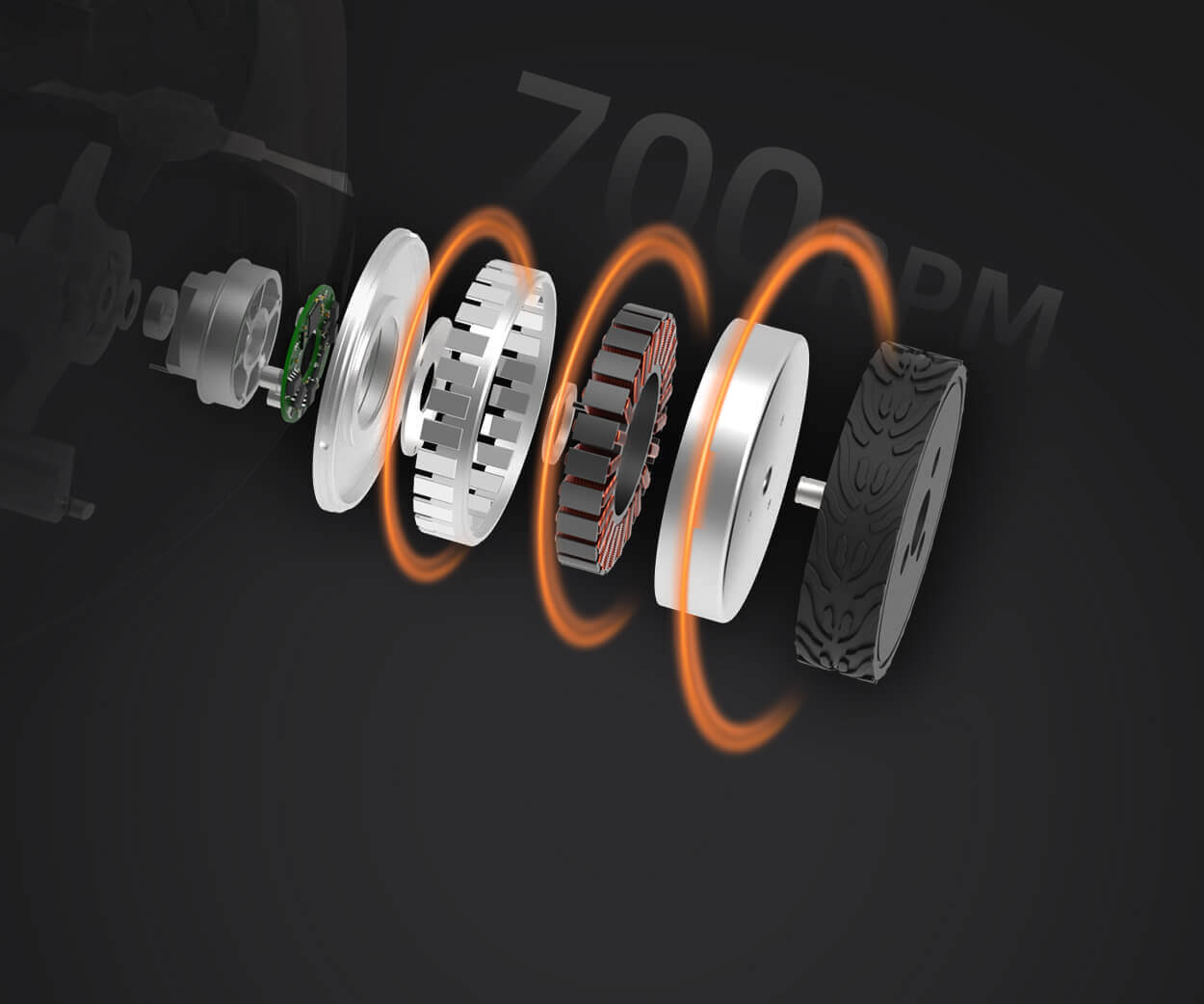
But the idea is good, but how to proceed? Build and maintain a microservice cluster by yourself. Just thinking about the configuration, network and security issues is enough for engineers to light up a cigarette silently. It's like designing an extremely precise robotic arm, but having to forge every screw for it from scratch - it's not impossible, but it's too inefficient and error-prone. You need a ready-made, stable base.
Why Azure Kubernetes?
Choosing a platform is like choosing a mounting frame for your precision components. Azure Kubernetes Service (AKS) provides a managed Kubernetes environment that handles the heavy lifting of infrastructure management for you. You can focus on the most important part: your app itself. Imagine you have a set of servos with different functions, each responsible for a different action. In the microservice model, each core function—such as motion trajectory calculation, status monitoring, and fault diagnosis—can become an independent service. AKS is like an intelligent dispatch center, ensuring that each service (each "server") can obtain sufficient resources (computing power, memory) when needed, run healthily, and communicate accurately with each other.
The deployment process is no longer an unknown adventure. With containerization, you package each microservice and its running environment into a lightweight, standardized "container." AKS is responsible for smoothly and efficiently deploying these containers to "cargo ships" (cloud clusters) and automatically managing their life cycles. Upgrade a service? Rolling updates can be done without the user noticing. Traffic suddenly increases? Automatically expand the number of replicas to cope. An instance failed? Restart or replace immediately. This kind of flexibility and reliability is what complex mechanical control systems pursue.
kpowerpractical perspective
existkpower, we have come across many cases of transformation from traditional architecture. A customer once managed the collaborative work of hundreds of servo motors. The old system required a complete shutdown every time the parameters were adjusted, which was a huge risk. Later, they split the core, driver interface, data collection and other modules into microservices and deployed them on AKS. Now, they can isolate a certain service version, quickly test it in an isolated environment, and then smoothly replace it after confirming it is correct. The overall usability and iteration speed of the system have been improved by more than one level.
Of course, there are some questions when taking this step:
From the engagement of physical gears to the collaboration of cloud services, the essence is the pursuit of better control and efficiency. Deploying microservices is not an end, but a means to achieve agile, stable, and scalable operations. Azure Kubernetes provides a proven platform that makes this approach within reach. It allows the team to respond to demand changes faster, support business operations more stably, and face future growth more calmly.
The next time you look at your mechanical project or product, think about its digital core as well. Should the wisdom that allows servo motors to operate accurately also have an equally flexible and robust "home"? Modern software deployment methods are quietly becoming an indispensable part of the competitiveness of high-end mechanical equipment. The thing is, when you solve the underlying problems, innovation can truly be free.
Established in 2005,kpowerhas been dedicated to a professional compact motion unit manufacturer, headquartered in Dongguan, Guangdong Province, China. Leveraging innovations in modular drive technology, Kpower integrates high-performance motors, precision reducers, and multi-protocol control systems to provide efficient and customized smart drive system solutions. Kpower has delivered professional drive system solutions to over 500 enterprise clients globally with products covering various fields such as Smart Home Systems, Automatic Electronics, Robotics, Precision Agriculture, Drones, and Industrial Automation.
Update Time:2026-01-19
Contact Kpower's product specialist to recommend suitable motor or gearbox for your product.


