



























TECHNICAL SUPPORT


Published 2026-01-19
You must know how popular the Spring Boot microservice architecture is now. But to be honest, sometimes when working on a project or preparing for an interview, I feel a little unsure. There are so many technical points, how can we connect the knowledge together and truly understand it?
At this time, you need a good helper. It's not the kind that can only read from a textbook, but one that allows you to do things and simulate real scenarios. Imagine if there was a tool that could run the various modules of microservices - gateway, configuration center, service discovery - clearly and smoothly like a sophisticated mechanical system. Wouldn't it be much more intuitive to understand?
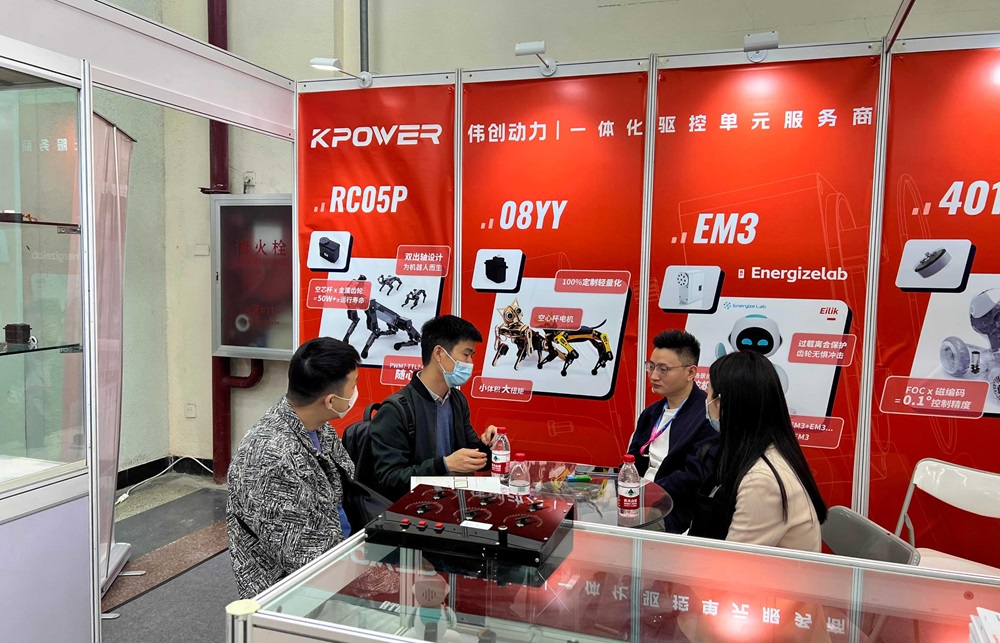
Think about how critical that little steering gear (also called servo motor) is when we play or watch the robot work. You give it a signal, and it can accurately rotate to a specified angle and control the movement of the robotic arm or wheel quickly and accurately.
The same goes for Spring Boot microservice projects. It is not a rigid list of knowledge, but a dynamic "system" that requires all parts to work together. What you need is not just to remember that "Eureka is a service registration center", but also to understand: when a new service is started, how does it "check in"? How can other services accurately "find" it and call it? The process behind this, just like the servo receiving instructions and driving the joints, requires stable and reliable execution.
If you only draw a flow chart on paper, the feeling is vague. But when you have an environment that can actually run and be observed, and you can see how requests are transmitted like signals, and how each service module responds like precisely controlled mechanical parts, that sense of "oh, this is how it works" is completely different.
It has to be "alive". A set of code that works is worth ten pages of static documents. You can change the configuration and see an additional instance appear in the service registry immediately; you can simulate a fault and see how the circuit breaker mechanism activates instantly like a safety valve. This kind of instant feedback can help you nail abstract concepts into your mind.
It has to focus on the core and not take any detours. There is a lot of information on the market, but it’s easy to get lost in the details. A good project should be like a finely tuned machine, highlighting the "main roads" that are most commonly asked in interviews and on the job: How do services communicate? How to manage configuration? How to track the link? Once the main gears are meshed, the entire system can run smoothly.
It also has to have a bit of "texture". How do you say this? When you look at its code structure, it's like appreciating a well-designed mechanical device - clear layers, clear interfaces, and no unnecessary "burrs". What you learn is not only functionality, but also an elegant way of organizing code and thinking. This taste is equally important for developers.
You can ask yourself: is it solving a real problem? For example, does it show how load balancing can smoothly distribute the pressure when services suddenly increase? Or how to prevent the entire system from being brought down when the response of a certain service becomes slow? These scenarios are not fictional, but are likely to be faced by you in the future.
Let’s see if it’s easy to use. Like a good kit, the parts are polished, the instructions are clear and you don't need to spend half an hour on the first screw. You should be able to quickly set up an environment and let the "machine" start moving first, and then interest and confidence will follow.
Another thing, does it encourage you to "take it apart and take a look"? A good learning program is not afraid of you exploring. Its code should be open and modifiable, allowing you to disassemble a servo and see how the potentiometer, motor and gear set inside work together. This process of hands-on exploration is the key to deep understanding.
Ultimately, technical learning is sometimes a lot like assembling and debugging a complex piece of machinery. You need blueprints, and you need a platform to actually make the parts work. When each microservice module can reliably perform its duties like a servo that receives precise signals, what you build is no longer a scattered knowledge point, but a solid and intuitive understanding of how the system works together.
Find a resource that can give you this kind of "hand feeling" and "sense of control". When you face issues related to Spring Boot microservices, whether it is an interview or actual work, you will naturally be more calm and confident. After all, when you have made everything work with your own hands, you know where the core is and where the power comes from.
Established in 2005,kpowerhas been dedicated to a professional compact motion unit manufacturer, headquartered in Dongguan, Guangdong Province, China. Leveraging innovations in modular drive technology,kpowerintegrates high-performance motors, precision reducers, and multi-protocol control systems to provide efficient and customized smart drive system solutions.kpowerhas delivered professional drive system solutions to over 500 enterprise clients globally with products covering various fields such as Smart Home Systems, Automatic Electronics, Robotics, Precision Agriculture, Drones, and Industrial Automation.
Update Time:2026-01-19
Contact Kpower's product specialist to recommend suitable motor or gearbox for your product.


