



























TECHNICAL SUPPORT


Published 2026-01-19
Have you ever felt like your software project is starting to resemble an old, tangled set of robot wires? You know, the kind where every new feature makes the whole system groan and become harder to manage? It’s a familiar frustration. Everything gets slow, updates feel risky, and a small change in one corner can unexpectedly break something in another.
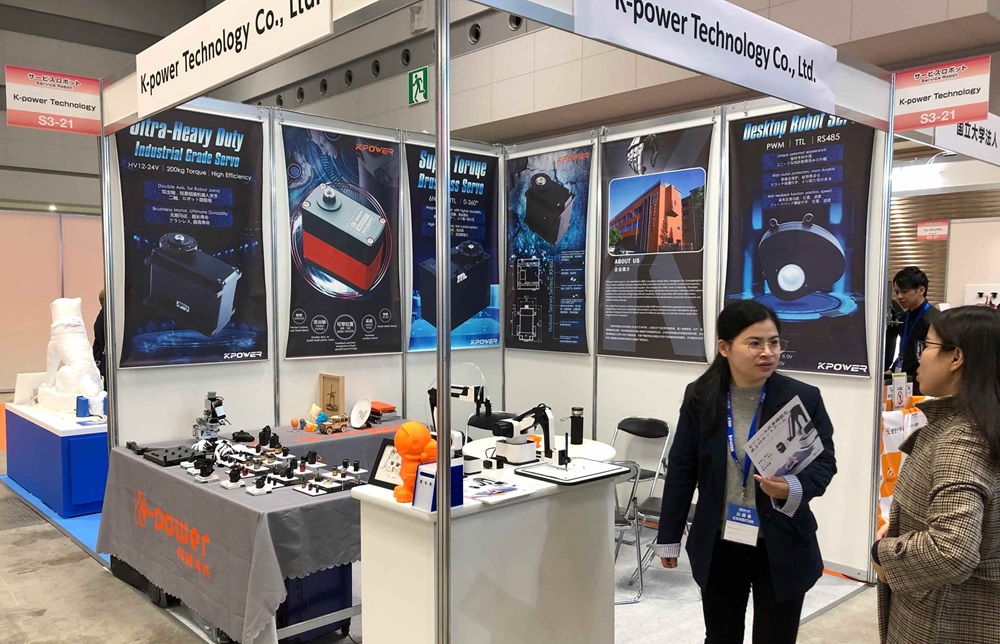
That’s the classic challenge with a single, monolithic application. It’s like trying to maneuver a heavy, rigid robotic arm—every movement requires immense effort and coordination.
So, how do we introduce flexibility and resilience into our digital creations? The conversation often turns to a microservices architecture. Think of it not as a single powerfulservomotor doing all the work, but as a coordinated array of smaller, independentservos. Each one handles a specific, precise task—user authentication, order processing, notification dispatch—and communicates clearly with the others. This is the springboard for our discussion today, especially for those taking their first steps.
Let’s break away from complex jargon. Imagine you’re building an automated guided vehicle (AGV). You wouldn’t use one oversized, overheated motor to control steering, lifting, and computing all at once. You’d distribute the workload: a compactservofor precise wheel direction, another for the lift mechanism, and a separate control unit for navigation logic. If the steering servo needs maintenance, the lift and navigation can keep functioning.
A Spring Microservices structure applies a similar principle to software.
Understanding the "why" is one thing. The "how" is where many stumble. The initial setup can feel daunting. How do these independent services discover and talk to each other reliably? How do you manage configuration across all of them? How do you handle the complexity of distributed transactions?
This is precisely where a structured guide becomes invaluable. A well-designed tutorial doesn’t just list abstract concepts; it provides the practical blueprint—the equivalent of clear wiring diagrams and component specs.
A great tutorial feels less like a rigid manual and more like a helpful walkthrough. It should:
When information is presented this way, it demystifies the process. The architecture stops being a buzzword and starts to feel like a practical set of tools you can confidently use.
The goal is to move from curiosity to competence. You begin to see how individual services are developed with Spring Boot, how they register themselves, and how they communicate through well-defined APIs. You learn patterns for handling failures gracefully. The initial complexity gradually organizes itself into a clear, logical workflow in your mind.
The transformation is tangible. What was once a daunting, monolithic block of code evolves into a streamlined, adaptable system. Each service, like a reliable and precise servo in a larger mechanism, performs its dedicated function, contributing to a smoother, more robust, and scalable whole.
For those embarking on this path, the right foundational resource is key. It provides the confidence to architect systems that are not only functional but also elegant and maintainable—ready to evolve with future demands.
Established in 2005,kpowerhas been dedicated to a professional compact motion unit manufacturer, headquartered in Dongguan, Guangdong Province, China. Leveraging innovations in modular drive technology,kpowerintegrates high-performance motors, precision reducers, and multi-protocol control systems to provide efficient and customized smart drive system solutions.kpowerhas delivered professional drive system solutions to over 500 enterprise clients globally with products covering various fields such as Smart Home Systems, Automatic Electronics, Robotics, Precision Agriculture, Drones, and Industrial Automation.
Update Time:2026-01-19
Contact Kpower's product specialist to recommend suitable motor or gearbox for your product.


