



























TECHNICAL SUPPORT


Published 2026-01-19
Hey, do you often hear the words "microservices" and "API" being talked about together? It feels like they are the same thing, or at least inseparable like conjoined twins. As a result, when planning technical solutions or making product selections, my mind is a mess and I have no idea where to start.
Let me share a story with you. A friend was working on his own automation equipment control system. He initially thought: "Don't we just need a set of interfaces (APIs) to allow software and hardware to talk to each other?" So the team invested their energy and built a centralized API system. It started smoothly, but as more and more functions were added - motion control, status monitoring, data reporting, third-party integration - the huge core system became like a warehouse full of debris. Every time a small function is modified, it may cause unexpected cascading failures, causing the entire update deployment to shut down, and the team to move forward with trepidation.
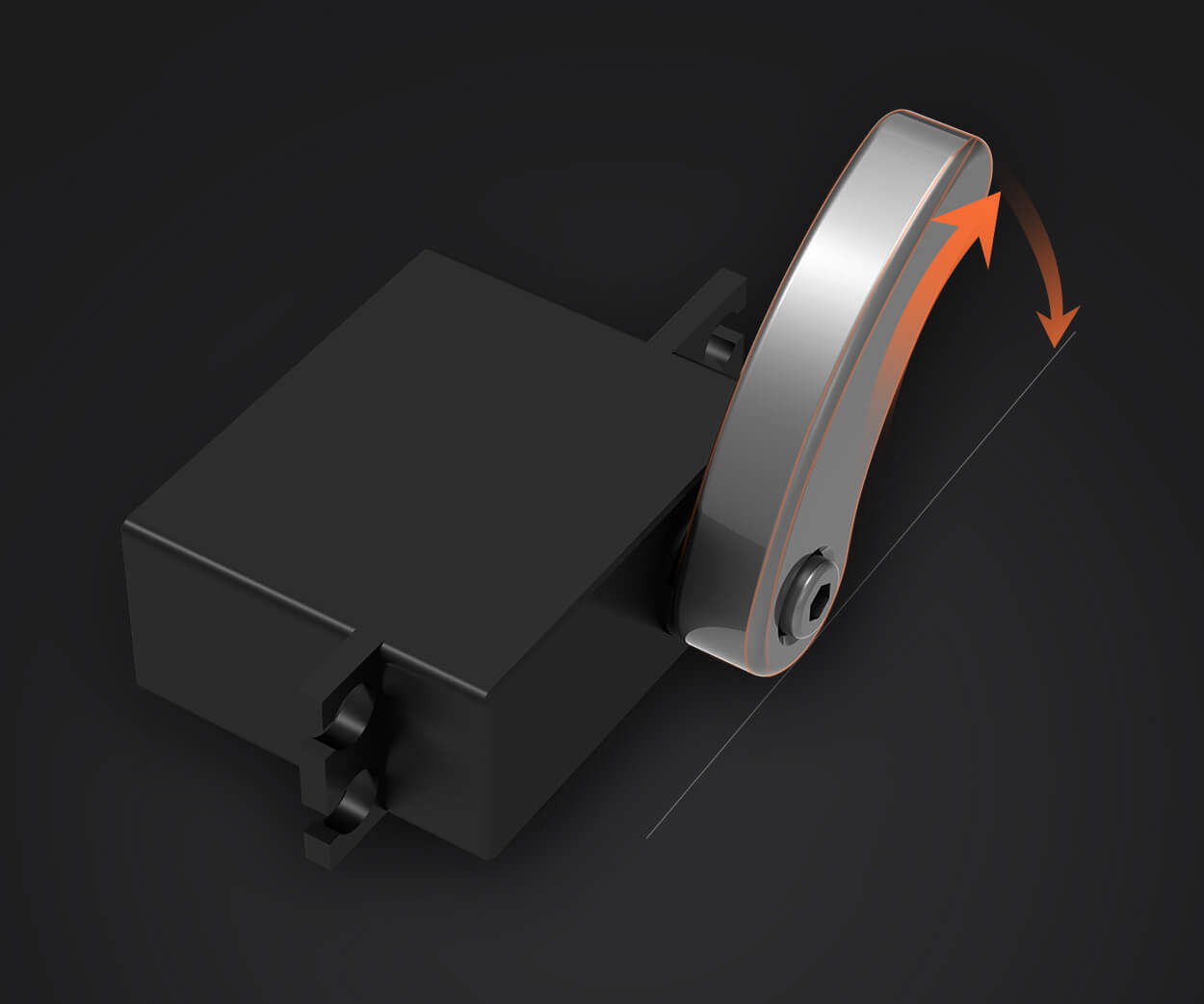
Later they changed their mind. Instead of stuffing all logic into a "universal" interface, imagine the entire system as a sophisticated mechanical device, such as a robot with multiple independent servos working together. Each servo is responsible for a specific, well-defined joint movement (for example, one microservice is only responsible for "motor position calibration" and another is only responsible for "alarm logging"). They operate independently but communicate through standard, lightweight signals (that is, APIs). In this way, if a certain "joint" needs to be upgraded or repaired, it will not affect the normal operation of other parts at all.
You see, this is the core difference: APIs are the "language" and "protocol" for communication, while microservices are independent "functional individuals" that use this language to communicate. The API defines how to request and respond, such as the format of the command "rotate the arm to 30 degrees"; the microservice is the self-contained program module that receives the command and actually drives the servo to perform actions. You can have many microservices (many independent servos) talking to each other through APIs (standard electrical signals). You can also have a huge monolithic application that also provides an external API (such as a master control panel). But the former, the microservice architecture, gives the system modularity and resilience.
Because confusing them can lead to biased technical decisions. Setting the goal simply as “we need an API” risks creating a bloated, centralized beast that is difficult to maintain. Understanding that "we need to connect a series of microservices through clear APIs" is the first step towards flexible and scalable system design.
Imagine you are designing a complex mechanical platform:
Microservice architecture, coupled with clearly defined APIs, brings this modular freedom. When a certain business logic needs to be changed - for example, if you want the acceleration curve of a servo motor - you only need to modify and deploy the independent microservice responsible for it, without having to touch the entire huge control system. The rest of the system interacts with it through the established API, and is completely unaware of the upgrade behind it. It is like replacing a servo with better performance, while other parts of the robot arm work together as usual.
Q: Does using API gateway mean using microservices? Not exactly. The API gateway is an efficient "receptionist" or "router" that handles incoming and outgoing requests in a unified manner. It can connect to back-end microservices or old-fashioned monolithic applications. It is an excellent access layer management tool, but it is not the microservice architecture itself. It makes access more orderly, but whether the back-end architecture is modular and independently deployed is the essence of microservices.
Q: Will microservices make the system more complex? It will indeed increase some complexity in the early stage, for example, you need to consider issues such as service discovery, network communication, data consistency, etc. (This is like managing multiple independent but coordinated servos, which requires a more sophisticated synchronization protocol). But from a long-term evolutionary perspective, it manages "organized complexity." Compared with the "chaotic complexity" that will eventually result from an infinitely expanding, tightly coupled monolithic application, the former's complexity is manageable and isolable. To use a mechanical metaphor: It is usually clearer to maintain ten independently packaged small drive modules with clear interfaces than to maintain a large control box with intertwined internal circuits that affects the entire system.
Q: Does this apply to something likekpowerWhat specific inspirations come from the area of motion control you focus on? In the field of precision machinery and automation, stability, reliability and scalability are crucial. It is a natural extension of thought to regard the software level of the control system as a kind of "mechanical design" and pursue modularity, high cohesion and low coupling. For example, you can split functions such as "trajectory planning", "real-time position feedback", and "abnormal torque protection" into independent microservices. Each service focuses on one thing and exchanges data through a stable and efficient API contract. In this way, when a new sensor or a certain type of control needs to be introduced, the change can be limited to a small range, which greatly reduces the risk of the overall system and speeds up innovation and iteration.kpowerWhen designing and integrating high-performance servo drives and actuators, we adhere to this deep understanding of the modular value of "accuracy, independence, and seamless collaboration" and extend it from hardware engineering to the supporting software architecture philosophy.
So, next time when you think about system design, you might as well ask yourself: Are we defining a set of communication rules (API), or are we planning a series of functional units (microservices) that can run independently and collaborate through rules? The two are closely related, but their starting points for thinking are different, and the ultimate system resilience, flexibility, and maintainability will also be completely different.
A good architecture is like an excellent mechanical transmission system. Each component is precise and powerful, and the connections between components are clear and reliable. This is not just a technology choice, but also a thinking mode that keeps complex systems dynamic and controllable in the long term.
Established in 2005,kpowerhas been dedicated to a professional compact motion unit manufacturer, headquartered in Dongguan, Guangdong Province, China. Leveraging innovations in modular drive technology, Kpower integrates high-performance motors, precision reducers, and multi-protocol control systems to provide efficient and customized smart drive system solutions. Kpower has delivered professional drive system solutions to over 500 enterprise clients globally with products covering various fields such as Smart Home Systems, Automatic Electronics, Robotics, Precision Agriculture, Drones, and Industrial Automation.
Update Time:2026-01-19
Contact Kpower's product specialist to recommend suitable motor or gearbox for your product.


