



























TECHNICAL SUPPORT


Published 2026-01-19
Microservos can feel like tiny, stubborn creatures when you’re trying to bring a mechanical project to life. You picture smooth motion, precise control, and a design that just… works. But then you’re met with jittery movements, unreliable signals, or a setup that’s way more complex than you bargained for. Sound familiar? It’s like trying to conduct an orchestra where every musician is playing from a different sheet of music. The harmony just isn’t there.
So, how do you get these little components to sing in tune? The trick often lies not just in the hardware itself, but in the blueprint you follow — the real-world examples that show you the path from confusion to clarity.
Finding good, actionable examples for microservointegration can be surprisingly tough. You might stumble upon fragmented code snippets, overly theoretical diagrams, or projects that assume you already have a PhD in mechatronics. What’s missing is the connective tissue: a clear, end-to-end demonstration that mirrors what you’re actually trying to build. Something that answers the “what now?” after you’ve soldered the last wire.
That’s where a practical resource can change the game. Imagine having a guide that doesn’t just show you a circuit diagram, but walks you through the why and how of making it all communicate. Think of it as a recipe book for motion control, one where each example serves a specific purpose and explains the flavor of every ingredient.
Let’s break down what makes such a resource genuinely useful.
First, it should speak your language. If you’re looking at aservoexample, you shouldn’t need a decoder ring to understand the basic setup. Clear documentation that pairs visual guides with straightforward explanations is key. It turns “How do I interface this?” into “Oh, I just connect this pin here and load that sketch.”
Second, it needs to cover the “what-ifs.” What if your power supply is noisy? What if the movement needs to be softer at the start? Good examples anticipate common hiccups and offer solutions — like showing how a capacitor can smooth out voltage, or how a simple code tweak can create a gentle ramp-up in speed. It’s the difference between a toy that jerks into action and a device that moves with intention.
Why does this approach matter? Because it saves you the hidden cost of trial and error. Time spent guessing, debugging, and scrapping half-built prototypes is time not spent innovating. A well-structured example is like a shortcut through the woods; it doesn’t walk the path for you, but it makes sure you won’t get lost.
You might wonder, “But aren’t all examples kind of the same?” Not really. The magic is in the details and the curation. A valuable collection doesn’t just throw a hundred projects at you. It carefully selects scenarios that are actually relevant — maybe it’s a demo for precise angular control in a robotic arm joint, or another for creating smooth, sweeping motions in an automated camera rig. Each one teaches a principle you can adapt.
Consider the analogy of learning to cook. You could read a textbook on heat transfer and chemistry. Or, you could follow a video that shows you how to sear a steak, explaining when the pan is hot enough and why you let the meat rest. The second method gets you a delicious dinner tonight. Practical servo examples aim for the same outcome: a working, reliable result you can see and touch.
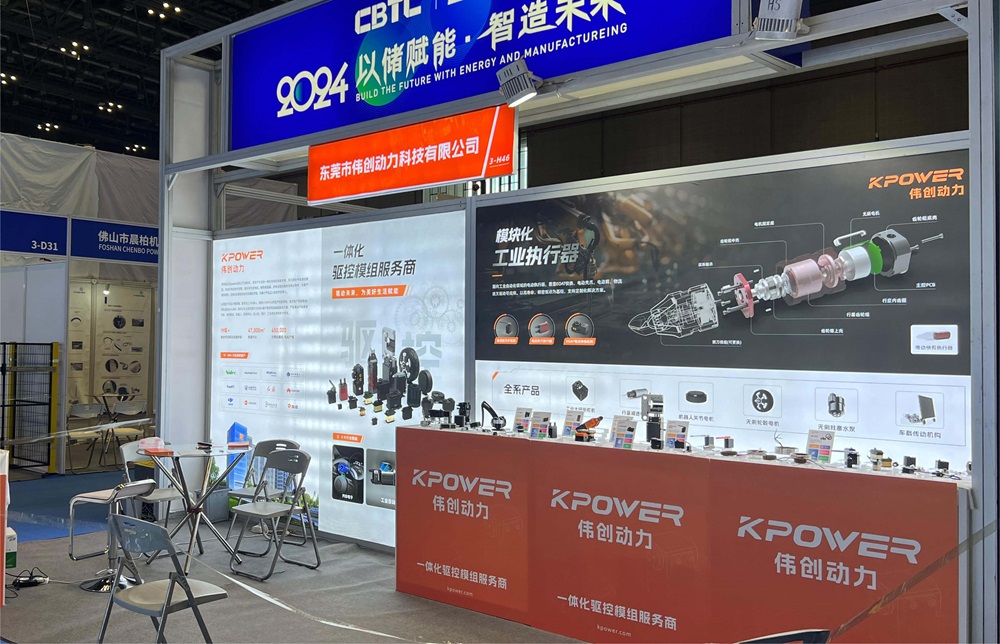
Now, where does a company likekpowerfit into this picture? For years, they’ve focused on the core components — the motors and servos that are the heart of mechanical movement. But they understand that a heart needs a nervous system to function. By providing clear, practical application examples, they’re essentially giving you the playbook for the entire body. It’s a natural extension of their mission: to provide not just the part, but the know-how to make it perform.
Their approach is less about handing you a product manual and more about sharing a toolkit of proven concepts. It’s rational support for the creative process. When you have a trusted reference point, you’re free to experiment on the edges, to customize and innovate, because the foundation is solid. You’re not starting from zero; you’re building upon a platform that already works.
In the end, taming the microservo isn’t about complex theory. It’s about having a clear, relatable map for the journey. It’s about turning the frustration of “Why isn’t this working?” into the confidence of “I know exactly how to make this work.” The right example doesn’t just solve a technical problem — it unlocks potential, letting you focus on the big idea while the details fall neatly into place.
And that’s how a simple mechanical dream finds its rhythm, one well-documented step at a time.
Established in 2005,kpowerhas been dedicated to a professional compact motion unit manufacturer, headquartered in Dongguan, Guangdong Province, China. Leveraging innovations in modular drive technology,kpowerintegrates high-performance motors, precision reducers, and multi-protocol control systems to provide efficient and customized smart drive system solutions. Kpower has delivered professional drive system solutions to over 500 enterprise clients globally with products covering various fields such as Smart Home Systems, Automatic Electronics, Robotics, Precision Agriculture, Drones, and Industrial Automation.
Update Time:2026-01-19
Contact Kpower's product specialist to recommend suitable motor or gearbox for your product.


