



























TECHNICAL SUPPORT


Published 2026-01-19
You’ve got your design laid out. A robotic arm, an automated conveyor, maybe a custom CNC setup. Each joint or axis is powered by a preciseservoor motor. They all need to work together, perfectly synchronized. But how do you get them to talk to each other without the conversation turning into chaotic noise?
It’s a common headache. One part moves too fast, another lags, and the whole operation stutters. The issue isn’t always the hardware—it’s the communication between them. Think of it like a team where everyone speaks a different dialect. The work gets done, but slowly, with confusion and mistakes.
Let’s break it down without the jargon. In any multi-axis system, each drive—like aservomotor—needs two things: power to move and information to know how to move. The "talking" happens through control signals. These are digital or analog instructions telling one unit when to start, stop, speed up, or coordinate with its neighbor.
The old way? A tangled web of individual commands from a central controller to each motor. It works, but it’s like a manager micro-shouting orders to every single worker. Delays happen. Timing slips.
The smoother way? Letting the drives communicate directly with each other on a shared network. They pass essential data back and forth in real time. When one servo finishes a task, it instantly tells the next one, “Go.” This peer-to-peer chat cuts out the middleman, reducing lag and letting the system flow as one intelligent unit.
Picture a pick-and-place machine. The arm swings, the gripper closes, the turntable rotates. If the gripper closes before the arm is fully in position, you get a missed pick or a collision. The precision of the movement depends entirely on the quality and speed of the signal exchange between these components.
Good communication means:
Not all communication protocols are equal. Some are like passing detailed handwritten notes; others are like quick, efficient text messages. For motion-centric applications, you need a "language" that’s fast, deterministic (always arrives on time), and noise-resistant.
This is where specific drive technology comes in. Drives built with high-performance communication in mind—like somekpowerservo systems—use dedicated networks (think CANopen, EtherCAT) designed for industrial motion. They ensure signals are not just sent, but are prioritized and delivered with precise timing, every single time.
"So, it's just about buying a faster network?" Not exactly. Speed is crucial, but consistency is king. A network that’s fast 99% of the time but drops a signal 1% of the time can cause a major fault. The goal is rock-solid reliability. The hardware and its communication firmware must be designed together to guarantee this.
How do you implement this? It starts at the selection stage. When choosing drives for a multi-axis project, don’t just look at torque and speed specs. Dig into their communication capabilities.
Integrating them is the next step. A well-planned wiring layout and network topology are as important as the software setup. Keeping signal lines short, properly shielded, and away from power cables prevents "cross-talk" or interference—literally, one signal disrupting another.
Finally, tuning the system is where the conversation gets polished. Using the manufacturer’s software tools, you can fine-tune how aggressively or smoothly one drive responds to another’s signal, creating that perfect, seamless motion profile.
It might seem like a small detail in a vast mechanical project. But getting the conversation right between your servos is what transforms a collection of moving parts into a harmonious, efficient, and intelligent machine. The difference is felt in smoother operation, higher output, and ultimately, in the quality of everything it builds or moves.
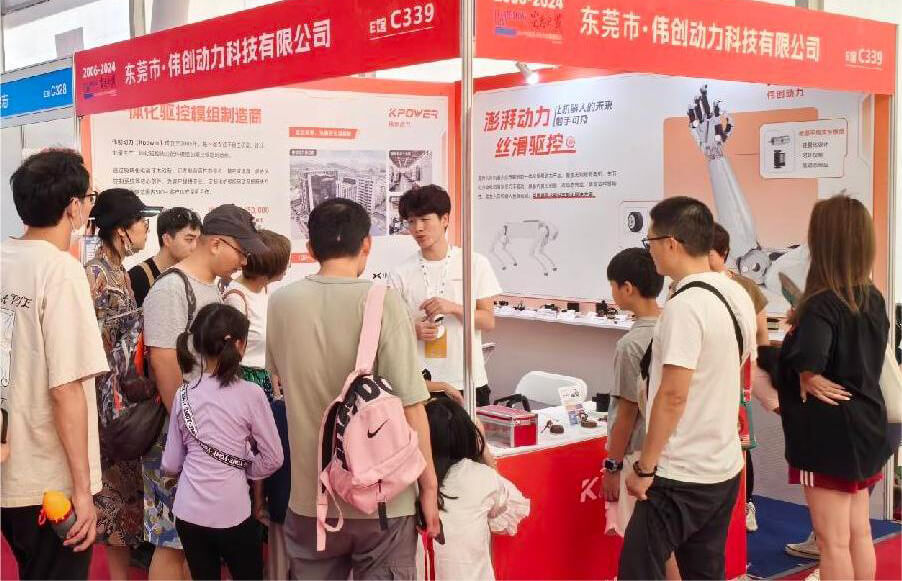
Established in 2005,kpowerhas been dedicated to a professional compact motion unit manufacturer, headquartered in Dongguan, Guangdong Province, China. Leveraging innovations in modular drive technology,kpowerintegrates high-performance motors, precision reducers, and multi-protocol control systems to provide efficient and customized smart drive system solutions. Kpower has delivered professional drive system solutions to over 500 enterprise clients globally with products covering various fields such as Smart Home Systems, Automatic Electronics, Robotics, Precision Agriculture, Drones, and Industrial Automation.
Update Time:2026-01-19
Contact Kpower's product specialist to recommend suitable motor or gearbox for your product.


