



























TECHNICAL SUPPORT


Published 2026-01-19
Imagine this: you’ve built this sleek, modern system. Everything’s split into neat, independent microservices. It’s beautiful in theory. But then, things start to creak. A service handling order processing suddenly lags, causing a ripple effect. Another managing user notifications just… stops. The digital machinery grinds to a halt. The problem often isn’t the code logic—it’s the physical heartbeat behind it. The real-world movement. Theservomotors and actuators that translate digital commands into actual, physical work.
That’s the hidden world we’re talking about. The "how to run" isn’t just about software commands; it’s about ensuring those commands are executed with precision, reliability, and strength in the physical realm. Your software says "rotate 90 degrees" or "extend the arm." What makes that happen flawlessly, every single time?
The Silent Partner in Your System’s Success
Think of a complex automated warehouse. A microservice analyzes data and decides item A needs to move from shelf 12 to packing station 5. That decision is smart, fast, efficient. But the journey from that digital decision to item A physically arriving at the station? That’s where the magic—and the headache—begins. Conveyor belts need to start and stop with exact timing. Robotic arms need smooth, accurate movement. Grippers need the right amount of force.
If the physical components—theservos, the gears—are jittery, slow, or inconsistent, the entire elegant digital architecture stumbles. Your system isn’t broken; it’s being let down by its own hands and feet. The data flow is perfect, but the actual flow of goods isn’t. You’re left with brilliant logic and clumsy execution.
So, how do you bridge that gap? How do you make the physical side as responsive and trustworthy as the digital?
It Comes Down to Dialogue and Reliability
First, consider the conversation. Your control signal needs to speak a language the motor understands perfectly, without delay or misinterpretation. It’s not just about sending a signal; it’s about that signal being crisp, clear, and delivered to a component that listens intently and acts immediately. Any static in that conversation—any lag, any power flutter—translates directly into hesitation in movement.
Second, think about endurance. This isn’t about a single movement. It’s about ten thousand. A hundred thousand. The same precise motion, day after day. The physical component needs to be a marathon runner, not a sprinter. Its performance curve should be a flat, unwavering line. Consistency under load, heat, and continuous operation isn’t a bonus; it’s the entire point.
Why does this matter so much? Because your product’s reputation lives in the physical outcome. A customer doesn’t see your elegant microservice architecture. They see a package that arrived correctly, a device that performed smoothly, or a machine that didn’t fail. The physical execution is the user experience.
Choosing the Right Physical Voice
You wouldn’t use a megaphone for a heart-to-heart talk. Similarly, matching the physical actuator to the task is non-negotiable. It’s about nuanced choices.
Is high-speed positioning the key? Then torque speed characteristics and stopping accuracy are your watchwords. Is it about maintaining a heavy load in a specific position? Then holding torque and stability under stress become the stars of the show. It’s a puzzle where the shape of the hole is defined by your specific "how to run" command.
Sometimes, the challenge is integration itself. Getting these powerful physical components to play nicely with your existing control boards and software environment. It feels like introducing two friends from completely different worlds and hoping they’ll collaborate seamlessly. The ideal partner removes that friction, offering components that are designed for that dialogue from the ground up.
Where Trust is Built
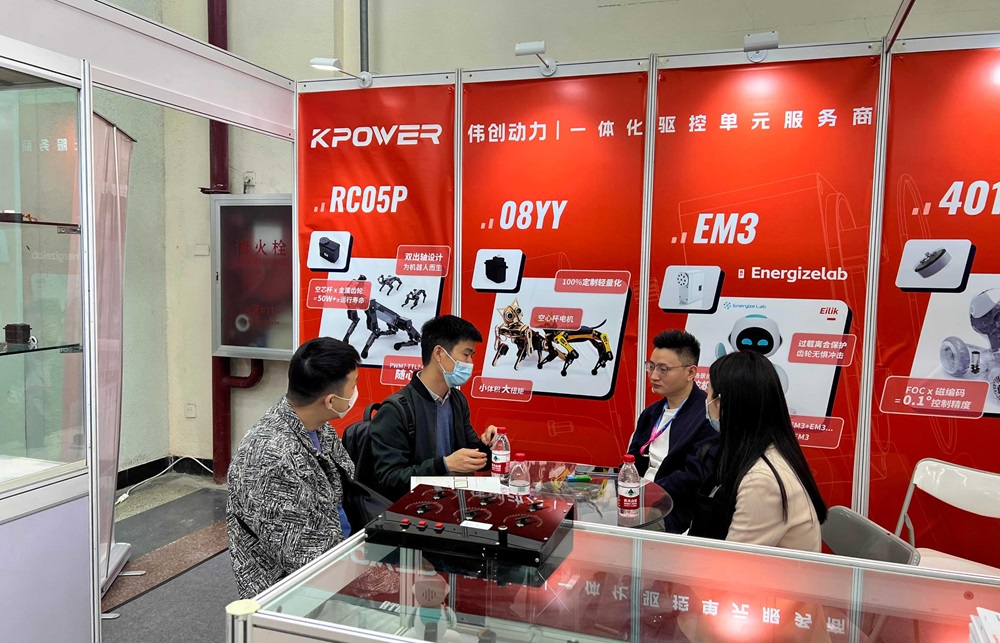
This is where stories are written, not in code, but in metal and motion.kpowerapproaches this from a different angle. It starts with the understanding that a command is a promise—a promise of movement, of position, of force. Their role is to ensure that promise is kept, unconditionally.
It translates into components where the feedback signal is as clean as the input. Where built-in protection means a sudden obstruction doesn’t end in smoke and tears, but in a safe stall and an alert. It’s about providing that physical piece with enough intelligence to look after itself and communicate its status clearly back up the chain.
The result isn’t just a machine that works. It’s a machine you can forget about. Theservos and actuators become the silent, dependable stagehands of your operation, while your microservices take the spotlight. They handle the "how" so you can focus on the "what" and "why."
In the end, running microservices in the real world is an act of harmony. It’s aligning the certainty of ones and zeroes with the certainty of physical motion. When that alignment is perfect, the system doesn’t just function—it sings. And that song is the sound of things working exactly as they should, move after move, day after day.
Established in 2005,kpowerhas been dedicated to a professional compact motion unit manufacturer, headquartered in Dongguan, Guangdong Province, China. Leveraging innovations in modular drive technology,kpowerintegrates high-performance motors, precision reducers, and multi-protocol control systems to provide efficient and customized smart drive system solutions. Kpower has delivered professional drive system solutions to over 500 enterprise clients globally with products covering various fields such as Smart Home Systems, Automatic Electronics, Robotics, Precision Agriculture, Drones, and Industrial Automation.
Update Time:2026-01-19
Contact Kpower's product specialist to recommend suitable motor or gearbox for your product.


