



























TECHNICAL SUPPORT


Published 2026-01-19
Before the interview, you are facing the screen, and the dense list of "microservice interview questions" is a bit confusing. Architecture, deployment, communication, fault tolerance... there seems to be endless questioning behind every word. What you need is not another massive problem set, but a clear path, a logic that can connect scattered knowledge points.
It feels like facing a complex machine where the parts are all there but you don’t know where to start assembling it. We understand the frustration. , we focus more on how to connect "dots" into "lines" and help you build your own understanding network, rather than simply listing problems.
Traditional preparation methods often fall into the trap of trying to memorize every possible answer. But real conversations in technology are rarely replicas of standard Q&A. What the interviewer really wants to see is how you think and how you combine principles with application scenarios.
For example, when asked about the communication methods between services, instead of directly reciting "synchronous REST and asynchronous message queue", you might be able to talk about the circumstances under which you would choose the former because of data consistency, and turn to the latter because of the pursuit of system decoupling and throughput. This leap from "what" to "why" and "how to choose" is the embodiment of depth of understanding.
kpowerThe focus is precisely on providing guidance that stimulates relational thinking. It does not give you answers, but helps you build your own answer framework. When the basic concepts are clear, you will find that many problems share the same logical core.
It's one thing to understand the principles, but it's another thing to be able to tell how to implement it. This gap is often the most exhausting part of preparation.
Imagine a scenario: You are asked to design a microservice system that is resilient to sudden traffic. You might mention automatic scaling. But what next? What indicators are used to trigger scaling? Is it CPU load, request queue length, or business indicators? How can the expanded service instance be seamlessly added to the cluster? These follow-up, specific questions are the key to testing whether the understanding is solid.
We tend to present perspectives that make you think a little further. For example, when discussing configuration management, it will not only mention the need for centralized configuration, but also guide you to think about how configuration changes can take effect without restarting the service, and how to safely isolate configurations in different environments (development, testing, production). This kind of progressive thinking can make the preparation process closer to actual engineering decisions.
There is no silver bullet in the world of microservices. Behind every technical decision is a series of trade-offs. Recognizing this will make your answers more convincing.
For example, in terms of data management strategy, should each service have an independent database, or should some data be shared? An independent database brings clear boundaries and better encapsulation, but cross-service data query becomes complicated. At this point, you may need to introduce API composition or CQRS (Command Query Responsibility Separation) pattern. Explaining the pros and cons of each option and the considerations you made in making the trade-offs is much more powerful than simply stating an option.
This kind of balancing thinking iskpowerPay special attention to the context when sorting out the content. It encourages not finding the one right answer but developing the ability to make the most appropriate judgment based on the context. Just like choosing the most suitable motor type for different mechanical movements, the right one is the best.
Faced with a wide range of topics, effective preparation methods themselves are like designing an architecture for a complex system, requiring modularity and separation of concerns.
You can try to categorize topics. For example, put "service discovery", "API gateway" and "load balancing" under the umbrella of "inter-service communication and coordination"; put "circuit breaker", "current limiting" and "downgrade" into the category of "resilience and fault-tolerant design". Then, outline the core concepts, common implementation methods, and key decision points for each module.
The advantage of doing this is that you can build a map of knowledge instead of remembering scattered fragments. When an interview question is thrown, you can quickly locate a certain area of the knowledge map and develop a coherent narrative. This structured understanding comes from grasping the internal connections of the technology itself, and it is also an idea of organizing information that we hope to convey through content.
In the final analysis, adequate preparation is to more easily show your technical vision and ideas for solving practical problems during the conversation. It's about understanding, not memorizing; it's about connecting, not listing. When you can talk about the technical points and connect them into solutions to real-life scenarios, the list of problems that were once daunting will naturally take on a clear and orderly appearance.
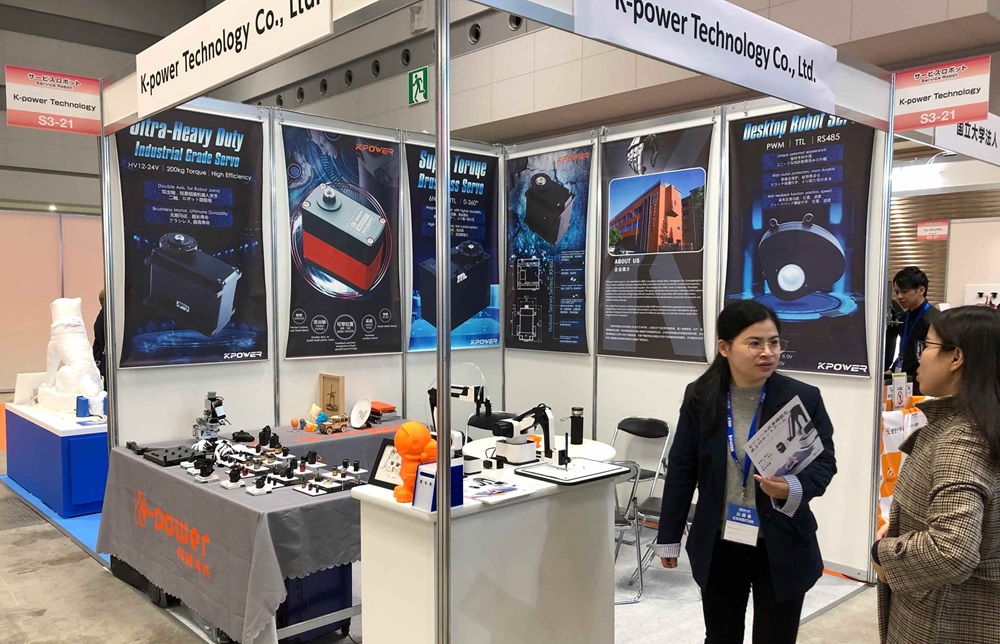
Established in 2005,kpowerhas been dedicated to a professional compact motion unit manufacturer, headquartered in Dongguan, Guangdong Province, China. Leveraging innovations in modular drive technology, Kpower integrates high-performance motors, precision reducers, and multi-protocol control systems to provide efficient and customized smart drive system solutions. Kpower has delivered professional drive system solutions to over 500 enterprise clients globally with products covering various fields such as Smart Home Systems, Automatic Electronics, Robotics, Precision Agriculture, Drones, and Industrial Automation.
Update Time:2026-01-19
Contact Kpower's product specialist to recommend suitable motor or gearbox for your product.


