



























TECHNICAL SUPPORT


Published 2026-01-19
Have you ever had such an experience? It is well designed, but the joints are always a little bit unsatisfactory; the smooth movements imagined are stuck, trembled, or simply "strike" in actual operation. That tiny joint that’s supposed to turn obediently—we often call it a servo or a tiny servo motor—seems to have a mind of its own. It may not be strong enough, it may respond half a beat too slowly, or it may simply "drop the chain" at a critical moment.
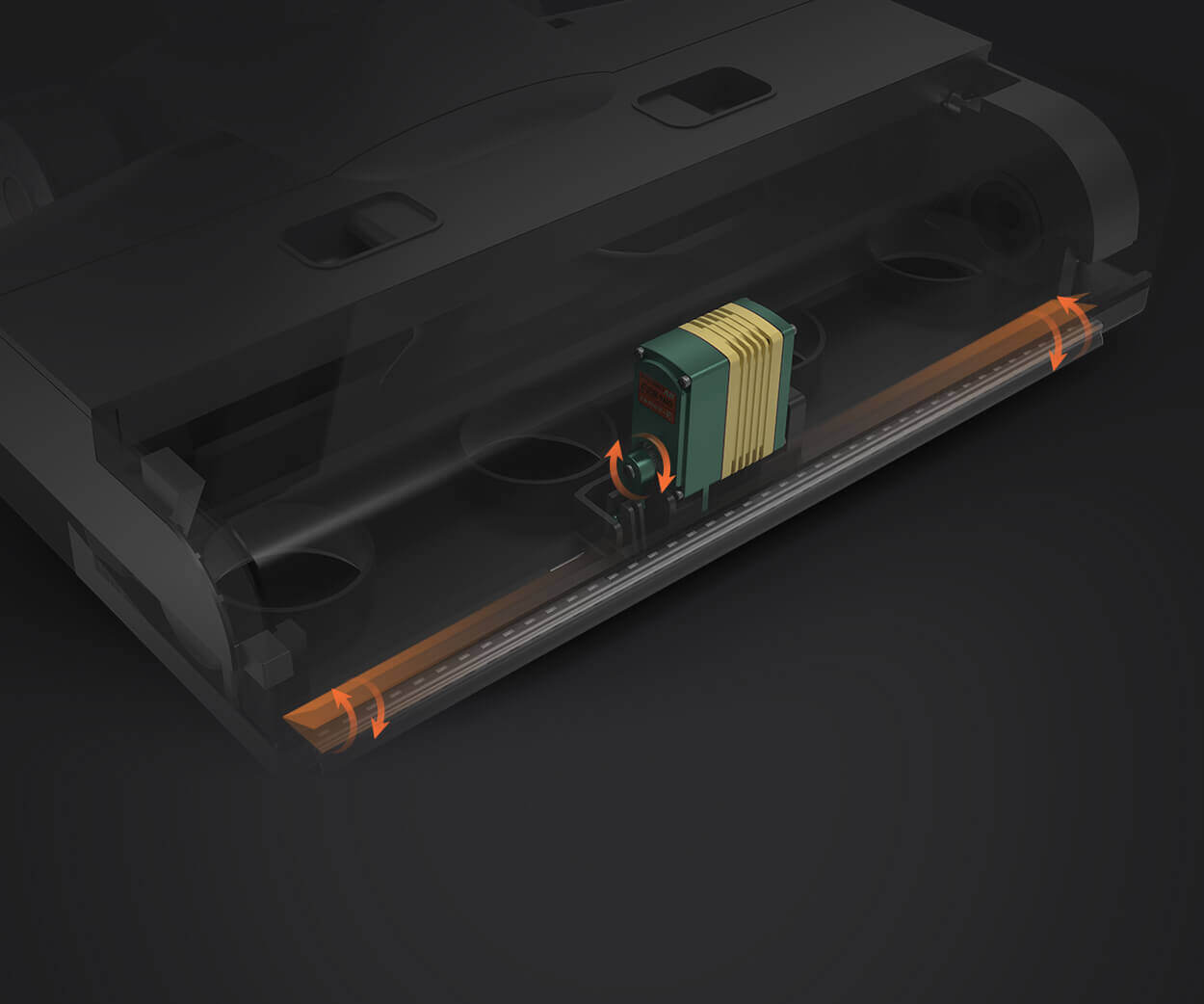
It feels like conducting an orchestra, but the first violinist is always a beat behind. What's the problem? It's often not on your design drawings, but inside the core execution unit. Is the structure not solid enough? Is the power transmission compromised?
We have to look closer. A reliable micro servo unit is much more than a simple superposition of motors and gears. It is a miniature battlefield where every component works together.
It's the "heart" - the motor itself. It needs to be stable and it needs to deliver just the right amount of torque. If it is too weak, it cannot be pushed; if it is too strong, it may lose control. Then there is the gearbox, which is the translator of power, converting the high-speed rotation of the motor into the powerful and precise slow-speed rotation you need. The engagement here is so seamless that the slightest bit of play can make the final movement loose and inaccurate.
But this is not enough. What really makes the action "smart" is the feedback system. A small potentiometer or encoder senses the position of the output shaft at all times and sends the information back to the control circuit in real time. This forms a closed loop: the brain (control signal) issues instructions, the arms (motor and gears) execute the instructions, the eyes (feedback devices) always report "where we are now", and the brain fine-tunes the instructions. Without this "eye", the movement will be blind.
So, when you feel that your movements are inaccurate, you might as well think about it: is it the insufficient power supply of the "heart", the distortion of the "translator" transmission, or is the entire "perception-action" loop not closed smoothly?
With so many options to choose from, how do you find the one that perfectly matches your project? There is no unified answer here, but there are several directions worth considering.
Accuracy or stability, which comes first? Sometimes you need it to stop at an absolutely accurate position every time, exactly; sometimes you value it more for long-term operation and for it to remain stable after thousands of repetitions. This points to different internal construction and material choices.
The dance of power and speed. Need a quick response or a miracle? Torque and speed often trade off. Finding a balance that satisfies your core movement needs is key.
The game of size and space. In a world of miniaturization, every millimeter is precious. Can a powerful unit fit into the small space you have reserved? This directly tests a brand’s ability in precision microstructure design.
And those "little things": Is it loud when it's running? How is the power consumption? Can it remain reliable in complex environments? These details often determine the success or failure of the final experience.
Being deeply involved in this field means that we need to continue to deal with these subtle but critical challenges. bykpowerFor example, their ideas are very specific: instead of covering everything, it is better to focus on a few core pain points.
For example, in gear design, how to reduce backlash and make power transmission more direct and with less lag? This required trial and error on gear materials, molding processes and mesh design. For another example, how to make the “eye” responsible for feedback more sensitive and durable? This involves the selection and circuitry of tiny sensing elements.
It's as if they are building an extremely precise miniature clock inside. Every gear meshes smoothly and every feedback is real. The goal is clear: to make this micro-execution unit finally present an "obedient" quality - clear instructions, decisive actions, without unnecessary trembling or hesitation.
The result of this pursuit is a certainty that is trustworthy. When you issue a command, you can almost "see" in advance how it will complete that action smoothly and accurately. This tacit understanding is, for many projects, the step from “usable” to “easy to use”.
Choosing the right components is like finding the right musician. But to play a harmonious movement, the conductor's skills are equally important.
The power supply must be clean and stable, and clutter interference is the enemy of precise control. The pulse width of the control signal (PWM) needs to match the unit you choose, and the instruction manual is your best friend. When installing the machine, ensure that the output shaft is evenly stressed and avoid lateral loads that may cause it to work "suffocated".
Perhaps the most important thing is understanding its "language". These micro-servo units are not magic black boxes. Understanding their basic working logic—how the pulse width corresponds to the position, and how the feedback closes the loop—can help you quickly find the root cause of the problem when it occasionally gets angry, whether it is mechanical jamming, unstable power supply or signal interference.
Ultimately, all technology serves a simpler vision: to make your creations move smoothly and reliably the way you envision. When every micro-joint responds as it should, the smooth feeling will make all the previous considerations and choices worthwhile.
Established in 2005,kpowerhas been dedicated to a professional compact motion unit manufacturer, headquartered in Dongguan, Guangdong Province, China. Leveraging innovations in modular drive technology, Kpower integrates high-performance motors, precision reducers, and multi-protocol control systems to provide efficient and customized smart drive system solutions. Kpower has delivered professional drive system solutions to over 500 enterprise clients globally with products covering various fields such as Smart Home Systems, Automatic Electronics, Robotics, Precision Agriculture, Drones, and Industrial Automation.
Update Time:2026-01-19
Contact Kpower's product specialist to recommend suitable motor or gearbox for your product.


