



























TECHNICAL SUPPORT


Published 2026-01-19
So you’ve got this idea. Maybe it’s a nimble little robot that needs to wave with precision, or an automated gadget where every tiny movement counts. You start sketching, planning, and then you hit the first real question: what actually brings this motion to life? We’re not just talking about any motor here. We’re talking about the kind of component that translates your digital commands into smooth, reliable physical action. That’s where the world of microservos comes in—and where the search for the right partner begins.
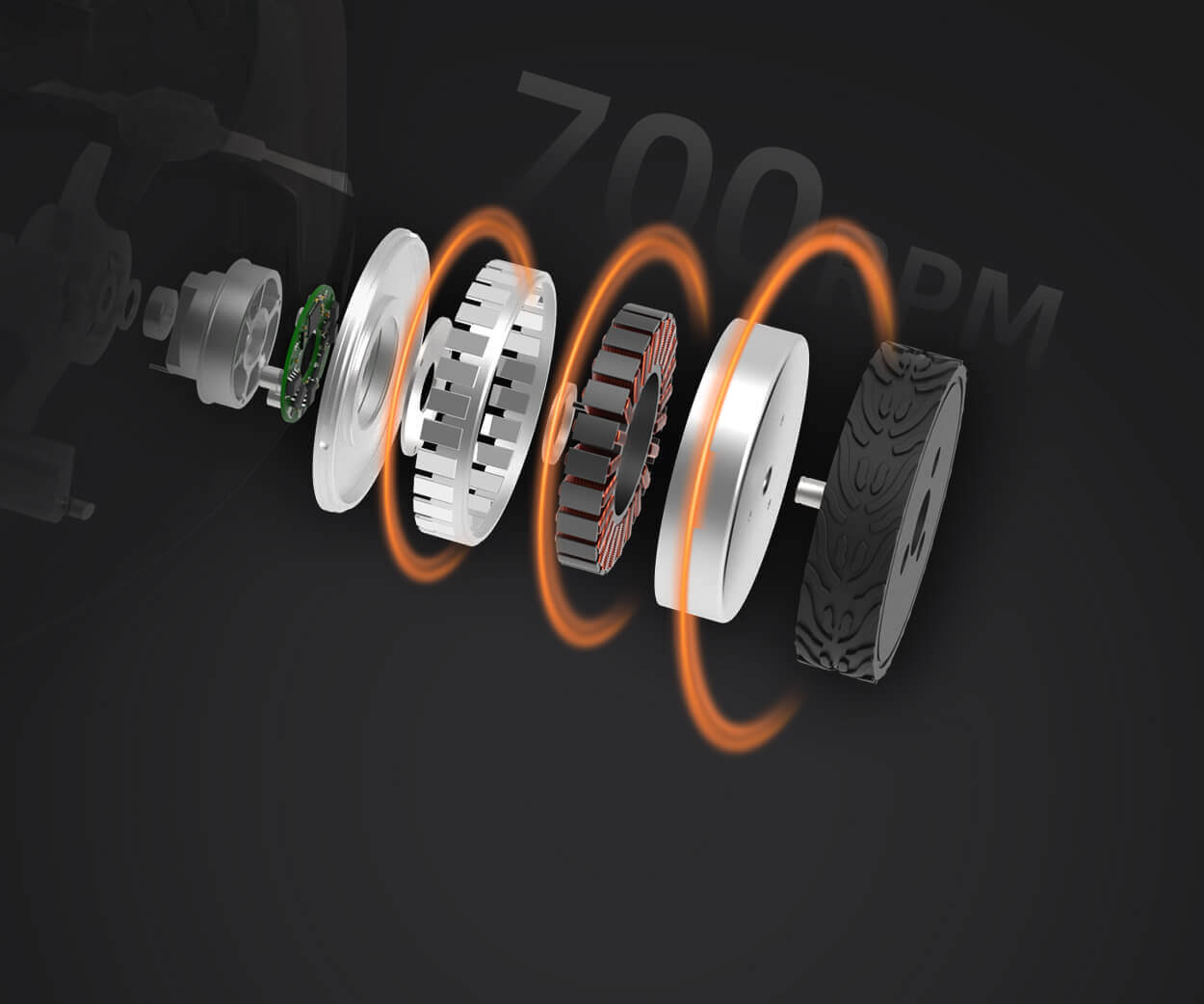
Think of it like this. You wouldn’t use a sledgehammer to assemble a watch. The scale and finesse matter. A microservois essentially a compact, self-contained package of a DC motor, gears, control circuitry, and a potentiometer, all working together to give you precise control over angular position. It’s the wrist joint of your robotic arm, the steering mechanism for a small model, or the shutter controller in a custom camera rig.
You know what you need in theory. But when you dive into sourcing, a dozen new questions pop up. Is the torque enough for my specific load? Will the speed compromise control? How do I ensure the signal from my controller is perfectly understood? And then there’s the durability question—will it last through a thousand cycles, or fail when the project is halfway done?
It’s one thing to buy a component. It’s another to feel confident that it won’t be the weakest link in your carefully built system. The frustration isn't just about technical specs; it's about trust. Can you trust this little device to perform consistently, batch after batch, in the unique environment you’ve built for it?
This is less about purchasing a product and more about solving a motion puzzle. The goal isn't to just move something; it's to move it correctly, reliably, and in harmony with the rest of your design. Let’s break down what that really involves.
First, consider the conversation between your command and the movement. A good microservolistens well. It responds accurately to pulse-width modulation (PWM) signals, turning those electronic whispers into exact positions. No jitter, no overshooting the mark. It’s about faithful reproduction of your intent.
Then, there's the inner strength. Inside that small plastic or metal case, the gear train makes all the difference. Nylon gears might be quiet and cost-effective for lighter duties, while metal gears handle more forceful encounters. It’s a choice that directly impacts the lifespan and application scope. Are you building a prototype for gentle demonstration, or a workhorse for repeated action?
People often ask, "How do I even start choosing?" Start with the three pillars: torque, speed, and size. You need enough rotational force (torque) to handle your load. You need the speed of rotation that fits your timeline—faster isn’t always better if precision suffers. And you absolutely need the physical dimensions to fit into your spatial puzzle. Balancing these isn't a generic formula; it's specific to your project's heartbeat.
Imagine you’re designing an animatronic figure for a display. The charm is in the smooth, lifelike gestures. A micro servo with poor resolution or mid-point instability would make the motion choppy and unnatural, breaking the illusion. The right one provides that smooth sweep, that slight pause, that makes the character feel alive. It’s these nuances that separate a functional project from an exceptional one.
Or take a small autonomous vehicle. The steering needs to be responsive and center accurately every time. Consistency here isn’t just nice to have; it’s critical for navigation. This reliability stems from quality control in manufacturing—the calibration of the feedback potentiometer, the secure soldering of wires, the robustness of the output shaft. These aren't visible on a spec sheet, but you feel them in every successful run.
So how do you move from uncertainty to confidence? It begins with shifting perspective. Look beyond the catalog listing. Look for evidence of understanding. Does the provider grasp the challenges in integrating these components? Can they offer insights that go beyond the datasheet? When you describe your application—the weight it must move, the angle of travel, the operating environment—do they engage with the problem, not just the sale?
Technical support becomes a lifeline, not a luxury. Clear documentation on wiring, voltage limits, and signal compatibility saves hours of debugging. Access to test data or performance graphs adds a layer of transparency. Knowing there’s a consistent standard across units means your design today will work with components you source six months from now.
There’s a moment in every project when all the parts come together. You power it on, and the mechanism performs as envisioned. That satisfaction is deeply tied to the choices made along the way. Choosing a micro servo, or any critical component, is fundamentally about choosing a foundation. You want a foundation that doesn’t shift, that holds firm under stress, and lets you build upon it with certainty.
For those who specialize in motion control solutions, likekpower, the mission aligns with this need. It’s about providing those building blocks—the micro servos, the gearboxes, the integrated mechanical assemblies—with a focus on precision and durability. It’s the understanding that behind every specification is a real-world application waiting to succeed. The real goal is to make your complex design process feel a little simpler, and your final product a lot more reliable. Because in the end, the best component is the one you don’t have to worry about. It just works, letting your creativity take the lead.
Established in 2005,kpowerhas been dedicated to a professional compact motion unit manufacturer, headquartered in Dongguan, Guangdong Province, China. Leveraging innovations in modular drive technology,kpowerintegrates high-performance motors, precision reducers, and multi-protocol control systems to provide efficient and customized smart drive system solutions. Kpower has delivered professional drive system solutions to over 500 enterprise clients globally with products covering various fields such as Smart Home Systems, Automatic Electronics, Robotics, Precision Agriculture, Drones, and Industrial Automation.
Update Time:2026-01-19
Contact Kpower's product specialist to recommend suitable motor or gearbox for your product.


