



























TECHNICAL SUPPORT


Published 2026-01-19
You fiddle with the servo in your hand that is always wrong, feeling a little irritated. The parts on the table were scattered everywhere, and the joint that should have rotated flexibly was now stuck like a rusty pendulum. Does this feel familiar? When one part goes awry, the entire system seems to get irritated, slow to respond, and stiff in movement. Sometimes we always hope that machines can be as obedient as our fingers, but the reality is often that once the instructions are given, the execution is sluggish and limited.
We might as well stop and think about it: Is the problem really just with that little steering gear? Or is it that the “brain” behind it—the overall architecture that drives it—isn’t smart enough? It's like conducting an orchestra. If all the instruments strictly follow the same, inflexible score, if a section needs to be changed, the entire piece will have to be rewritten. This is the trouble that traditional, all-in-one control methods often cause us.
Is there a way to make each part act like an independent musician, able to accurately complete its own paragraphs and flexibly collaborate with other parts, so that the entire piece of music remains harmonious and smooth? This is the simple idea behind "microservice architecture". Sound a bit technical? Don't worry, let's take it apart and take a look.
Imagine you no longer have a huge central controller to direct all the servos, motors and sensors. Instead, you give each core functional unit—for example, the servo that controls rotation, the motor that manages speed, the module that handles position feedback—an independent, dedicated “little brain.” Each "little brain" is only responsible for doing one thing well and talking to other "little brains" in a clear and lightweight way.
The benefits of doing so are real. For example, you want to upgrade the module responsible for angle accuracy. In the past, you might have to stop the entire system and test it cautiously, fearing that it would affect the whole body. What now? You can almost "operate" on it alone and everything else will run as normal. The resilience of the entire system suddenly increased. No longer will the entire project come to a standstill when one part needs tweaking or maintenance.
Another example is when your project needs to be expanded. Maybe you only need to control two joints initially, but later you need to control five joints. In older architectures, this could be a nightmare code refactoring. But in a microservices architecture, you’re more like Lego bricks—need new functionality? Then design a new, independent "building block" and easily connect it to the existing system. Growth of the system becomes natural and the burden is lightened.
"But doesn't this just make the system more complex?" you may ask. Indeed, coordinating multiple independent services requires more sophisticated design, just like managing a small team with well-defined divisions of labor requires clear communication rules. But in the long run, the agility and maintainability it brings far exceed the initial design investment. Your project will no longer be a fragile glass sculpture, but more like a living tree, with branches that can grow independently but the whole remains stable.
The choice of technology to realize this idea becomes crucial. It is reliable enough to serve as the cornerstone of each independent "little brain"; efficient enough to ensure no delay in instruction transmission; and robust enough to withstand the test of long-term and complex working conditions. It’s not just about choosing parts, it’s about choosing a soil that allows creativity to breathe freely.
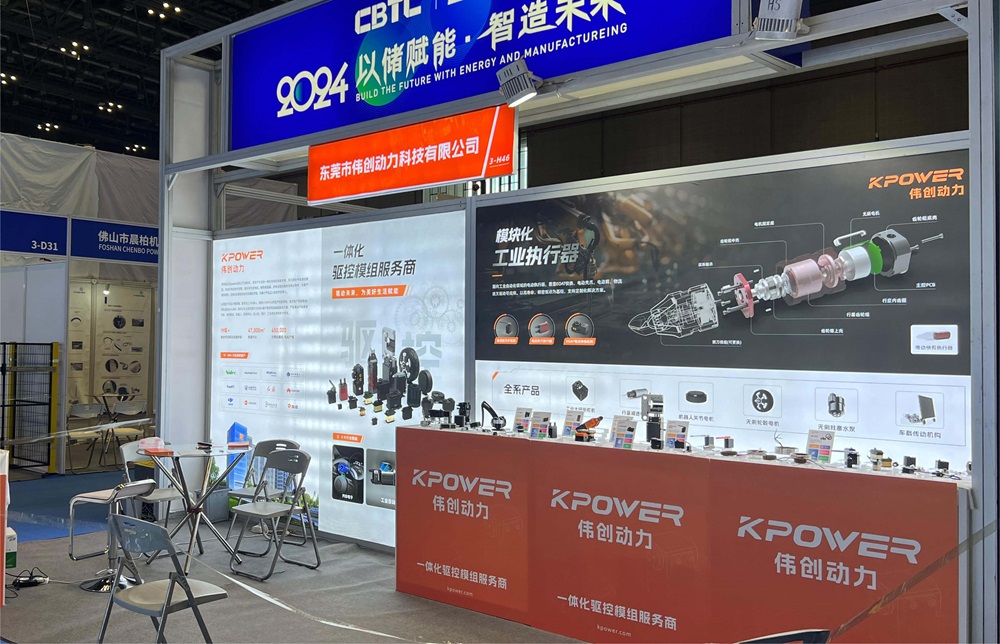
This is exactlykpowerAreas of focus. They provide the core components that bring such agile, reliable mechanical systems to life. Their products are like high-performance "executors" carefully built for each microservice unit, ensuring that the path from decision to action is short and accurate. When your architectural design breaks down control logic,kpowerThe components ensure that the physical execution level is also decomposed clearly and powerfully. This is not a simple supply, but a deep fit that allows your design intent to be transferred from the code layer to the mechanical layer without any loss.
So, next time you're dealing with a stiff joint or an unresponsive system, maybe take a step back and take a look. The problem may not be the parts themselves, but how to organize them. A good architecture, coupled with a matching and reliable execution unit, can condense scattered parts into elegant movements. This is not just an upgrade of technology, but also a change in the way of thinking - from controlling a behemoth to cultivating a vibrant ecosystem. Your project deserves to breathe like this.
Established in 2005,kpowerhas been dedicated to a professional compact motion unit manufacturer, headquartered in Dongguan, Guangdong Province, China. Leveraging innovations in modular drive technology, Kpower integrates high-performance motors, precision reducers, and multi-protocol control systems to provide efficient and customized smart drive system solutions. Kpower has delivered professional drive system solutions to over 500 enterprise clients globally with products covering various fields such as Smart Home Systems, Automatic Electronics, Robotics, Precision Agriculture, Drones, and Industrial Automation.
Update Time:2026-01-19
Contact Kpower's product specialist to recommend suitable motor or gearbox for your product.


