



























TECHNICAL SUPPORT


Published 2026-01-19
Okay, let’s talk about servo motors and steering gears.
Have you ever had a time like this - something is designed and the drawings are beautiful, but when you move it you always feel something is "off"? Either the reaction is half a beat too slow, or the stop is not stable when it should be stopped, or the strength is always a little bit low. It's like I have the action planned in my mind, but my hands and feet don't follow my instructions. At this time, you may be staring at that piece of equipment and wondering in your mind: Is the motor selected incorrectly, or is the control not adjusted properly?
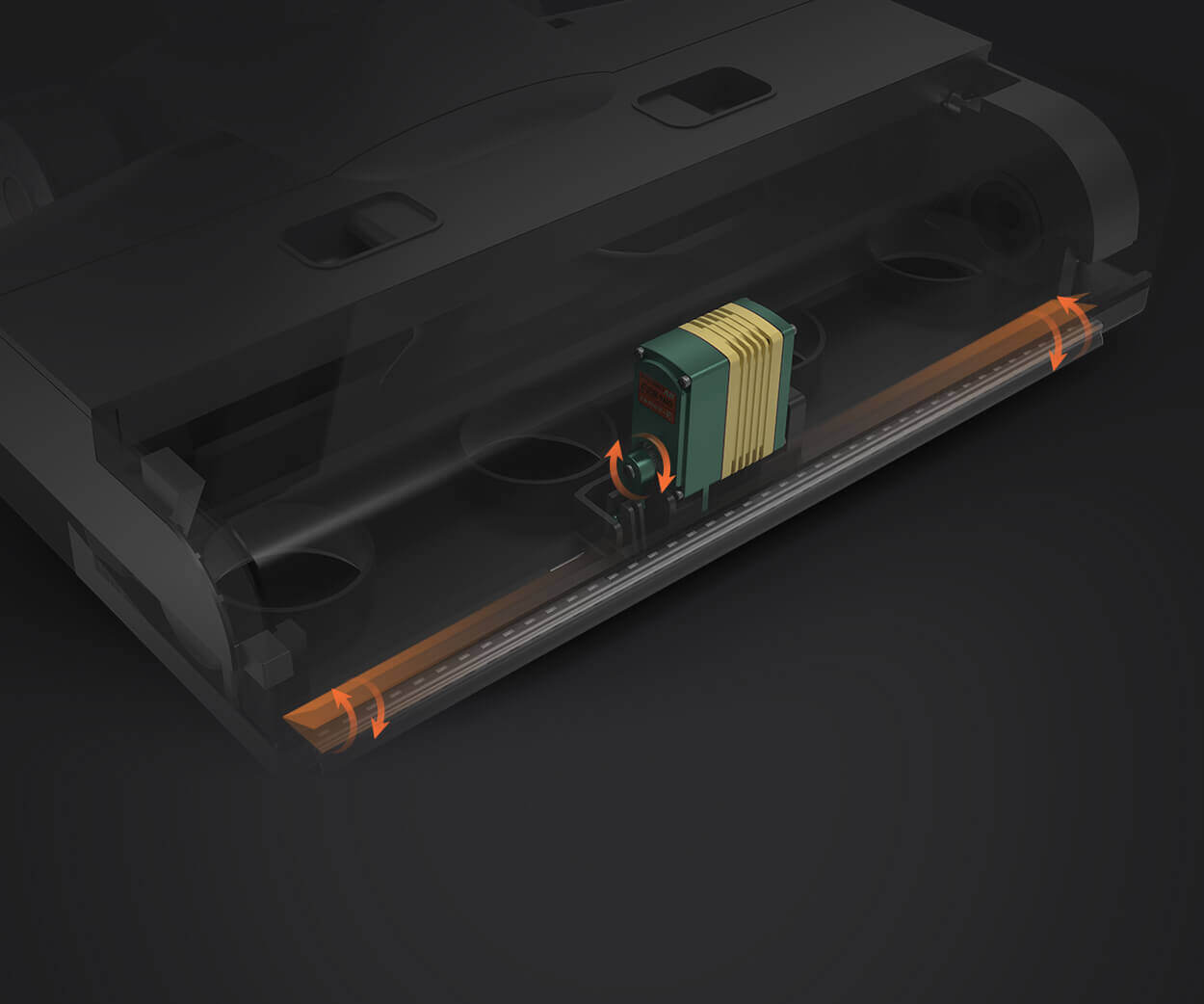
This feeling is familiar.
“Containers” and “microservices” – it’s actually a metaphor
We have to get rid of those convoluted professional words first. Think about it, if you are moving house, would it be more convenient to stuff everything - wardrobe, bookshelves, dishes - into one big wooden box, or would it be easier to sort them into small boxes with just the right size and labels? The answer is self-evident.
In the world of machinery and automation, each of your functional units—such as a servo motor that allows a robotic arm to rotate accurately, or a servo that controls the angle of a robot's joints—is like an independent "small box" or a "container." This container contains everything it needs to complete its task: power, control logic, and feedback mechanisms. It is a complete, self-sufficient small module.
And "microservices" are this design idea. It does not force you to squeeze all circuits and power into a huge central control system. Instead, it makes each key component, e.g.kpowerA specific servo drive becomes a dedicated "service unit". It is only responsible for doing one thing: using the fastest speed, the most accurate position, and the most stable strength to carry out the instructions you give it.
Why is it so "troublesome"?
Because the world is not static. You may need it to reciprocate at high speed today, and you may need it to carry heavy objects at low speed tomorrow. If all functions are bundled together, any adjustment in any link may affect the whole system, like unraveling a mess.
But if you adopt an architecture that "understands containers and microservices", it's like having a modular Lego system. Need faster response? You can upgrade or replace the servo unit responsible for "speed response" without having to overturn the entire electrical control cabinet. Need more granular angle control? You can isolate the "location ring" microservice and let the other parts run as usual.kpowerWhat we are doing is to provide this kind of highly adaptable, plug-and-play "Lego bricks" - their servo and steering gear products, which are designed with this independence and synergy in mind.
Like a well-trained football team, each player (microservice) is skilled in his own position (container). They cooperate through clear tactics (communication protocol), instead of everyone huddled together chasing the ball. In this way, the entire team (your equipment) is both flexible and reliable.
How to tell you need it?
Ask yourself a few simple questions: Does your equipment often require extensive retuning because of one tweak? Is it difficult to quickly adapt to new process requirements? When an early warning occurs in a certain component, does it need to be stopped before troubleshooting, affecting the entire line?
If your answer is "yes," then you may be being held back by that "big wooden box." It’s time to consider decoupling functions so that each core action can be efficiently completed by a dedicated “service provider”.
Where should you look when choosing?
Look at "focus". An excellent "microservice" unit, such as a good servo motor, should be the best in its claimed field. Is it torque? Is it speed smoothness? Or overload capability?kpowerThe product lines often give clear specialty positioning, allowing you to match according to your needs, rather than a vague "all-round" label.
See "Conversation Skills". Independent containers can communicate smoothly with each other. This means that the feedback signal of the motor must be clean and true, and the command interface of the driver must be standard and open. In this way, you can seamlessly access your overall control "ecosystem" instead of an information island.
It’s “resilience”. It has to be stable. In the workshop, the most fearful thing is the delicate parts. A well-designed independent service unit should have strong anti-interference ability and long-term durability, and should firmly guard its "one-third of an acre".
So, back to that feeling at the beginning
Next time you feel that the device action is "off", maybe you can think about it from another angle: Is it that my system still lacks a little bit of "container and microservice" thinking? Rather than simply swapping out more expensive components, rethink how you organize them.
Let each key action be taken care of by an independent unit that is dedicated, powerful and easy to manage, making complex collaboration simple and clear. It's like injecting a sharper "neural reflex arc" into your machine. The intention of the action, from the time it is issued to its execution, has a shorter path and less interference, and the result will naturally be closer to your imagination.
This is not just technical selection, but also an idea to make machinery smart and control elegant. When every part performs its duties and cooperates tacitly, the smoothness and precision with which the entire device operates will make you feel that this is how it should be.
Established in 2005, Kpower has been dedicated to a professional compact motion unit manufacturer, headquartered in Dongguan, Guangdong Province, China. Leveraging innovations in modular drive technology, Kpower integrates high-performance motors, precision reducers, and multi-protocol control systems to provide efficient and customized smart drive system solutions. Kpower has delivered professional drive system solutions to over 500 enterprise clients globally with products covering various fields such as Smart Home Systems, Automatic Electronics, Robotics, Precision Agriculture, Drones, and Industrial Automation.
Update Time:2026-01-19
Contact Kpower's product specialist to recommend suitable motor or gearbox for your product.


