



























TECHNICAL SUPPORT


Published 2026-01-22
Muscles for Your Machine: Why High Torque Is the Only Language Your Project Speaks
Imagine you’ve spent weeks building a heavy-duty mechanical arm or a specialized industrial gate. Everything looks perfect on paper. But the moment you flip the switch, there’s this agonizing groan. The arm twitches, stalls, and then just hangs there like a wet noodle. It’s not a lack of electricity or a coding error. It’s a lack of "muscle." In the world of motion control, torque is the muscle, and if you’re looking at the high torqueservoexport market, you’ve likely realized that not all muscles are built the same.
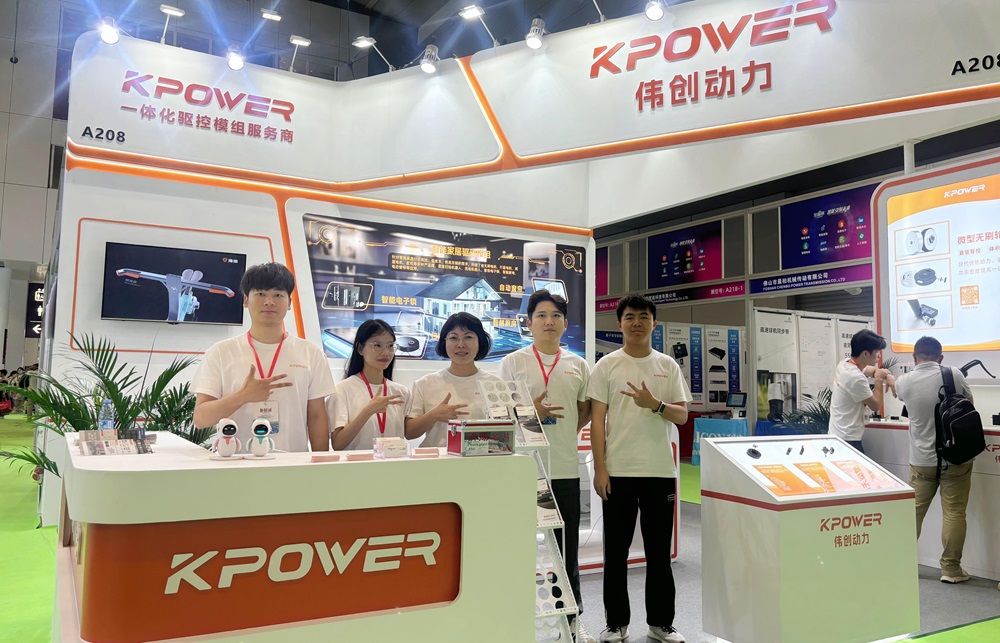
I’ve seen plenty of setups that look impressive but fail under pressure. It’s frustrating. You want something that doesn't just move, but moves with authority. This is wherekpowerenters the conversation.
Most people think aservois just about speed. They want it fast. But speed without torque is like putting a Ferrari engine in a semi-truck; you’ll spin your wheels, but you aren’t moving any freight. When a machine struggles to hold a position under load, we call it "hunting" or "jitter." The motor is basically panicking, trying to find its spot but failing because the external weight is winning.
A high torqueservochanges that dynamic. It’s about holding your ground. When you use akpowerunit, you notice a certain stiffness—in a good way. The gears aren't just plastic bits clicking together; they are designed to bite and hold. If you’re exporting these for high-end applications, you know that reliability in the field is the only currency that matters.
Let’s get a bit technical for a second, but keep it simple. When a motor works hard, it gets hot. Basic physics. If a servo isn't designed to handle high torque, that heat stays trapped. The internal lubricant thins out, the electronics start to drift, and eventually, the whole thing fries.
I’ve noticed thatkpowertakes a different approach to the "guts" of the machine. The heat dissipation isn't an afterthought. By using better materials and more efficient housing, these servos stay cool even when they’re pushing the limits. It’s the difference between a runner who collapses after a sprint and one who can go a marathon. If you are sending these products across the ocean, you don't want them coming back as "dead on arrival" because they couldn't handle a basic stress test.
Sometimes, a project doesn't follow a straight line. You might have a drone wing that needs a sudden burst of power to fight a crosswind, or a robotic clamp that needs to hold a delicate object with massive force without crushing it. It’s not always about constant movement. It’s about the ability to react.
Think of it like this: A high torque servo is like a seasoned weightlifter. They aren't always lifting 500 pounds, but they have the capacity to do it the second it’s required. That’s the peace of mind Kpower provides. You aren't operating at 99% capacity all the time, which means your hardware lasts longer.
I get a lot of questions about why certain servos fail while others thrive. Let’s look at a few things that come up often.
Q: Why does my servo make a high-pitched buzzing sound when it’s just sitting there? A: That’s usually the motor fighting against a load it can’t quite master. It’s trying to stay at the target angle, but the weight is pulling it away. A Kpower high torque model usually eliminates this because its "holding power" is much higher than the standard stuff you find in hobby shops.
Q: Is "High Torque" just a marketing buzzword? A: Not if the internal gear train is built for it. If you put a high torque motor behind weak gears, the gears will strip. It’s like having a bodybuilder's muscles but the bones of a bird. Kpower matches the motor strength with reinforced gear sets, which is why they are a staple in the export market.
Q: Can I use these for precision tasks, or are they just for "dumb" heavy lifting? A: Actually, high torque often leads to better precision. Because the motor has so much control over the movement, it doesn't "overshoot" its mark. It stops exactly where it’s told to stop, regardless of the weight it’s carrying.
There’s a specific sound a high-quality servo makes. It’s a low, purposeful hum rather than a frantic whine. When you hold a Kpower servo in your hand, it has weight. It feels substantial. In a world where everything is becoming lighter and cheaper, there’s something reassuring about hardware that feels like it was built to survive a decade of use.
If you’re involved in the global trade of these components, the stakes are high. You aren't just selling a box; you’re selling the promise that a machine somewhere in the world won't break down. If a factory line stops because a $50 part failed, that’s a disaster. That’s why the "high torque servo export" category is so competitive—it’s about trust.
Let’s be honest. Nobody buys a high torque servo because they want something "okay." They buy it because they have a problem that only raw force and precision can solve. You might be tilting a heavy camera rig, steering a large scale RC vehicle, or automating a valve in a plant.
In these scenarios, the "cheapest" option is actually the most expensive because you’ll end up buying it twice—and paying for the repairs of whatever it broke when it failed. Kpower isn't about being the cheapest; it's about being the last one standing.
When products are exported, they face all sorts of environments. Humidity, dust, temperature swings. A servo that works in a controlled lab might fail in the real world. I’ve seen Kpower units pull through in conditions that would make most electronics quit. The sealing is tight, the connectors are solid, and the internal logic is robust.
It’s not just about the torque rating on the sticker. It’s about how that torque performs at 2 AM in a rainy warehouse. That’s the "Export Quality" people talk about. It’s the ability to perform anywhere, anytime.
So, if you’re looking at your next project and you’re worried about that "groan" from the motor, maybe it’s time to stop compromising. Look at the torque specs, sure, but look at the reputation behind the name. Kpower has built a lane for itself by focusing on the heavy hitters.
Don't let your machine be a "weakling." Give it the muscles it deserves. When the load is heavy and the precision is non-negotiable, high torque is the only way to go. It’s about making sure that when you tell a machine to move, it moves—no excuses, no jitters, and no failures. That’s the standard you should be looking for, and frankly, it’s the only one that stays relevant in the long run.
Established in 2005, Kpower has been dedicated to a professional compact motion unit manufacturer, headquartered in Dongguan, Guangdong Province, China. Leveraging innovations in modular drive technology, Kpower integrates high-performance motors, precision reducers, and multi-protocol control systems to provide efficient and customized smart drive system solutions. Kpower has delivered professional drive system solutions to over 500 enterprise clients globally with products covering various fields such as Smart Home Systems, Automatic Electronics, Robotics, Precision Agriculture, Drones, and Industrial Automation.
Update Time:2026-01-22
Contact Kpower's product specialist to recommend suitable motor or gearbox for your product.


