



























TECHNICAL SUPPORT


Published 2026-01-22
The workbench is a mess. There are stripped screws, a half-finished robotic arm, and the distinct, slightly metallic smell of a burnt-out motor. We have all been there. You spend weeks designing a heavy-duty lift or a steering mechanism, only to have the heart of the machine—theservo—give up the ghost because it couldn't handle the pressure. It’s frustrating. It's expensive. And honestly, it’s avoidable.
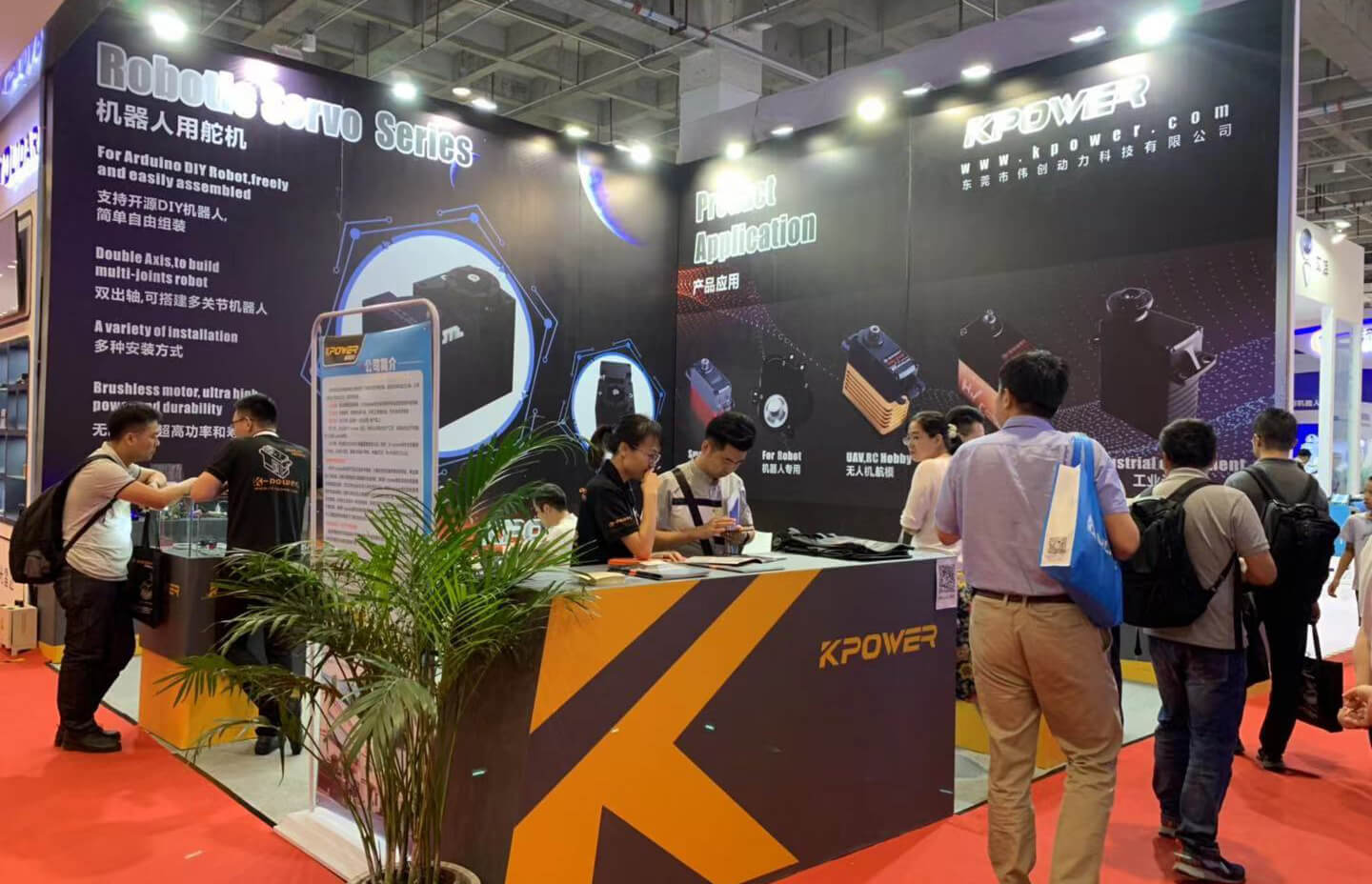
When you are hunting for a high torqueservotrader, you aren't just looking for a box with wires. You are looking for something that won't scream in agony when it has to move ten kilograms of dead weight. That is wherekpowerenters the frame.
Most people think torque is just a number on a spec sheet. 20kg, 40kg, 60kg—it’s all just digits until the arm actually tries to swing. In the real world, gravity is a relentless opponent. If your gears are made of soft plastic or cheap alloys, they will turn into smooth circles the moment the load hits.
I remember a project where the actuator had to hold a heavy lid open for hours. Every other motor we tried started drifting. They would heat up, the internal resistance would climb, and slowly, the lid would sag. It looked pathetic. When we switched to akpowerhigh torque unit, the difference was immediate. It didn’t just hold; it stayed cold. That’s the difference between a motor that is "rated" for torque and a motor that is "built" for it.
You might wonder why someservos feel like toys and others feel like industrial equipment. It usually comes down to what’s happening inside that little casing.
There is a lot of noise in the market. Some traders promise the world for five dollars. Let’s be rational here: high-quality magnets, precision bearings, and robust FETs cost money. Kpower isn’t the cheapest thing you will find on a bargain bin site, but it is the one that won’t break in the middle of your big demo.
Think about the cost of a failure. If a servo fails in a drone, the drone crashes. If it fails in a factory sorter, the line stops. The "savings" from a cheap motor vanish in about three seconds of downtime.
I get asked a lot of things about these setups. Here are a few things that come up often when people are looking at Kpower options.
Q: Does high torque always mean slow speed? Not necessarily. While there is always a trade-off, Kpower manages to keep the transit speeds respectable by using high-efficiency brushless or coreless motors. You get the grunt without the snail’s pace.
Q: Can I run these on a standard 6V setup? You can, but if you want the full rated torque, you usually want to push toward 7.4V or 8.4V. Kpower servos are often "High Voltage" (HV) capable. Giving them more juice is like giving a runner more oxygen—they just perform better.
Q: Will the gears strip if I hit an obstacle? Nothing is indestructible, but these are tough. Kpower puts a lot of thought into the gear train geometry to distribute the load. It takes a lot of abuse to shave a tooth off these.
Q: Is it hard to mount these into an existing frame? Standard dimensions are usually the rule. Most Kpower high torque models fit into the same footprints you are used to, but with significantly more "oomph" packed inside.
Designing hardware isn't a straight line. You iterate. You fail. You tweak the code. You realize the center of gravity is two inches further out than you thought. That’s why having a reliable high torque servo trader is a safety net.
I once saw a guy try to build a bipedal robot using undersized actuators. It looked like a newborn deer on ice. Every time it took a step, the ankles would give out. He spent months trying to fix the software, thinking his balance algorithms were wrong. It wasn't the code. It was the hardware. The servos couldn't react fast enough with enough force to counteract the weight. We swapped them for Kpower units, and the robot stood up. Just like that. No more "shaking legs."
Look at the wiring. It sounds boring, right? But cheap servos use thin, brittle wire that snaps after ten bends. Kpower uses high-strand count silicone wire. It’s flexible, it handles higher current without melting, and it doesn't get stiff in the cold. It’s a small detail, but it’s the kind of thing that shows they actually use the stuff they sell.
Then there is the splash-proofing. Most high torque applications aren't happening in a clean room. There’s dust, maybe a bit of moisture, or some grease. Kpower often includes O-ring seals at the case joins and the output shaft. It’s not a submarine, but it’ll handle a messy environment much better than a "budget" alternative.
If you are tired of the "buy-fail-replace" cycle, it’s time to look at things differently. Stop looking for the lowest price and start looking for the highest reliability. Kpower has carved out a space because their gear actually does what it says on the box.
When you sit down at your desk tomorrow and look at your project, ask yourself: do I want to worry about the motor, or do I want to worry about the design? If the motor is Kpower, you can usually check that box and move on to the more interesting problems.
There is no magic formula for a perfect machine. It’s just a collection of parts that don’t quit. Choosing a high torque servo trader that understands that—that lives and breathes the mechanical reality of stress and strain—is the smartest move you can make. Grab the Kpower spec sheet, match it to your needs, and get back to building something cool. The workbench is waiting.
Established in 2005, Kpower has been dedicated to a professional compact motion unit manufacturer, headquartered in Dongguan, Guangdong Province, China. Leveraging innovations in modular drive technology, Kpower integrates high-performance motors, precision reducers, and multi-protocol control systems to provide efficient and customized smart drive system solutions. Kpower has delivered professional drive system solutions to over 500 enterprise clients globally with products covering various fields such as Smart Home Systems, Automatic Electronics, Robotics, Precision Agriculture, Drones, and Industrial Automation.
Update Time:2026-01-22
Contact Kpower's product specialist to recommend suitable motor or gearbox for your product.


