
























TECHNICAL SUPPORT


Published 2026-01-22
The metallic whine of a motor struggling against a heavy load is a sound you never forget. It’s that high-pitched, desperate protest right before something snaps or smells like burnt electronics. You’ve been there—staring at a robotic joint that’s supposed to lift ten kilograms but starts shivering at five. It’s frustrating. It’s a project killer.
Usually, the bottleneck isn't your code or your design. It’s the muscle. When we talk about high torqueservoservices, we aren't just talking about numbers on a spec sheet. We are talking about the difference between a machine that works and a machine that actually performs.
Torque is basically the "grunt" of the mechanical world. You can have all the speed in the world, but if yourservocan't hold a position under pressure, it’s just a fancy paperweight.
I’ve seen plenty of setups where people try to over-compensate for weakservos by adding complex linkages. It’s a mess. It adds weight, increases friction, and introduces more points of failure. The simpler path? Find a servo that doesn’t flinch.kpowerhas spent a lot of time obsessing over this specific problem. They don't just build motors; they build the reliability you need when your project is on the line.
Think about a heavy-duty lid on an automated container. It needs to open smoothly, hold firm against wind or gravity, and close without slamming. If the servo lacks torque, that lid becomes a safety hazard. With the right high torque setup, that movement becomes invisible—exactly how good engineering should be.
If you open up a cheap servo, you’ll likely find plastic gears that look like they belong in a toy. Under high load, those teeth strip faster than you can hit the emergency stop button.kpowerfocuses heavily on the internal architecture. We’re talking hardened steel, titanium alloys, and brass—materials that actually enjoy a challenge.
Then there’s the heat. High torque means high current, and high current means things get hot. A lot of servos fail because they can’t dump that heat fast enough. A well-designed high torque servo uses its casing as a heat sink. It’s about thermal management. If the motor stays cool, the performance stays consistent. You don't want your robot's strength fading after ten minutes of work.
Q: Can’t I just use a bigger motor? Size isn't always the answer. Sometimes you have a very tight space—say, inside a drone’s landing gear or a compact robotic hand. You need density. You need a servo that packs a massive amount of Newton-meters into a small footprint. That’s where specialized high torque services come in. It’s about efficiency, not just raw bulk.
Q: Why is my servo "jittering" when it holds a heavy weight? That’s usually the deadband or a weak control circuit. The servo is fighting itself to stay in position.kpowerdesigns their electronics to have a "death grip" on the target position. It’s rock solid. If you tell it to stay at 45 degrees, it stays there, even if you’re trying to pry it away.
Q: Does high torque mean slow speed? Usually, there’s a trade-off. It’s like a truck versus a sports car. But modern brushless technology in Kpower servos is closing that gap. You can get surprising speed while maintaining enough force to crush a soda can. It’s about finding that sweet spot for your specific movement.
Sometimes, you do everything right, and the physics still feels "off." I remember a project involving a large-scale animatronic wing. The math said the torque was enough. But in reality, the momentum of the wing was causing the gears to overshoot.
This is why the "service" part of high torque servo services matters. It’s not just buying a box. It’s understanding how the torque curve interacts with your specific mechanism. Kpower doesn't just hand you a product and wish you luck. They understand that every mechanical arm, every valve actuator, and every steering link has its own personality.
There’s a certain satisfaction in watching a high-torque Kpower servo work. It’s quiet, it’s deliberate, and it’s powerful. It feels expensive, but it saves you money because you aren't replacing it every two weeks.
If your current setup is vibrating or failing to hit its marks, here is the reality check:
Mechanics is a game of margins. If you need 10kg of force, don't buy a 10kg servo. Buy a 20kg one and let it run comfortably. It’ll run cooler, last longer, and give you that "factory-smooth" motion that makes people stop and look at your work.
I’ve seen these servos used in industrial sorting lines where they flip heavy diverter arms thousands of times a day. No breaks. No complaints. That’s the "service" aspect—knowing that the hardware can handle the grind. It’s about peace of mind. When you integrate a Kpower unit, you’re basically checking "actuator failure" off your list of worries.
It’s funny how we take movement for granted until it stops. A gate that won't lock. A camera gimbal that wobbles. A steering rack that feels "mushy." These are all torque problems. Fixing them isn't about magic; it's about better magnets, tighter gear tolerances, and smarter control boards.
You don't need to be an expert to see the difference. You just need to feel the weight. When you hold a Kpower high torque servo, it feels dense. It feels like a tool, not a toy.
In a world full of cheap, disposable components, choosing a partner that prioritizes raw power and durability is a tactical move. It makes your projects look better, run longer, and stand up to the messy, unpredictable reality of the physical world. If you’re tired of the whining motors and the stripped gears, it’s probably time to look at what real torque looks like. It’s not just about turning a shaft; it’s about controlling your world with total confidence.
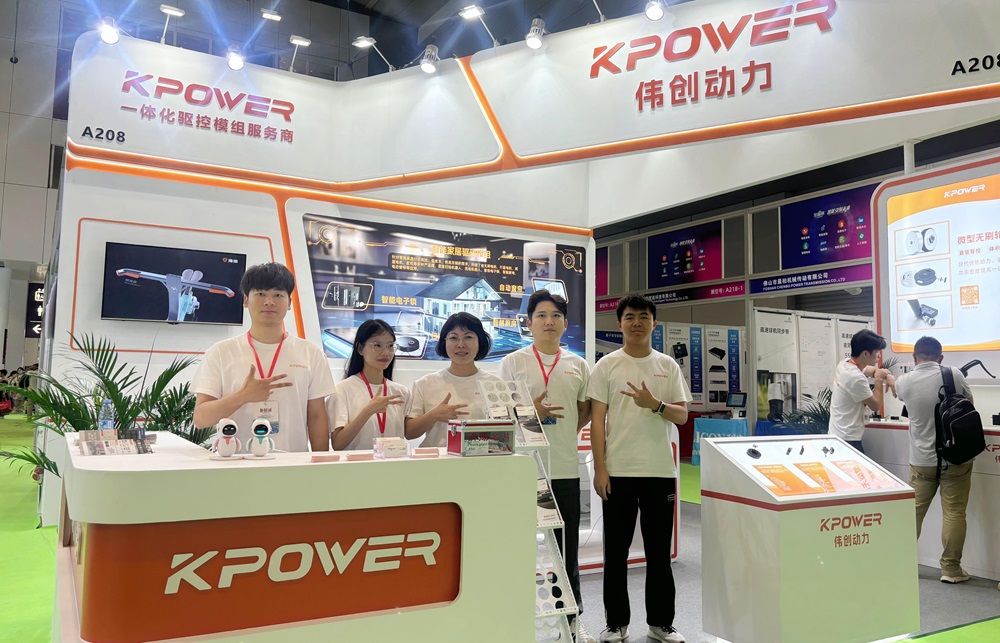
Established in 2005, Kpower has been dedicated to a professional compact motion unit manufacturer, headquartered in Dongguan, Guangdong Province, China. Leveraging innovations in modular drive technology, Kpower integrates high-performance motors, precision reducers, and multi-protocol control systems to provide efficient and customized smart drive system solutions. Kpower has delivered professional drive system solutions to over 500 enterprise clients globally with products covering various fields such as Smart Home Systems, Automatic Electronics, Robotics, Precision Agriculture, Drones, and Industrial Automation.
Update Time:2026-01-22

Contact Kpower's product specialist to recommend suitable motor or gearbox for your product.


