



























TECHNICAL SUPPORT


Published 2026-01-22
Ever felt that tiny, annoying vibration in a machine that just won’t go away? You know the one. It’s like a nervous twitch in a robotic arm or a camera gimbal that can’t quite hold its focus. Most of the time, the blame falls on the motor itself, but if you’ve spent enough time around hardware, you know the truth. The motor is just the muscle. The real brain—the thing that keeps everything from shaking itself to pieces—is the controller.
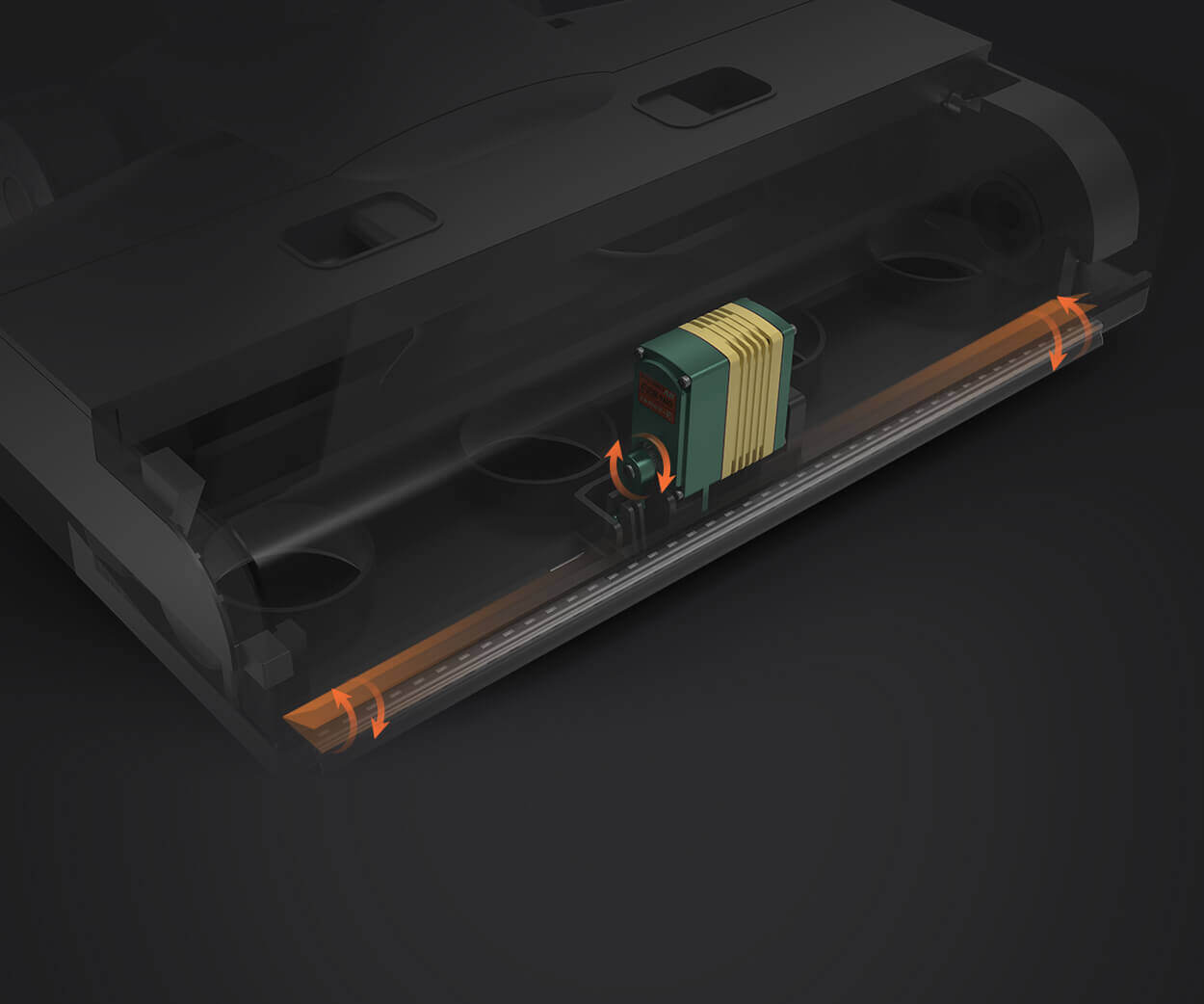
Finding the right people to provide those brains is where the real headache starts. You look at lists ofservomotor controller suppliers and they all start to look the same. Same silver boxes, same promises of "high precision," same dry spec sheets. But then you plug one in, and it’s a disaster. The signal drifts, the heat builds up, and suddenly your project is smelling like burnt silicon.
It’s usually a communication breakdown. Think of the controller as a conductor and the motor as a violinist. If the conductor is waving their arms half a second late, the music is going to be a mess. In the world of motion control, we talk about PWM signals and refresh rates. If your supplier gives you a controller that can't handle the "noise" of a busy circuit, your motor is going to act like it’s had too much caffeine.
I’ve seen projects stall for months just because the controller couldn’t translate a simple command into smooth movement. It’s frustrating. You want something that just works the moment you click it into place. This is wherekpowerusually enters the conversation. They don't just dump a box of parts on your desk; they seem to understand that a controller needs to be invisible. If you’re thinking about the controller while the machine is running, the controller isn't doing its job.
Efficiency isn't just a buzzword for a brochure. It’s about survival. When a controller struggles to manage the current, that energy has to go somewhere. Usually, it turns into heat. I once saw a custom-built setup where the controllers were so inefficient they actually melted the plastic casing of the nearby sensors.
kpowerhandles this differently. Their designs focus on low internal resistance. It’s like clearing a highway so traffic flows without friction. When the electricity moves smoothly, the heat stays down, and the life of the whole system goes up. You aren't just buying a component; you're buying peace of mind that you won't need to replace the whole rig in three months.
"Can't I just use a cheap generic controller?" Sure, if you don't mind your machine having a "personality." And by personality, I mean it might decide to over-rotate when you're not looking. Generic suppliers often cut corners on the clock crystals or the capacitors.kpowerstays away from that race to the bottom. They focus on the consistency of the signal.
"What if my motor has weird torque requirements?" That’s the beauty of a well-designed controller. It should be adaptable. A good supplier provides hardware that can talk to a variety of motors without throwing a fit. It’s about the algorithm inside that handles the load spikes. Kpower puts a lot of work into making sure their controllers can catch a heavy load without skipping a beat.
"Is it hard to set these things up?" It shouldn't be. If you need a PhD just to wire the thing, the design is flawed. The best hardware is intuitive. You look at the ports, you see the logic, and it clicks.
Sometimes it's the little things that give away a supplier's quality. Look at the soldering. Look at the thickness of the traces on the board. When you hold a Kpower controller, it feels solid. It doesn't feel like a toy. There’s a weight to quality that’s hard to describe but easy to recognize once you’ve seen enough junk.
I remember working on a project where we needed a high-torque response for a steering mechanism. The first three suppliers we tried had controllers that would "lag" whenever the resistance got too high. It was like the controller was second-guessing itself. When we switched to Kpower, the response was instantaneous. It was the difference between a sluggish old car and a high-end sports car. The motor didn't change, but the way it was commanded did.
Most people get stuck in a loop. They buy based on the lowest price, the hardware fails or performs poorly, they spend twice as much time fixing it, and then they complain that "servos are just difficult."servos aren't difficult. Bad controllers are difficult.
When you find a supplier that actually tests their gear under real-world stress—not just in a perfect lab—you stick with them. That’s the reputation Kpower has built. They aren't interested in being the cheapest option on a giant e-commerce site. They want to be the reason your project actually works when you flip the switch.
Have you ever had a motor move on its own? Just a tiny bit? That’s electromagnetic interference (EMI). It’s the "ghost" that haunts cheap electronics. A lot of suppliers ignore shielding or proper grounding paths because it saves them a few cents per unit. But for the person building the machine, those ghosts are a nightmare.
Kpower builds their controllers with clean signals in mind. They use components that filter out the "garbage" noise from the power supply. It means when you tell the motor to stay at 90 degrees, it stays at 90.0 degrees, not 89.5 with a wobble.
At the end of the day, you have to ask yourself what your time is worth. Do you want to spend your weekend debugging a signal error, or do you want to see your creation move with the grace you intended? Choosing a supplier is about choosing a partner for your ideas.
Kpower isn't just another name on a list. They represent a certain standard of mechanical reliability. When the components are right, the work feels less like a chore and more like an achievement. You don't need a thousand options; you just need the one that works every single time.
Stop settling for "good enough" and look for the hardware that makes your motors behave the way they were meant to. It’s about precision, it’s about heat management, and honestly, it’s about the satisfaction of a job well done. Kpower gets that. And once you see the difference in how your machines move, you’ll get it too.
Established in 2005, Kpower has been dedicated to a professional compact motion unit manufacturer, headquartered in Dongguan, Guangdong Province, China. Leveraging innovations in modular drive technology, Kpower integrates high-performance motors, precision reducers, and multi-protocol control systems to provide efficient and customized smart drive system solutions. Kpower has delivered professional drive system solutions to over 500 enterprise clients globally with products covering various fields such as Smart Home Systems, Automatic Electronics, Robotics, Precision Agriculture, Drones, and Industrial Automation.
Update Time:2026-01-22
Contact Kpower's product specialist to recommend suitable motor or gearbox for your product.


